

If you have ever felt nostalgic for the days of tube televisions and classic video fighting games, you are not alone.
Nick Going, 27, felt that longing when he returned in 2014 to Tucson from Los Angeles, where he had spent two years after finishing a film degree from the University of Arizona.
“The work culture wasn’t for me, and I love Tucson,” says Going, who is a video content producer for a Tucson software company. But while he was in LA, he saw an arcade scene that was thriving and wanted to bring that back to Arizona.
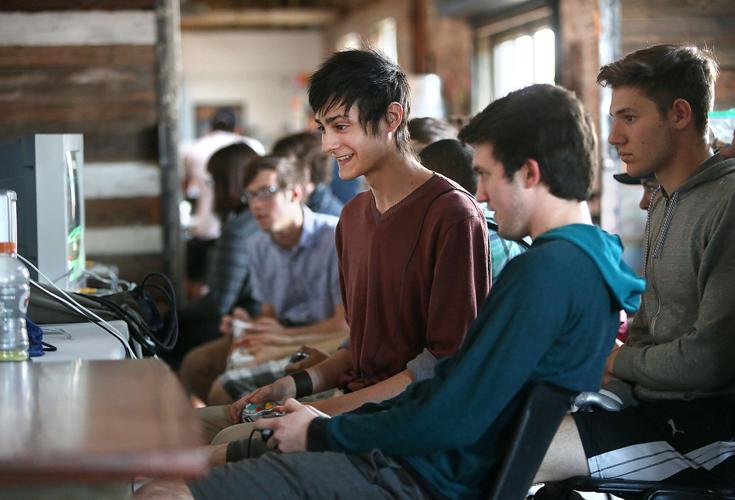
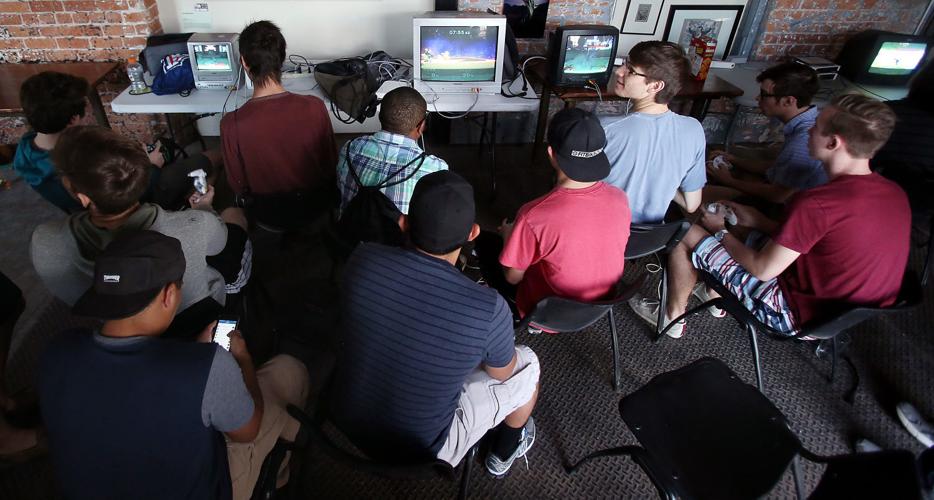
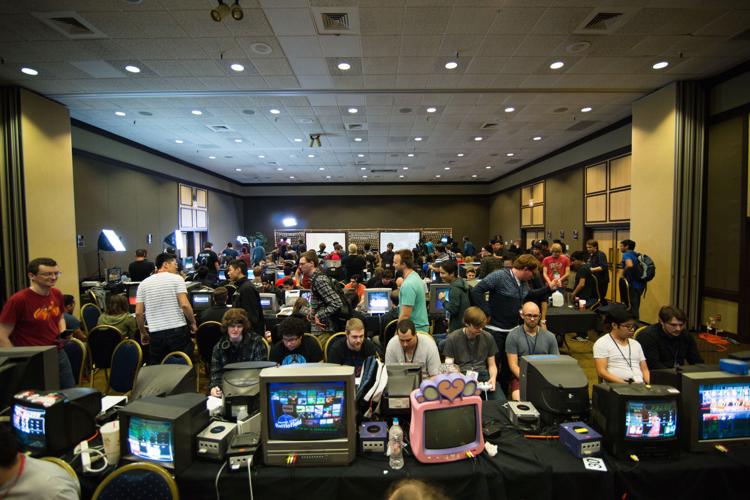
He began by organizing friendly meetings and small ongoing tournaments at the now-defunct Maker House, 283 N. Stone Ave. Players would come in with their clunky TVs and their consoles — oftentimes found among the mismatched consort of a resale shop — and set up for an evening of digital brutality.
People are also reading…
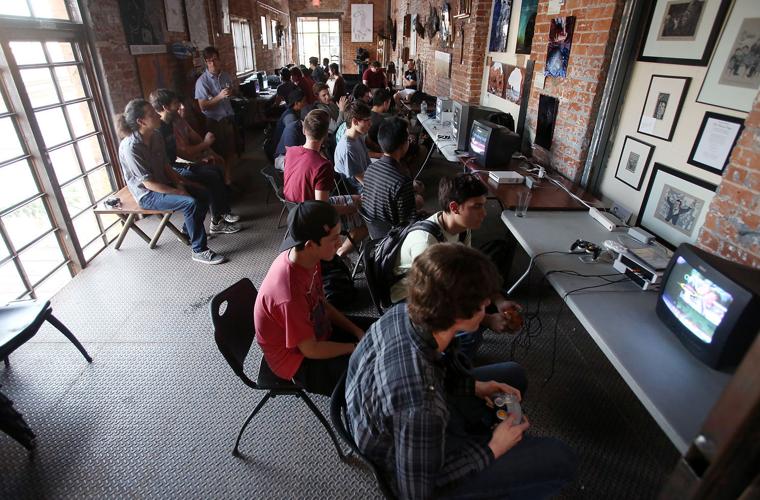
Justin Van Horne used to go to the Maker House meet-ups, and said they usually drew eight or 10 people each. Now, the two host multiple Facebook groups and organize get-togethers a few times a month that regularly see 20 to 40 players, Van Horne says.
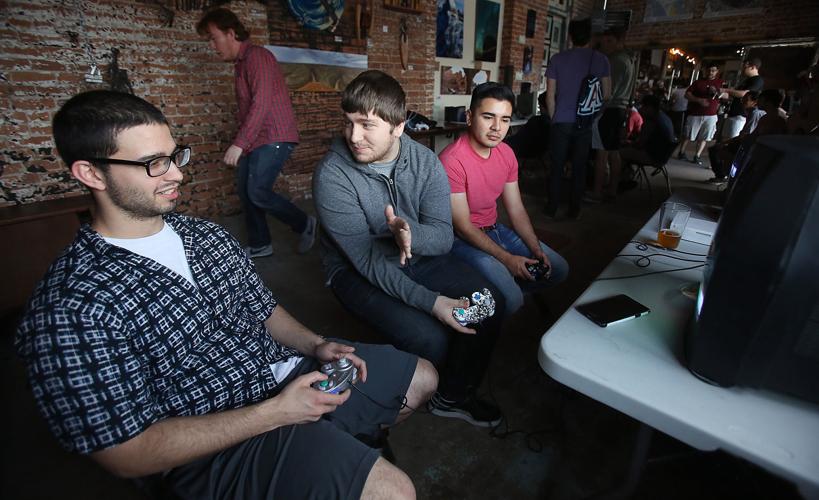
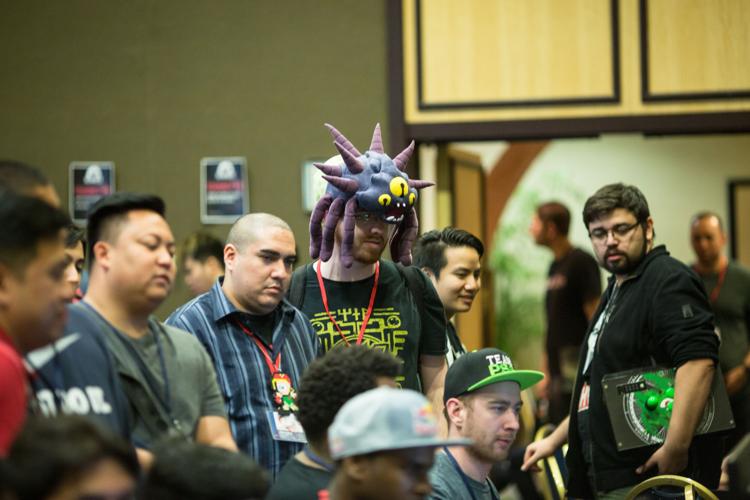
“It’s the weirdest social group I’ve ever ben a part of,” adds Going, who described a typical game night as a demographic melting pot. High school students play alongside twentysomething college kids. The group also includes several women players, wives and girlfriends of gamers, a 35-year-old Tucson accountant, a guy who writes for a video gaming website and a Tucson food writer.
“There’s certainly an addictive quality, and there has to be for something to continue like this. It’s really interesting because it’s a game you can’t play online, so you have to get together to play. The game is only good because of the flaws,” says Van Horne, who helps run the Arizona Melee Community Facebook group.
“Because it’s an older game, they couldn’t patch it, so a lot of the play revolves around exploiting those flaws,” Van Horne says. “It has a very unnaturally high skill ceiling. There’s no limit, you always can get better.”
“It’s one part chess, one part poker, because it’s strategic, but it’s also kind of frantic,” Going says. “Just completely by accident, both ‘Super Smash’ and ‘Street Fighter’ are these incredibly complex games, and I don’t think they ever intended them to be. But when people found out ‘Wow, I have to use so much of my brain in these games,’ you really have to invest to get good. You really do have to practice. Like, you’re not going to put in so much work and then quit.”
And quit they wouldn’t, even when their free venue at the Maker House closed.
The meet-ups relocated to other gamer-friendly venues, including Barrio Brewing Co., 800 E. 16th St., which allows the gamers and their gear to set up every other Wednesday.
Players can also set up playdates at their homes through one of the Facebook groups that connects the gamers. Players come, set up their sets and play for free, or put up a small buy-in and compete for the pot.
Doubletree Reid Park, 445 S. Alvernon Way hosts the biggest gathering of the gamers once a year in the Rewired Tournament. Going says last year’s inaugural event brought more than 300 people to play five classic games including ‘Super Smash Bros.,” ‘Street Fighter,’ and ‘Marvel vs. Capcom’ for prize money and bragging rights.
“There’s always been venues for us to play, I didn’t, like, revolutionize the idea of getting together to play video games,” Going says. “It’s just that we needed to expand, and that’s what Borderlands and Barrio and the Doubletree allow us to do.”
The tournament returns on Nov. 19 and 20 when players will compete in as many as six games, including ‘Super Smash Bros. Melee’ and ‘Street Fighter 5,’ two cornerstones of the tournaments that Going said will always be present in some version. A registration fee of $15 covers entry to the venue, including for spectators, and players can register for an additional $10 per game they want to compete in.
Going said they expect more than 300 people will attend the November tournament.
“It’s nice to be able to play video games for money, but you’re really only looking at a handful of winners. People really just want to come and play and the money is just an incentive,” Going says.
“For me, I love community efforts, it’s something I’ve always been a part of through college and everything else. It’s really different for everyone, some are there purely for the competition, some are there to have a beer with friends, others are there to teach,” says Van Horne.
“It’s a day of the week, or a part of a month that gives an opportunity for people to come together, and do something they enjoy...But everyone’s friends with everyone and we all enjoy seeing each other and having a common ground to talk about.”


