

Arpilleras: Colorful appliqués from Peru
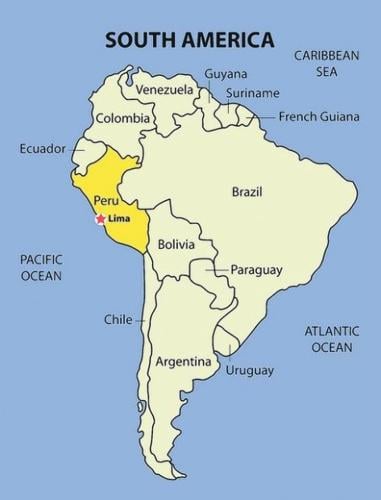
Hi, it's me again, Artzy. Fasten your seatbelts, because we're off for another adventure. This time we're headed to Peru, a country in South America that is known for hand-sewn, three-dimensional pictures made of fabric called arpilleras (the Spanish word for "sackcloth" or "burlap").
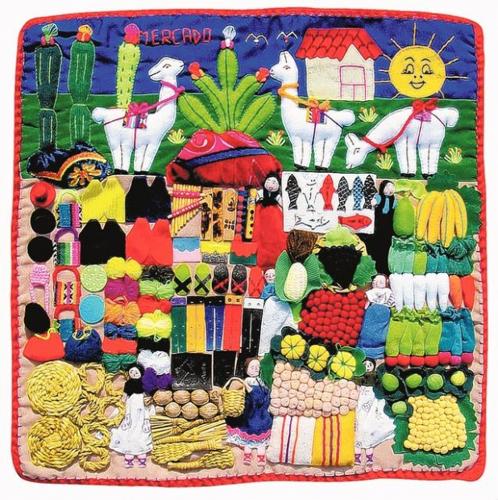
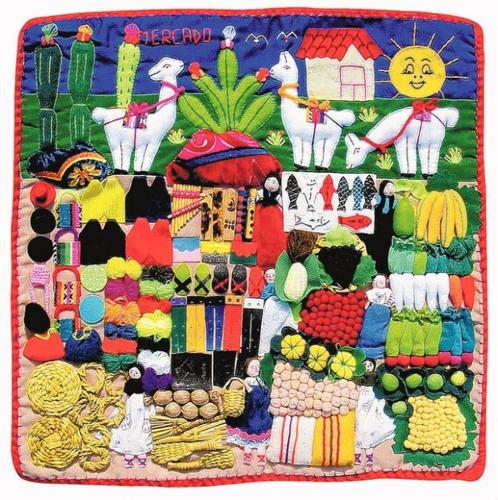
The women who make arpilleras use the appliqué technique to attach small items to a larger cloth background. These small objects may be made out of scraps of fabric, vinyl and felt; thin pieces of wood; or fibers such as straw or raffia. If you look closely at the picture on the far right, you can see that the little baskets are made of straw fibers, the hats of felt, and the shoes of small pieces of vinyl.
People started making arpilleras in Chile as a form of political protest. During the dictatorship of General Augusto Pinochet in the 1970s and 1980s, many men were arrested and never seen again. Their wives, mothers and sisters were left alone to support their families. These women began sewing arpilleras as a way to earn money and also to tell the story of what was happening in their country.
People are also reading…
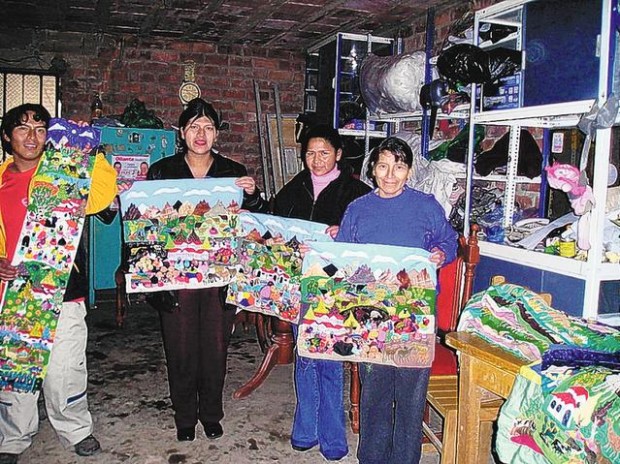
Today, arpilleras are a popular folk art. Women continue to work together, creating brightly colored arpilleras that depict scenes from daily life, such as their villages, markets or local carnivals.
Did you know . . .
Th arpillera pictured also features three llamas. Interesting looking creatures, aren't they? (Although personally I can't help but think they'd be a little more attractive if they had a stripe or two!)
Llamas are found primarily in South America but are thought to be related to the camels of Asia. The ancient Incas depended on the llamas as a source of food and clothing. Although they are generally calm and even-tempered, llamas will sometimes launch a smelly spit wad at other llamas or even at people if they are scared or upset!
Roads
Scholar
Educational adventures in our own backyard


