

Each winter, a bit of Moussa Albaka's faraway homeland comes to Tucson when African merchants transform a dirt lot near I-10 into a village of tents.
Albaka has lived in Tucson for several years, but he's still a nomad of sorts, just as he was in Niger. The difference is he no longer travels by camel to sell his handcrafted wares.
Of all the art shows he visits nationwide, Albaka said, Tucson's African Art Village is his favorite.
Tucked away from the Gem & Mineral Show crowds, the two-week event includes more than 100 vendors, mostly from West Africa, selling jewelry, clothing, woven baskets and other African folk art.
"It's just like Africa. It's like a free market in Africa," he said.
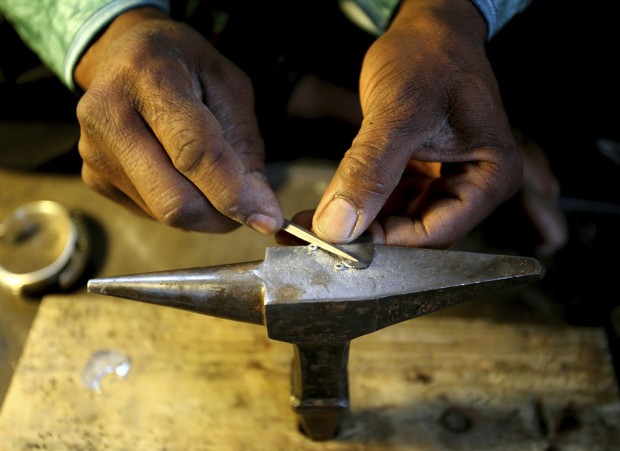
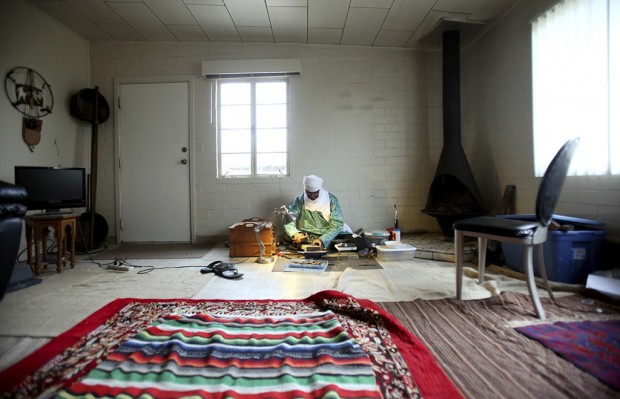
In his sparsely furnished home, Albaka has spent months preparing his work, sometimes focusing on one item for several days.
People are also reading…
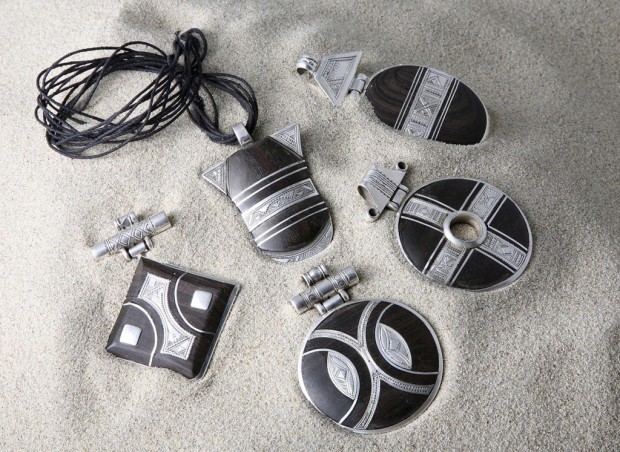
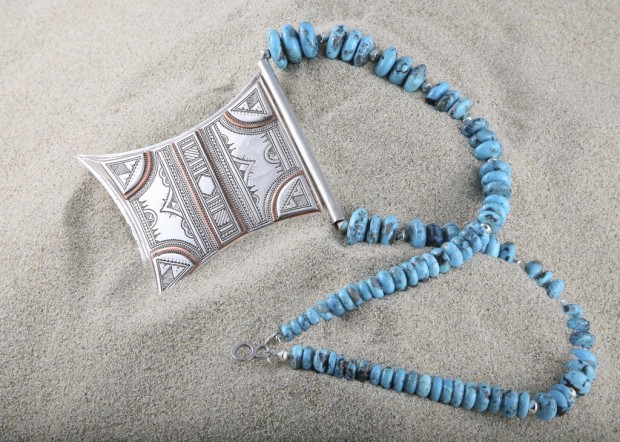
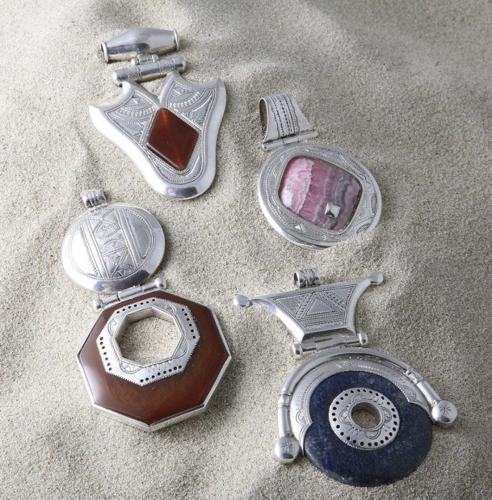
Each earring, each necklace, each ring is made of carefully crafted silver. Albaka's engravings are sometimes subtle, sometimes bold with inlays that include ebony, semiprecious stones and brass.
•••
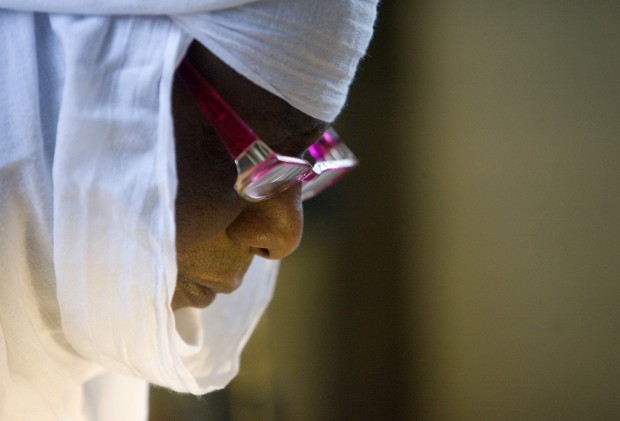
Albaka is a Tuareg tribesman whose family traveled by camel in the Sahara Desert to trade and to find markets and grazing land for their goats, donkeys and camels.
A married father with seven children, he first thought of coming to the United States after befriending an American Embassy worker and some Peace Corps volunteers in his homeland.
His new American friends and longtime customers would gather to look over his unique creations and sip the sweetened tea Albaka continues to offer here in Tucson.
"Everybody would come to my shop and drink tea. They said, 'Why not sell your jewelry in America?' " he said.
In 1992, Albaka received some assistance from an American friend and visited Washington, D.C. He sold some of his jewelry there.
Eventually, he was able to secure a work visa and lived in San Francisco and New Orleans before settling in Tucson.
"I like Tucson because it's just like Niger," he said, referring to the climate.
Albaka also sells his work at the United Nations Center in Tucson and received an award for excellence from the United Nations Educational, Scientific and Cultural Organization.
Albaka, 53, supports his wife and children back in Africa, as well as the wife and children of his brother, who is deceased.
He misses Niger and hasn't been home for more than two years, a trip he made after his mother died.
Albaka learned to make jewelry from his father and grandfather, a tradition he treasures and would like to see continue. His dream is to build an artisan school in Niger and teach his trade to children.
"This is our traditional art, and I don't want the tradition to go," he said.
•••
Mamadou Bah has had a tent at the African Art Village for more than a decade now, offering telephone-wire baskets, oil drums from Haiti and African folk art.
"I used to do shows all over the country, but these last few years, I just do the Tucson Gem Show," said Bah, who lives in New Mexico. He owns a store called Nomades in Albuquerque and runs a flea market in Santa Fe.
He first heard of the African Village while living in San Francisco, around 2000, which is roughly when he met Albaka.
The two became fast friends. Like Albaka, Bah is from a nomadic tribe, the Fulani, in Guinea.
His last time home was in 2005, when his father died. Bah said he can't go now because of political turmoil.
"It's heartbreaking. It's all about family, living as a nomad," he said. "I'm the only boy, and my dad passed away. My mother lives alone in the village, and I would like to visit her every year for at least two weeks."
What Bah cherishes about the African Art Village are the friendships he's made. He said many clients come back to see him each year.
"There are retired people who save their money and come in to buy things and help you," he said. "It's about the Tucson people. That's why I do it every year."
•••
Retired Tucson anthropologist Karen Seger visits the African Art Village every year. She said it's a chance to "immerse yourself in a completely different culture."
"If you're interested in Africa and African art and customs, you can learn a lot," said Seger, a friend of Albaka and Bah.
Charlotte Mack and her husband, Joseph, both enjoy going to the African Village and decided to help in 2001 when they heard the merchants were looking for a permanent location.
Mack now coordinates the event.
"We have the same vendors who come every year, and then, when I have new ones who come in, I try to find a spot for them," said Mack, who works in the health office at the Arizona State Schools for the Deaf and the Blind.
Mack said she finds it impossible to get through the whole market in one day. She tours the tents a few times before selecting her treasures.
Among her favorites are shea butter and black soap.
"I never know what they're going to bring," she said. "I sit around waiting like a kid at Christmas."
If you go
• What: African Art Village.
• When: Open 8 a.m. to 5 p.m. through Sunday, Feb. 12.
• Where: 1134 S. Farmington Road.
• Admission: Free.
Did you know?
• Tuareg is an Arabic term meaning "abandoned by God." The Tuaregs call themselves "Imohag," which means "free men." The language of the Tuareg is Tamachek and their script is known as Tifinagh, which is thought to be from ancient Libya.
• No one knows the true origins of the Tuareg people or when they arrived in the Sahara Desert, although they are believed to be of Berber descent.
• One of the most notable attributes of the Tuareg is an indigo veil that is worn by the men but not by the women. This tradition brought about the name "The Blue Men of the Sahara" or "Men of the Veil."
• Most Tuaregs follow Islam to some degree, but they have also maintained many pre-Islamic traditions.
- Information courtesy of the Bradshaw Foundation
Contact reporter Patty Machelor at 806-7754 or pmachelor@azstarnet.com


