

Being alive is underrated.
It can seem pretty simple, all told: Breathe in, breathe out. Walk around. Pay bills. It's been done for centuries, by billions of people - so how special can it be?
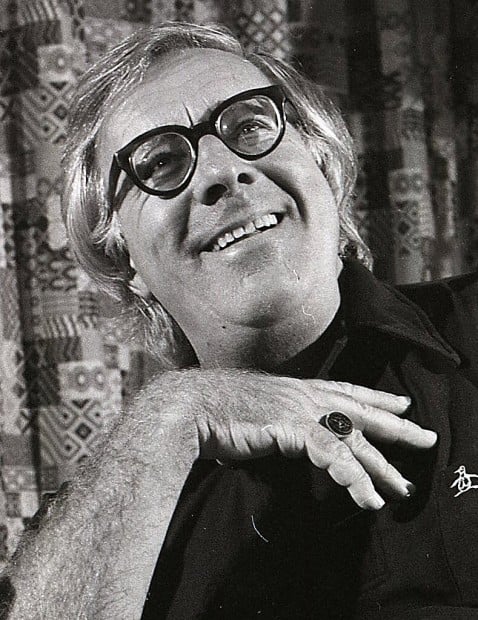
But then you hear Ray Bradbury talk about being alive and suddenly you understand: Life is as thrilling, as risky, as wild and as wonderful as a ride on a rocket ship. Don't waste a second of it. And for heaven's sake, don't be jaded and cynical about it. That's like dumping a diamond down a garbage disposal.
Bradbury's ferocious love of life comes roaring out of "Listen to the Echoes: The Ray Bradbury Interviews" (Stop Smiling/Melville House). It is compiled by Chicago author Sam Weller, who follows up on his superb 2005 biography of Bradbury with this surprising, inspiring book.
It's filled with passion and vigor and insight from Bradbury, the native of Waukegan, Ill., who went on to become a major American artist, the man who wrote "The Martian Chronicles" (1950), "Fahrenheit 451" (1953), "Dandelion Wine" (1957) and so many other works.
People are also reading…
"All my life I've been running through the fields and picking up bright objects. I turn it over and say, 'Hey, there's a story,' " Bradbury says in one of the interviews in "Listen to the Echoes." Later he declares, "I'm interested in having fun with ideas, throwing them up in the air like confetti and then running under them."
He has possessed a madcap enthusiasm since childhood, when he'd zip, he says, from Waukegan to downtown Chicago on roller skates every Saturday night to pick up a Sunday Chicago Tribune so he could read the comics.
Bradbury is sometimes dismissed as merely a science-fiction writer, a spinner of yarns for kids, but as Weller reminds us in his incisive introductions to each section of "Listen to the Echoes," Bradbury's range is remarkable. He has excelled in screenplays, essays, novels, short stories, plays, poems, TV scripts, building designs. The themes of his stories have become our modern myths.
The author has maintained a ravenous appetite for life - and work.
"I get up every morning not knowing what I'm going to do," Bradbury says in the book. "And all these voices talk and when they come up with a good metaphor, then I jump out of bed and run and trap them before they're gone. So that's the whole secret: to do things that excite you."
The conversations were recorded between 2000 and 2010 on a series of Radio Shack microcassette recorders during his visits to Bradbury's home in Los Angeles, Weller says. The friendship between Weller, who teaches creative writing at Columbia College Chicago, and Bradbury began when Weller was hired by the Tribune to profile the author.
The article was expanded into the biography, and now the biography has been supplemented by "Listen to the Echoes."
"I had mountains of transcriptions from interviews I'd done for the biography that I'd barely used," says Weller. "I couldn't get all of his philosophies into the biography. There were anecdotes that were just so beautiful."
Those anecdotes cover Bradbury's life from his days as an aspiring young writer in Los Angeles, where his life always seemed to be sprinkled with the fairy dust of serendipity: He ran into Greta Garbo - literally - and bumped into Walt Disney.
Once Bradbury became famous, the stars would brag about bumping into him.
Weller organized "Listen to the Echoes" with a deft hand, grouping them into sections such as "Childhood," "Faith," "Politics" and "Sexuality." Weller's questions are simple but imaginative and effective; he doesn't get in the way of the man you've come to listen to.
The result is a book that's feisty and that charges full-speed ahead, like Bradbury himself.
"My life has been a fight against death," Bradbury tells Weller. "I finish a story, go to the mailbox, drop it in and say, 'OK, Death, I'm ahead of you.' "


