Tucsonans will soon be able to explore Asia through some of the continent's iconic animals without ever leaving the city.
Tucson's Reid Park Zoo is set to open its long-awaited expansion, Pathway to Asia, on Friday.
The $50 million project, started in 2019, will include a new Tropical Discovery Center, an aviary and more than 30 new species.

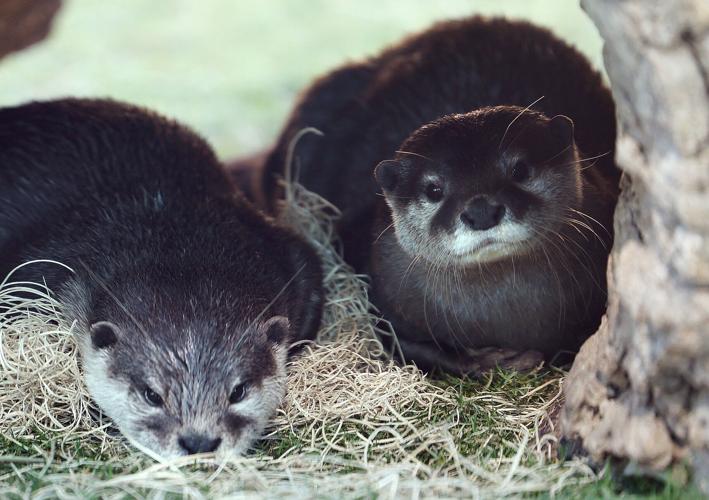
Asian small-clawed otters cuddle in their new habitat at Reid Park Zoo's new Pathways to Asia expansion, which opens Friday.
"There's been a lot of excitement,” said Chelo Grubb, zoo spokesman. “It's a long time coming.”
The 4.5-acre expansion includes several new habitats for close to 100 new residents, including sand cats, Muntjacs, red pandas and two Malayan tigers.
“The tiger habitat is kind of the reason we have Pathway to Asia in the first place,” Grubb said. “Next door is our wild dog habitat, and that used to be our tiger habitat, and it started with Nancy having a desire to give tigers a bigger space, a better habitat. So we're really proud of this.”
People are also reading…
Malayan tigers are critically endangered, and Grubb said the zoo’s two striped additions, Maya and Berani, will hopefully be an important part of their species’ conservation.
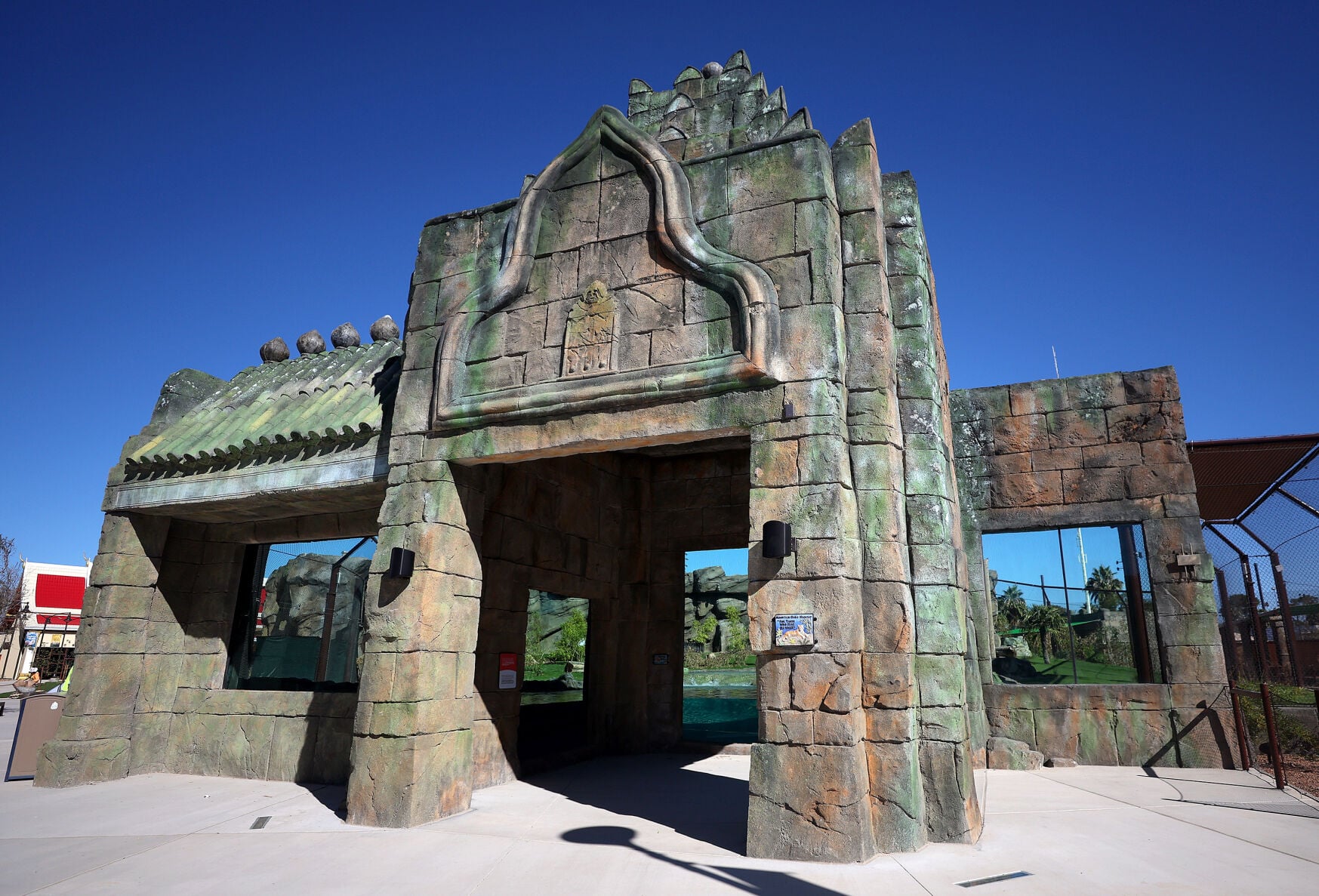
The stone architecture of the new habitats in the expansion are inspired by specific buildings in Cambodia and Thailand, zoo officials say.
“There's an estimated 150 left in the wild. So we're really excited to have them here,” Grubb said. “One thing that's really cool about this habitat that's an improvement over our last one, is that there are two habitats. That means the tigers won't be able to see each other unless they are in the same space, and that's important for tiger breeding.”
To help the tigers transition to their new environment, Megan Keller, lead keeper for the zoo’s large carnivore program, traveled to the Jacksonville Zoo and Botanical Gardens to meet Maya ahead of her arrival.
“I got to shadow their tiger team for two days. They showed me what their husbandry and their routine looked like for Maya, what her habitat spaces looked like, what her favorite toys enrichment and habitat places were,” she said. “She tends to be a bit more of a nervous, anxious animal, and requires a little bit more relationship building and trust when it comes to new people and faces. So this was actually their request- to send someone to come visit her and try to build a relationship with her, so that way when she did transition to Tucson, she would have a friendly face.”

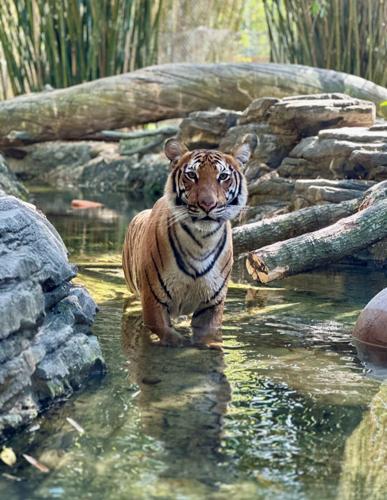
Maya, Reid Park Zoo's new female tiger, stands in water in her new habitat.
So far, Keller said Maya seems to be adjusting well to her new habitat.
“This is the biggest thing she's ever done in her life so far, so as you can expect, it can be a little bit new and scary for animals, or they can be a little bit nervous. We definitely saw a little bit of that at the beginning, but she is getting braver and braver every day,” she said. “She's been a lot more confident being around new keepers and new people on the team, and she is also getting more confident exploring her habitat and going out and being out visible for guests as we start doing our soft openings.”
Keller said that despite being a little shy, Maya also has a playful side.

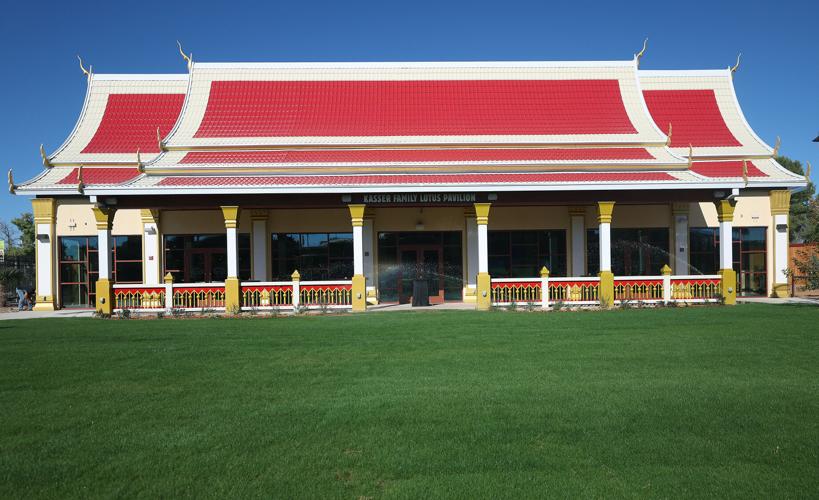
The Kasser Family Lotus Pavilion is part of the new Pathways to Asia exhibit at the Reid Park Zoo.
“She really loves to swim when she is in the mood for it, and she also really likes to stalk and pounce at guests,” Keller said.
Luckily, the new tiger enclosures at the zoo feature pools with underwater viewing areas, so visitors can watch the big cats go for a swim. The tigers will also have a large indoor area behind the scenes of the habitat.
The stone architecture of the new habitats in the expansion is inspired by specific buildings in Cambodia and Thailand, Grubb said. That includes the new Tropical Discovery Center, which houses fruit bats, tortoises, snakes, lizards and a Komodo dragon.
“We're really excited about the space because we haven't had a dedicated reptile space before,” Grubb said. “We do have some snakes and other reptiles in our conservation learning center, but this has a little bit more and a little bit more focus.”
Inside, guests can find emerald skinks, a black monitor lizard, and the largest reptile resident — their new reticulated python.

Kluge
“She's 18 feet long, which is as tall as our giraffe,” Grubb said. “It took four or five people to carry her.”-
“I know that not everybody's a fan of snakes and bats and so forth,” said Nancy Kluge, the zoo’s president and CEO. “But I feel like if you get to know them and you see their faces, you see how amazing they are, and you hear about the things that they do, I think that can change people's minds so that they care about them and want to protect them, and that's that's my biggest hope.”
“It's amazing. I think everyone has done such a good job on it, and I’m so proud of our team,” said Kluge about the overall expansion. “It's around a 20% increase in our animal collection, and a 20% increase in the land, so it's really significant to the zoo and to the animals to be able to tell their story. Which of course is why they're here.”

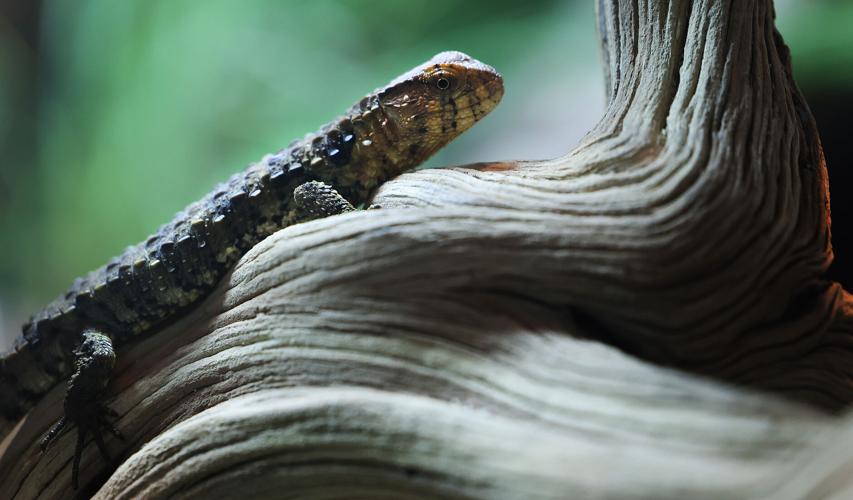
A Chinese crocodile lizard hangs out in its habitat inside Reid Park Zoo's new Tropical Discovery Center.
For the next couple of weeks, a temporary timed-entry system will be in effect to keep initial crowds down for the enjoyment of guests and for the animals as they settle into their new homes, Kluge said.
While Pathway to Asia officially opens on Friday, a few of the animals will be a little late to the party. The gibbons and red pandas might be arriving in the next couple of weeks.
“We don't have an exact date,” Grubb said. “It all depends on what the animal needs and also weather patterns.”