The rise in faith-based films can be traced to social media, artificial intelligence and the tech world, says Mena Massoud, the star and producer of “Daniel and the Fiery Furnace.”
“You can lose yourself in all that,” he explains. “These films are a way to help people get grounded again and back to a place of faith, back to a place of community.
“We can spend hours on our phones scrolling without making contact with another human being.”

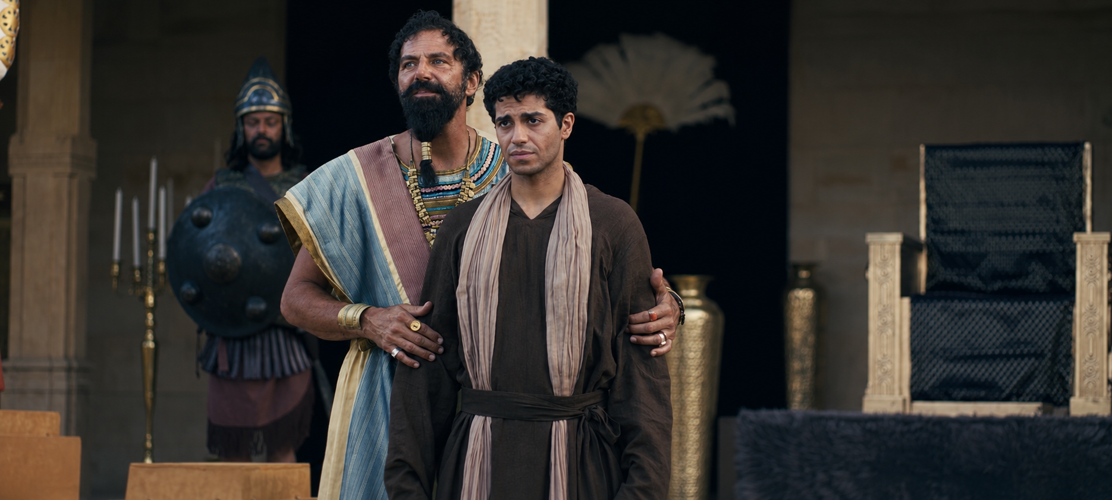
Elijah Alexander plays King Nebuchadnezzar and Mena Massoud plays Daniel in "Daniel and the Fiery Furnace."
Much of the current flurry of interest can be traced to “The Chosen,” a Christian-based historical series which covers the life of Jesus. Begun as a crowdfunding venture, it segued into theaters, then found a wider audience on multiple streaming platforms. Now, it’s on Amazon Prime Video and growing. More than 280 million have watched it worldwide. Season Six will premiere later this year.
People are also reading…
Elijah Alexander, who appeared in four of the seasons, found it crucial to his own spiritual journey. While playing Roman investigator Atticus Aemilius, he was baptized in the production’s lake that doubles as the Sea of Galilee.
“The Chosen,” and now, “Daniel,” in which he plays King Nebuchadnezzar, have had a profound effect. “This has been like the culmination of my life’s work, because I get to bring all the experience in telling the stories,” he says. “It’s a dream come true.”
Massoud had roles in church plays as a child but hadn’t portrayed a Biblical figure until “Daniel.” He says the exposure could resonate in the mainstream universe. “It’s been a blessing and a ride.”

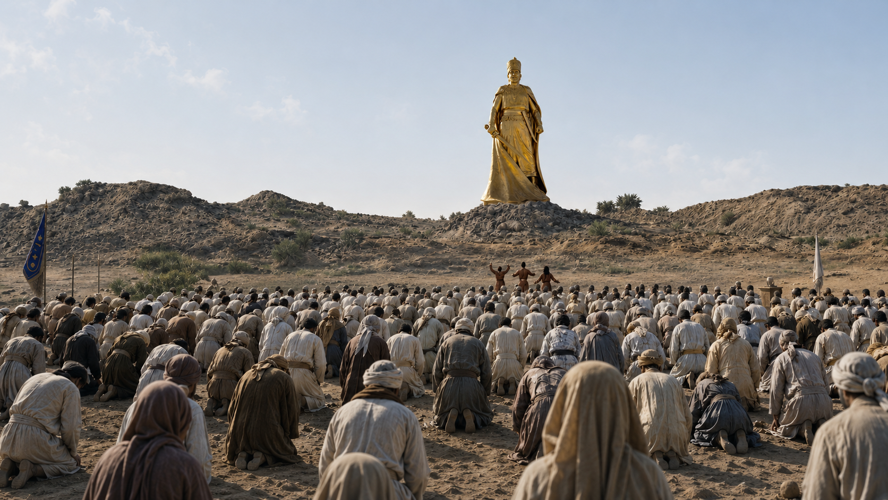
A scene from "Daniel and the Fiery Furnace."
While he had plenty of activity as Aladdin in the live-action version of the animated film, he knows there are effects that can make the impact even greater. “There were no real monkeys in ‘Aladdin.’ There are no real lions in ‘Daniel.’ None of it is real but the puppeteers come in and lay the foundation.”
Alexander says the films take advantage of his classical training. When he does Shakespeare or Shaw, there’s a weight to the language. It’s the same with Bible-based films. “It’s language that requires you to make it your own,” he adds. “It’s different from contemporary movies where they’re image-based. It needs to be treated differently…and it’s exciting to do that.”
In “Daniel,” he quotes Moses and that helps inform Nebuchadnezzar. “The king fashions himself a prophet, a man of God, so he quotes from the great. The fact that this pagan king has read the five books of Moses does many things in terms of telling us a little bit about the character.”
Massoud says bringing Biblical stories to theaters and television could put an end to the isolation many people feel.
Grammy winner Michael W. Smith, who’s executive producer of “Daniel,” sees the revolution occurring. “There’s a hunger for it,” he says of faith-based films. “We need it.”

“Daniel and the Fiery Furnace” opens in theaters Sept. 18.