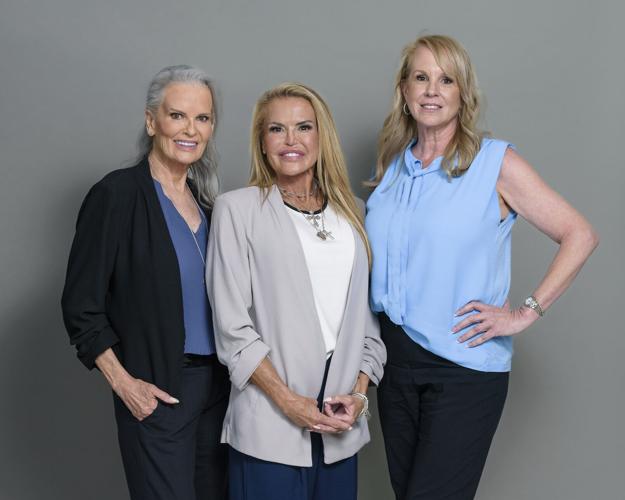

The sisters of Nicole Brown Simpson hope a new documentary on her life, “The Life & Murder of Nicole Brown Simpson," will explore how she lived, and not just how she died.
In the familiar images that circulated after her June 1994 death, Nicole Brown Simpson appears frozen in place.
She's a statuesque blonde with a tense smile, silently escorting famous husband O.J. Simpson. She’s the breezy California beauty behind the wheel of her white Ferrari. And she’s the somber woman, with telling bruises and a black eye, in the stark Polaroids locked away in a bank vault.
Thirty years later, Nicole’s three sisters want her remembered for more than those static images or the violent way she died. They fear the vibrant person they knew has been lost in the chaos of Simpson’s murder trial, the questions it raised about race in America and the headlines spawned by his recent death.
People are also reading…
“It's seeing her move. It's hearing her talk, seeing her,” youngest sister Tanya Brown said of the joy she felt watching video clips of Nicole in a new Lifetime documentary. “(She's) someone who just was very warm, very warm-hearted and quirky.”
“Daddy’s taking movies again,” coos Nicole, who met Simpson when she was 18, as she cuddles her infant child on the beach. The home movie included in “The Life & Murder of Nicole Brown Simpson,” which aired over the weekend, echoes one of her as a child with her own mother. The two-part documentary is available to stream on the Lifetime app or can be purchased or rented online at Apple TV and Prime Video.
“She wanted to be like her mother,” said Melissa G. Moore, the executive producer. “Nicole wanted to be home, being a mother and creating a beautiful home.”
The innocence of the mother-and-child beach scene contrasts with friends’ memories of a cloud descending over the couple’s Laguna Beach home whenever Simpson arrived and another of him knocking her down in the water.

Denise Brown, from left, Dominique Brown, and Tanya Brown gather May 29 in New York to promote the docuseries "The Life & Murder of Nicole Brown Simpson."
“Nicole was a very, very good hider of her domestic violence. She pushed everything under the rug and then would change the subject. And I think that was just all to protect herself and to protect everyone that she loved and her family,” Dominique Brown said.
Along with the Browns, the filmmakers spoke to friends both famous and infamous, including Simpson houseguest Brian “Kato” Kaelin, whose laid-back demeanor on the witness stand at the 1995 trial made him a household name; Faye Resnick, who wrote a tell-all book; and Kris Jenner, whose ex-husband Robert Kardashian, to her dismay, joined Simpson’s defense team.

“The Life & Murder of Nicole Brown Simpson" is available to stream on the Lifetime app or can be purchased or rented online at Apple TV and Prime Video.
Nicole’s two children, who have stayed out of the public eye and seemingly remained close to Simpson until his death last month, did not take part. They were both busy starting families of their own, Moore said.
But the sisters felt it was finally time to revisit Nicole’s life and legacy. They have grieved in different ways, and sometimes grew apart. Their parents have died.
Oldest sister Denise Brown, who gave wrenching trial testimony, never hesitated to pin the stabbing deaths of their sister and Ronald Goldman on Simpson, and became a vocal advocate for domestic violence victims. Although she had known the marriage was volatile, she did not think of Nicole at the time as a battered woman, even after Simpson was charged with assault on New Year’s Eve 1989. Nicole, after a week away, chose to return home afterward.
“She said, ‘I don’t want to ruin my children’s father’s life,’” Denise Brown recalled.
Dominique Brown focused on the couple's young children, Sydney and Justin, after Nicole's death. For more than a year, as Simpson sat in jail, she helped her aging parents raise them, along with her own son. Simpson won back custody after he was acquitted, later moving his children to Florida. Dominique said she remains close with the children today — and still doesn't know quite what to think.
Tanya Brown, a decade younger than Nicole, has felt waves of guilt over Nicole's death. At the 10-year mark, she tried to take her own life. In treatment, she thought: “She had a perfect opportunity to share something with me, to share her tumultuous relationship, you know? And she never did.”
All three believe that Nicole, like many victims, downplayed the abuse.
They made a glamorous couple, and Simpson found more fame as an actor and TV pitchman. Nicole loved hosting people at his Los Angeles mansion, where they married in 1985. But those good times were interrupted by bouts of violence, according to the photos and diaries Nicole hid in a safe deposit box, and the repeated 911 calls she made seeking help, especially after they separated in the early 1990s.
At the time, domestic violence was largely deemed a private matter. Nicole's death helped bring it out of the shadows.
Not long after Nicole died, then-Sen. Joe Biden invited Denise Brown to Washington to lobby support for the Violence Against Women Act. It passed that fall, helping to fund shelters, hotlines and other services ever since.
Nicole herself called a helpline five days before she was killed, as Simpson’s stalking intensified.
“This was a woman who couldn’t share the hell that she was going through with the people she loved. Not because she didn’t trust them, but because she wanted to protect them,” Moore said. “It must have been a very lonely experience for Nicole.”
This story includes discussion of suicide and domestic violence. If you or someone you know needs help, the national suicide and crisis lifeline in the U.S. is available by calling or texting 988. There is also an online chat at 988lifeline.org. For the National Domestic Violence Hotline, call (800) 799-7233 in the U.S.
12 signs that you or someone you love might be at risk of suicide
Recognizing the warning signs

More than half of those who died by suicide between 1999 and 2016 did not have a known diagnosed mental health condition, according to a June 7, 2018 CDC report. That means that any warning signs could be subtle at best.
But at the same time, seven out of ten people who survive suicide attempts ultimately never try to kill themselves again, the Harvard School of Public Health reports. This suggests both that suicide is not the answer and that prevention efforts pay off in spades.
With that in mind, here are 12 suicide warning signs to watch for in your friends, your loved ones — and yourself.
1. Feeling like a burden

"When people are not able to perform in a role, or are unable to fulfill a purpose, it’s not just that they feel their life is of no value. They feel that they are a burden to others," Sane.org.uk reports.
2. Being isolated

"The subjective feeling of loneliness increases risk of death by 26 percent," Time Magazine reports.
3. Increased anxiety

"Among individuals reporting a lifetime history of suicide attempt, over 70 percent had an anxiety disorder," the National Institutes of Health reports.
4. Feeling trapped or in unbearable pain

"Often suicidal people are experiencing intolerable emotional pain, which they believe to be unrelenting," according to The Crisis Intervention and Suicide Prevention Centre of British Columbia. "They often feel hopeless and trapped. By helping them to recognize and explore alternatives to dying, you are planting the seeds of hope that things can improve."
5. Increased substance use

"Research has shown that the strongest predictor (link is external) of suicide is alcoholism, not a psychiatric diagnosis," Psychology Today reports.
6. Looking for a way to access lethal means

"Many suicide attempts take place during a short-term crisis, so it is important to consider a person's access to lethal means during these periods of increased risk," the Suicide Prevention Resource Center reports. For example, loved ones can limit a person's access to medications and attempt to store firearms with law enforcement.
7. Increased anger or rage

"An expression of profound distress and rage ... often emphasises the loss of control that the patient is experiencing at that point," Joy Hibbins writes on Huffpost.co.uk. "This fury and loss of control should be of great concern to any clinician who is focusing on trying to ensure that the patient does not harm themself. An intense angry outburst can greatly increase the risk of an imminent suicide attempt."
8. Extreme mood swings

"Long-lasting sadness and mood swings can be symptoms of depression, a major risk factor for suicide," according to ClevelandClinic.org.
9. Expressing hopelessness

"There always is hope. But you may not feel that hope until you receive effective treatment for any disorder that you might have," writes Kevin Caruso for Suicide.org.
10. Sleeping too little or too much

"Teenagers who thought about or attempted suicide were more likely to have suffered sleep disorders in earlier years," researchers suggested in one Reuters report.
11. Talking or posting about wanting to die

Many social media sites, such as Facebook, include pages where you can report suicidal content to get help.
12. Making plans for suicide

This could include giving away significant possessions, making a will, writing a suicide note or clearing up loose ends, The Crisis Intervention and Suicide Prevention Centre of British Columbia reports.
Get help

If you or someone you know is having suicidal thoughts, help is less than a moment away. Call 1-800-273-TALK (8255), text 741741 or visit suicidepreventionlifeline.org for free, confidential support 24 hours a day, seven days a week.