For 25 years, a federal rule kept new roads and most commercial logging out of some of the wildest corners of America’s national forests, including more than 152,000 acres across western North Carolina’s Pisgah and Nantahala national forests.
Now, that protection could disappear nationwide.
The U.S. Department of Agriculture, through the U.S. Forest Service, proposed to rescind the 2001 Roadless Area Conservation Rule, removing nationwide restrictions on road construction, road reconstruction and most timber harvesting across about 45 million acres of National Forest System land.

The U.S. Department of Agriculture proposed rescinding the 2001 Roadless Rule that helped protect National Forest System lands from road construction and other development.
The Trump administration says eliminating the rule would give local Forest Service managers more flexibility to reduce wildfire risk, manage timber and respond to changing conditions.
Conservation advocates say it could dismantle a national safeguard for some of the country’s largest remaining blocks of relatively undisturbed forest, threatening wildlife habitat, drinking water, recreation and an already strained Forest Service road system.
People are also reading…
In North Carolina's mountains, where Tropical Storm Helene toppled trees and destroyed roads, leaving behind a more complicated wildfire threat, the proposal added urgency to a long-running question over how much development should be allowed in the region’s public lands.
“What a lot of people don't understand about the Appalachian Trail is that it is not inherently protected,” said Brendan Mysliwiec, director of federal policy for the Appalachian Trail Conservancy.
The Appalachian Trail stretches almost 2,200 miles from Georgia to Maine and crosses eight national forests. Mysliwiec said protections for the trail were assembled through forest plans, agreements between agencies and individual management areas.
The Roadless Rule supplied another layer of protection by establishing nationwide restrictions in inventoried roadless areas.

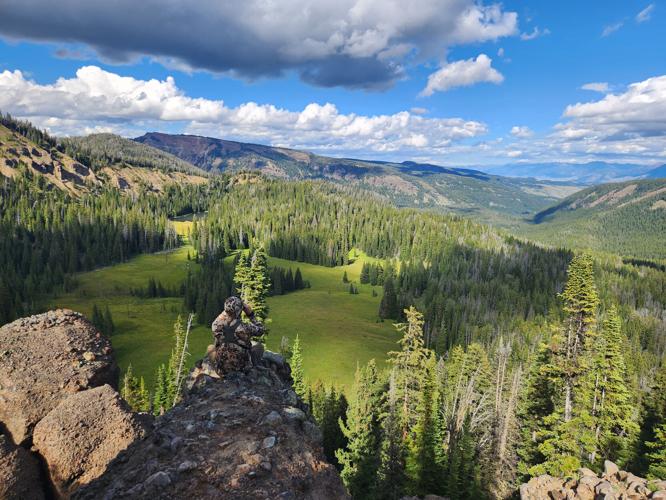
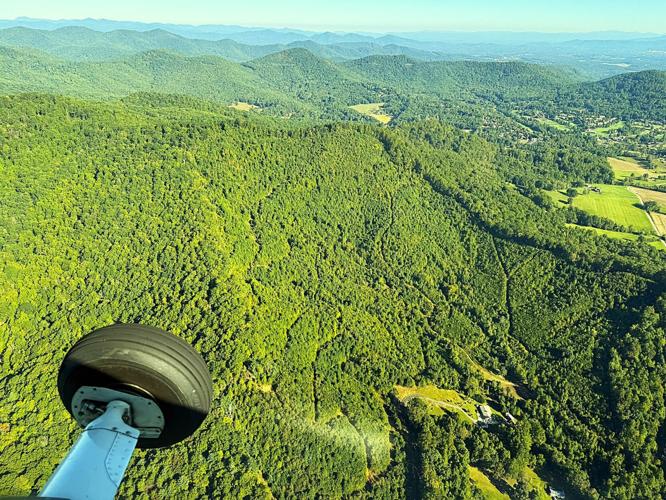
A Forest Service assessment identified 152,488 acres of inventoried roadless areas in Western North Carolina, like those seen here in the Pisgah National Forest.
New uncertainty
If the rule is repealed, projects still would have to comply with individual forest plans, the National Environmental Policy Act and other federal laws.
But the change would leave more decisions to individual forests and project-level reviews.
“We could see within the viewshed of the Appalachian Trail additional use of the forest as a multi-use entity,” Mysliwiec said. “There may be increased timbering. There may be increased road building.”
The effects, he said, would not necessarily be on the narrow treadway hikers walk. They could instead appear farther across a mountainside in the form of timber harvests, roads, noise or changes to wildlife habitat that alter what the Appalachian Trail Conservancy calls the “AT experience” — the natural, scenic, cultural and historic character surrounding the trail.
It also could mean more work for Forest Service employees, conservation organizations and volunteers who would have to analyze individual projects.
“We're already working with fewer people in the (Forest Service) agency than we are used to, and that the public is used to,” Mysliwiec said.
For the Nantahala and Pisgah national forests, a Forest Service assessment identified 152,488 acres of inventoried roadless areas. They include places such as Snowbird, South Mills River, Woods Mountain, Wesser Bald and Tusquitee Bald.
The Citizen Times previously reported on the administration’s latest move toward rescinding the rule, including potential effects around Craggy Mountain, Mount Mitchell, Graveyard Fields and other WNC landscapes.
Those areas are part of a much larger national system created through one of the most expansive public rulemaking processes the Forest Service ever undertook.
When the Roadless Rule was adopted in 2001, the agency held hundreds of public meetings and received about 1.6 million comments. About 95% of the roughly 1.6 million comments supported strong roadless protections, according to contemporaneous material preserved in the Forest Service’s rulemaking records.
A new study reveals that fires near where human communities meet wildlands, called wildland-urban interface fires, produce disproportionately worse health impacts worldwide. Though these fires emit less smoke overall, their proximity to people causes more premature deaths linked to fine particulate matter and ozone exposure. Disclosure: This video contains stock footage and content created or enhanced using AI-assisted tools. WooGlobe Ref : WGA702999
Wildfire risk
Keats Conley, senior policy and planning specialist for Defenders of Wildlife, said the administration’s wildfire argument became a central point in the debate because the rule does not prohibit all forest management.
USDA and the Forest Service argue existing restrictions can make it harder for managers to respond to wildfires, insects, disease and other changing forest conditions.
Agriculture Secretary Brooke Rollins characterized the policy as an outdated, one-size-fits-all restriction, saying local Forest Service officials should have greater discretion over how forests are managed.
The administration also tied rescission to efforts to increase domestic timber production and reduce federal regulation.
That argument carries particular weight in WNC after Helene left huge amounts of downed timber across the region. In spring 2025, wildfires burned across the region as officials warned Helene debris created abundant fuel.
Opponents say the choice is not simply between retaining the Roadless Rule and leaving forests untouched; the rule already allows some vegetation management and hazardous-fuel reduction.
A Defenders of Wildlife analysis of Forest Service data found almost 2 million acres of roadless lands nationwide received treatments intended to reduce fire risk since the rule took effect.
The organization’s analysis also cited previous Forest Service research finding the absence of roads did not prevent fuel-reduction work in inventoried roadless areas and roads themselves were relatively neutral in determining long-term wildfire occurrence.
The Forest Service, meanwhile, said more than 40% of inventoried roadless areas, particularly in the West, have high or very high wildfire hazard potential and argues local managers need more flexibility to respond.

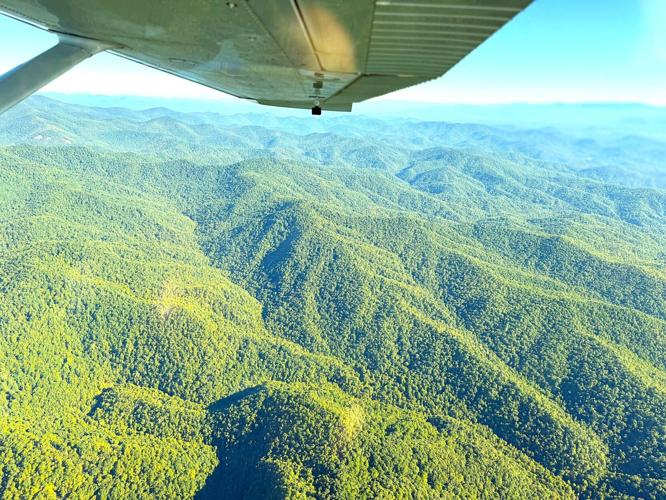
A wooded slope just west of Asheville Regional Airport, off McElrath Road, still bears the scars of logging decades ago.
Wildlife concerns
The debate extends beyond fire. Conley said roadless areas provide unusually large and connected blocks of habitat at a time when development elsewhere continues fragmenting forests.
“A primary cause of species impairment in our country is habitat loss,” Conley told the Citizen Times on Oct. 1. “We can't just carve up places in our national forests with roads and industrial logging without impacting those species.”
Helene itself demonstrated how quickly habitat can change. USA Today reporting after the storm found flooding, landslides and wind had dramatically altered wildlife habitat and aquatic ecosystems across WNC, with some areas potentially requiring decades to recover.
Roadless areas comprise only a small fraction of the land in the lower 48 states but overlap habitat for hundreds of species listed, proposed or considered vulnerable under federal conservation laws.
They can also connect wilderness areas and other protected lands, giving animals larger contiguous areas in which to move.
“From a conservation biology perspective, the bigger the protected area, the more connected the landscape, the better it is for species,” Conley said. “That's exactly what the Roadless Area Conservation Rule does.”

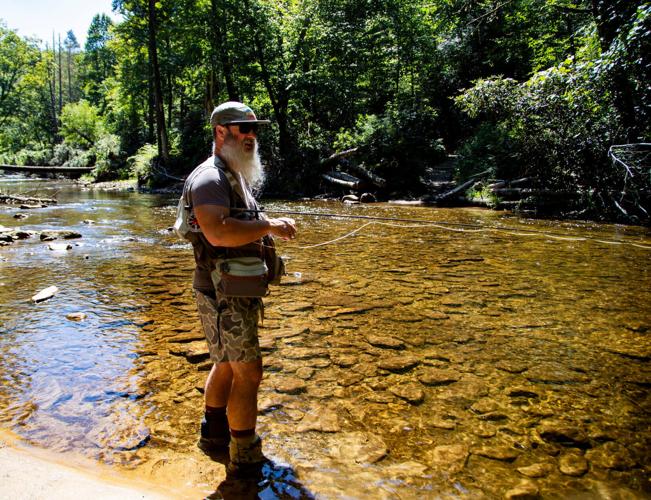
Pisgah Outdoors owner and operator Heath Cartee fly fishes Aug. 24 in the South Mills River in the Turkey Pen area of Pisgah National Forest. Cartee said sediment from road construction and logging could threaten fish habitat if protections under the Roadless Rule are rescinded.
Water sources, costs
National forests contain headwaters that supply communities around the country, while roads can contribute sediment to streams when they erode or fail.
That concern is particularly relevant in mountain streams altered by Helene, where Citizen Times documented heavy sediment loads and severe damage to aquatic habitat.
Defenders of Wildlife estimates roadless areas contain all or portions of 354 municipal watersheds supplying drinking water to millions of Americans.
There is also the question of who will pay for new roads.
The Forest Service already oversees more than 370,000 miles of roads. A Defenders of Wildlife and WildEarth Guardians analysis estimated the agency faces about $9 billion in deferred road and bridge maintenance.
Conley said controlling the expansion of that road network was one reason the rule was adopted in the first place.
“They enacted the rule with the intention of trying to better maintain the existing road system rather than just continuing to stretch themselves thinner and thinner,” she said.

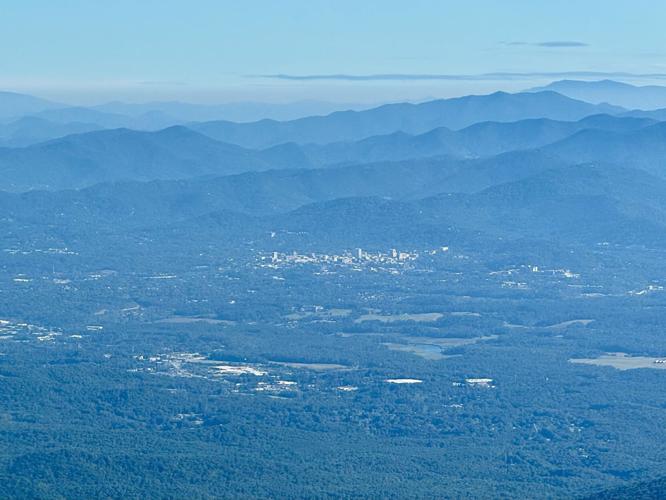
Asheville, North Carolina, is surrounded by lush woodlands that power the region's tourism economy.
Shift to local
USDA and the Forest Service argue that forest plans are capable of protecting water, wildlife, recreation, scenery and other resources without a nationwide prohibition.
Under the proposed rescission, individual forests could retain restrictions through their own land management plans. States, tribes and other interested entities could also petition USDA for geographically specific roadless protections.
The department says that system would allow decisions to reflect local ecological, economic and social conditions instead of being governed by a single national rule.
Opponents say that is precisely the approach the Roadless Rule was created to replace.
One of the Forest Service’s own justifications for adopting the rule was that roadless-area management became a major source of conflict and local forest planning did not always account for the national importance of those lands. Without the rule, protection again could become a forest-by-forest and project-by-project fight. Mysliwiec said that would consume time and money on all sides.
“Unfortunately, we're all just going to have to work a little bit harder,” he said.
The fight is not confined to the mountains in North Carolina's western reaches. USA Today Network documented concerns in national forests across the country, from California to Pennsylvania, as communities consider what rescission could mean for logging, wildfire management, habitat and access.

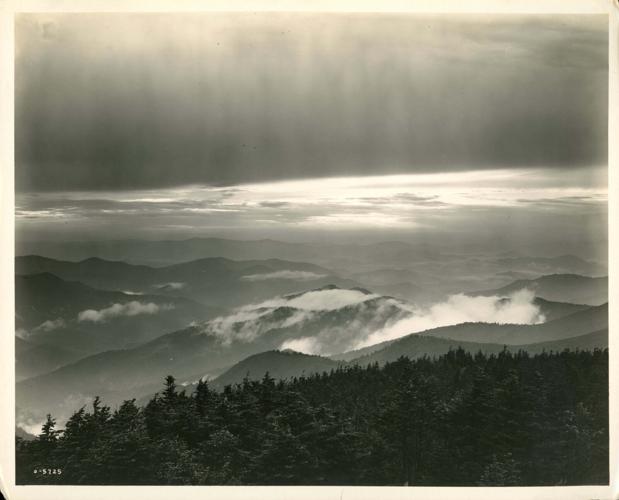
A George Masa photograph of a sunset viewed from Mount Mitchell northeast of Asheville, N.C.
Public opposition
The current proposal followed a 2025 public comment period, when the Forest Service received more than 625,000 submissions. Its draft environmental impact statement says about 99% were generally opposed to rescission of the rule.
Despite that, USDA proceeded with the proposed rule and draft environmental impact statement released Aug. 20.
Conley said public comments can still affect the final decision.
“That is the intent of the NEPA process,” she said. “The public is supposed to have a say in ensuring that the agency is making an informed decision and understanding the potential consequences of its action.”
After the current comment period closes, the Forest Service must review substantive issues raised by commenters and prepare a final environmental impact statement before USDA issues a final rule. Conley said the agency could still change course.
“I think it's really important for the public to know that they deserve to have a say in this process,” she said.
Mysliwiec expects the controversy to continue even after a final decision. Given the breadth of interests affected, he said he would be surprised if rescission did not eventually result in litigation.
“The reason that we drive bipartisan consensus on the (Appalachian Trail) and the reason that we strive to be a nonpartisan organization as much as possible is because cooperative management and making decisions together make them the longest-lasting decisions,” he said.
For now, however, the decision remains in the administrative process, and one of its last major opportunities for public input is rapidly closing.
The USDA extended the comment period from its original Sept. 21 deadline to Oct. 6. Comments on the Forest Service proposed rule, draft environmental impact statement and cost-benefit analysis can be submitted through Regulations.gov under docket FS-2025-0001. The window closes at 11:59 p.m. Eastern on Tuesday, Oct. 6.