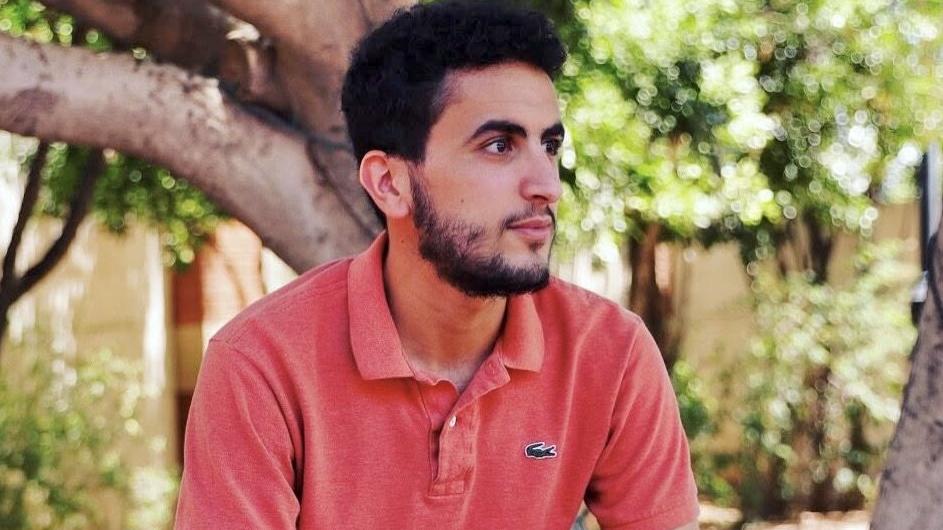
A federal judge has ordered the U.S. government to facilitate the return of a Phoenix man who the judge determined was "unlawfully" deported to Equatorial Guinea in April and has suffered "irreparable harm" since then.
Ahmed Soliman, 31, has been arbitrarily detained for more than five months and subject to beatings and threats since he was deported to the Central African nation without due process, the U.S. District Court of Arizona judge said in an order Tuesday calling for his return to the U.S.
The third-country deportation — in which Soliman was forcibly carried onto a plane, without notice or the opportunity to object — violated both U.S. law and Soliman's due process rights under the Constitution's Fifth Amendment, the judge's order said.
Citing the "irreparable" and ongoing harm to Soliman, the ruling orders that the U.S. Department of Homeland Security must "take all reasonable steps within their control" to facilitate Soliman's release from custody in Equatorial Guinea, including issuing travel documentation and arranging transportation to a U.S. port of entry, at DHS's expense.
People are also reading…
Upon reading the order, "We all frankly broke into tears of relief, and hope," said Dana Camilleri, senior attorney at Tucson-based Green Evans-Schroeder. The firm's defense team has been working for months to find legal recourse for Soliman, who is currently being held "incommunicado" at a jail in Equatorial Guinea, despite not having been charged with a crime.
Attorneys filed a civil complaint Sept. 15 in U.S. District Court in Arizona seeking relief for Soliman, four days after he was violently arrested at the hotel where he'd been imprisoned for months, along with dozens of other U.S. deportees, none of whom have ties to Equatorial Guinea.
Attorneys for the DHS did not dispute Soliman's account that ICE deported him without a fear screening, which allows immigrants to express their fear of persecution or torture in a particular country, nor did they dispute that he's experienced abuse in Equatorial Guinea, the judge's order said.
Citing news reports and lawyers' affidavits, District Judge John C. Hinderaker wrote in his final order: "The unrebutted record shows that, since his removal, (Soliman) has been confined under armed guard, assaulted, held at gunpoint, and, most recently, arrested, hooded, beaten, and held incommunicado, reportedly without food or water."
DHS and ICE officials did not immediately respond to the Star's request for comment on the order. The agency has 30 days to appeal the ruling.
The judge's order directs DHS to issue a status report every three days stating what DHS officials know about Soliman's current location and physical condition, as well as the steps DHS has taken, and will take, to facilitate his return.
Once home, Soliman would still face the possibility of being removed to another third country. Under the order, DHS is prohibited from deporting Soliman to another third country without first providing him "meaningful opportunity" to raise a fear claim before a neutral judge.

In this screenshot from a Sept. 5 video shared with the Arizona Daily Star, Ahmed Soliman, who grew up in Phoenix, is seen on his knees as a police officer aims a firearm at him, inside a the hotel in Equatorial Guinea where Soliman had been detained. This week a federal judge ordered Soliman returned to the U.S., citing "irreparable harm" following his "unlawful" deportation to the Central African nation.
Targeted for arrest
Soliman's lawyers say he was targeted for arrest by Equatorial Guinea officials due to his determination to speak out about the deteriorating, life-threatening conditions in which U.S. deportees are being held at a decommissioned hotel there.
Soliman, who grew up in Phoenix after his family fled Egypt when he was 4, has been detained without access to his legal counsel at an Equatorial Guinea jail since his Sept. 11 arrest. After Soliman was hospitalized last month, lawyers were unable to confirm his health status or diagnosis, only that he's since been returned to a jail cell.
Soliman's family in Arizona "have been left waiting, without any assurance that he is safe — or even still alive," said Tucson attorney Jesse Evans-Schroeder, one of Soliman's lawyers, in a Wednesday statement.
The Arizona Daily Star began reporting this summer on Soliman's case and his allegations of abuse at the decommissioned hotel where deportees are being held.
Attorneys said, faced with few legal options, news reports on Soliman's allegations were key in documenting the unlawful deportations and inhumane treatment in Equatorial Guinea. Judge Hinderaker cited news reports, including the Star's coverage, in his order.
"It's been invaluable and I think really conveyed to the judge what has been going on," Camilleri said.

Ahmed Soliman, pictured in Glendale in 2020, grew up in Phoenix after his family moved from Egypt to Arizona when he was 4. ICE deported him to Equatorial Guinea, a country he has no ties to, on April 28 without notice. On Oct. 6, a federal judge ordered him returned to the United States.
Deportees have been imprisoned at Hotel Bamy under armed guard and are routinely subjected to threats and violence at gunpoint, as armed men — who are often drunk — pressure them to agree to return to their home countries, according to several deportees, including Soliman, in interviews with the Star.
Like Soliman, the other deportees held at the hotel were granted protection against return to their home countries, after a U.S. immigration judge agreed they'd face torture or persecution there.
The government of Equatorial Guinea has not explained the basis for imprisoning the dozens of people deported there from the U.S.
Diplomatic assurances 'insufficient'
In a secretive agreement, the U.S. State Department gave Equatorial Guinea $7.5 million in exchange for receiving third-country deportees from the U.S.
DHS has claimed the required fear screenings aren't necessary in third-country removals if the country has provided "diplomatic assurances" to the State Department that deportees will be safe there.
Multiple judges, most recently in the First Circuit appeals court, have rejected DHS's argument in an ongoing class-action lawsuit on third-country removals known as DVD vs. DHS, saying the diplomatic assurances included in opaque third-country removal agreements were "insufficient" to ensure deportees' safety.
DHS must provide meaningful notice and an opportunity for a fear screening, the First Circuit court ruled in September. DHS has appealed the decision to the U.S. Supreme Court, which stayed the lower court's decision. The justices will hear the case in December.
The State Department has refused to provide its agreement with Equatorial Guinea to the Star. DHS attorneys wouldn't even provide the agreement to the federal judge in Soliman's habeas corpus petition earlier this year.
The habeas case was still pending in U.S. District Court when Soliman was deported in April.
Hinderaker was also the judge in Soliman's habeas case, which challenged the legality of his continued detention at ICE's Eloy Detention Center, so the judge was aware of Soliman's sudden deportation while the case was still pending, Camilleri said.
In Soliman's civil complaint, Hinderaker dismissed DHS's argument that the judge could not rule on the case while DVD vs. DHS was still pending before the Supreme Court. Hinderaker said the court can use its discretion to consider Soliman's claims, due to the extent of the harm he's endured.
"The exercise of discretion is particularly important here because the harm at issue — removal to a third country without due process, followed by detention, abuse, and incommunicado confinement in that country — is ongoing and, in the Court’s view, irreparable," Hinderaker wrote.
DHS attorneys also argued the agency can't redress Soliman’s injuries because he is in the custody of Equatorial Guinea, not the U.S. DHS claimed any court order "would intrude on the Executive’s conduct of foreign affairs, and that the Court may not second-guess the diplomatic assurances Equatorial Guinea provided," Hinderaker recounted in his order.
"The Court is not persuaded," Hinderaker said. Much of the relief sought by Soliman, such as transportation and admission to the U.S., "lies entirely within Defendants’ (DHS) control," he said.
'Breathtaking' courage
In speaking out publicly about the conditions he and others face in Equatorial Guinea, Soliman displayed "breathtaking courage," Tucson attorney Evans-Schroeder said in a statement.
Those conditions include "confinement, beatings, threats at gunpoint, and the fear and uncertainty of being stranded indefinitely under one of the world’s most repressive authoritarian regimes," Evans-Schroeder said. "Those dangers were hardly unforeseeable: Equatorial Guinea has a long-documented history of arbitrary detention, torture, and violence by security forces."
Soliman has emphasized "he was not speaking only for himself; he believed Americans needed to know what was happening to the people transferred as he was, in the name of the U.S. government," Evans-Schroeder said.
Soliman's family came to the U.S. legally, on a religious visa, when he was 4 years old. He later obtained lawful permanent residency, but he lost his legal status after causing a car accident while under the influence of fentanyl in 2021, he said.
Soliman said he'd developed substance abuse problems as he struggled to accept his identity as a gay man in his teens and 20s. After the car accident, he was sentenced to 2.5 years in prison in 2023, during which time he said he rehabilitated himself, confronting the "self-hatred" he said led to his addiction.
In October 2025, an immigration judge granted Soliman protection from removal to Egypt under the U.N.'s Convention Against Torture, or CAT, agreeing Soliman would face torture or death there due to his identity as a gay man and due to his family’s political activity there when he was a child.
Soliman faces similar risks in Equatorial Guinea, where homosexuality is de facto criminalized, and would have made that argument if granted a credible-fear interview before his removal, attorneys say.
He was transferred to ICE custody after completing his prison sentence. Despite the fact that he won protection against removal to Egypt, ICE continued to search for a third country to deport him to.
DHS could appeal
DHS declined to continue with oral arguments in the civil case, leading the judge to cancel arguments scheduled for Oct. 7 and issue his final order.
"I think the decision not to have oral arguments today was because they knew they'd lost in this phase," attorney Camilleri said Wednesday.
DHS still has 30 days to decide whether to appeal the decision.
To win an appeal, DHS would have to argue it would suffer "irreparable harm" by returning Soliman to the U.S. and that the harm outweighs Soliman's interest in "frankly, being alive and well, and not continuing to be held incommunicado in a foreign prison, without charges," Camilleri said.
"It would be interesting if they tried to make that argument," she said. "I obviously do not think it has any legitimacy."
If DHS seeks to stay the judge's order, "It should be clear what that would mean in human terms: (Soliman) would remain imprisoned in Equatorial Guinea, beyond the reach of his family and counsel, after a federal court has held that the United States violated his constitutional rights by sending him there in the first place," Evans-Schroeder said. "The government now has an opportunity — and, under the Court’s order, an obligation — to take meaningful steps to secure his release and bring him safely home."
Soliman's case has parallels with that of Kilmar Abrego Garcia, who was wrongfully deported to his native El Salvador last year, in violation of a 2019 immigration judge's order protecting him from being returned there.
Abrego Garcia and dozens of others deported to El Salvador were arbitrarily imprisoned in a notorious prison described by human-rights advocates as a "black hole," where inmates are often restricted from communication and face indefinite imprisonment without legal recourse.
Abrego Garcia's case made it to the U.S. Supreme Court, which unanimously ruled in April that he must be returned to the U.S. It took two more months for Abrego Garcia to arrive in the U.S., and since June, DHS has continued to try to deport Abrego Garcia to Liberia, despite his having already agreed to be deported to Costa Rica.
Others still held at hotel
More than 20 people deported by the U.S. are still being held at Hotel Bamy in Equatorial Guinea, and none have been able to contact their families or legal counsel since their phones were confiscated Sept. 9 by armed guards at the hotel.
The Star has also not been able to reach other deportees previously interviewed while at the hotel, including two women — one an ordained pastor — who grew up in the United States and lived here for years after being granted protection against return to their home country.
Attorneys hope Soliman's legal win could lead to a pathway home for other U.S. deportees still imprisoned in Equatorial Guinea. Amnesty International and other legal advocacy groups are looking at the judge's order as a "signal of hope" for others still detained in the hotel, said attorney Kate O'Donnell, also of Green Evans-Schroeder law firm.
"It is a glimmer of hope, in a very long dark tunnel," she said.
Soliman previously told the Star he was committed to speaking publicly, despite the risks, in hopes of getting help for himself and the others imprisoned with him.
Soliman "had the courage to speak out when doing so placed him at extraordinary personal risk," Evans-Schroeder said. "He spoke because he wanted Americans to know what was being done in their government’s name. The job now is to make sure that courage is answered with action, and to hold the government accountable until he is safely home."
Contact reporter Emily Bregel at ebregel@tucson.com. On X, formerly Twitter: @EmilyBregel

Emily Bregel
Border reporter


 Arizona man hospitalized in Equatorial Guinea; U.S. officials mum on abuse claims