A beloved giant has fallen at Catalina State Park.
Sometime last month, a massive saguaro with more than 30 arms toppled from its familiar perch on a hillside overlooking the park's Birding Trail.
Catalina State Park manager Steve Haas said the “granddaddy” cactus was one of the largest and most accessible in the 5,500-acre preserve north of Tucson. It had probably been growing on the slope above Montrose Wash for the past 200 years or so.
“It’s all part of the natural cycle, but it’s still sad to see,” Haas said.
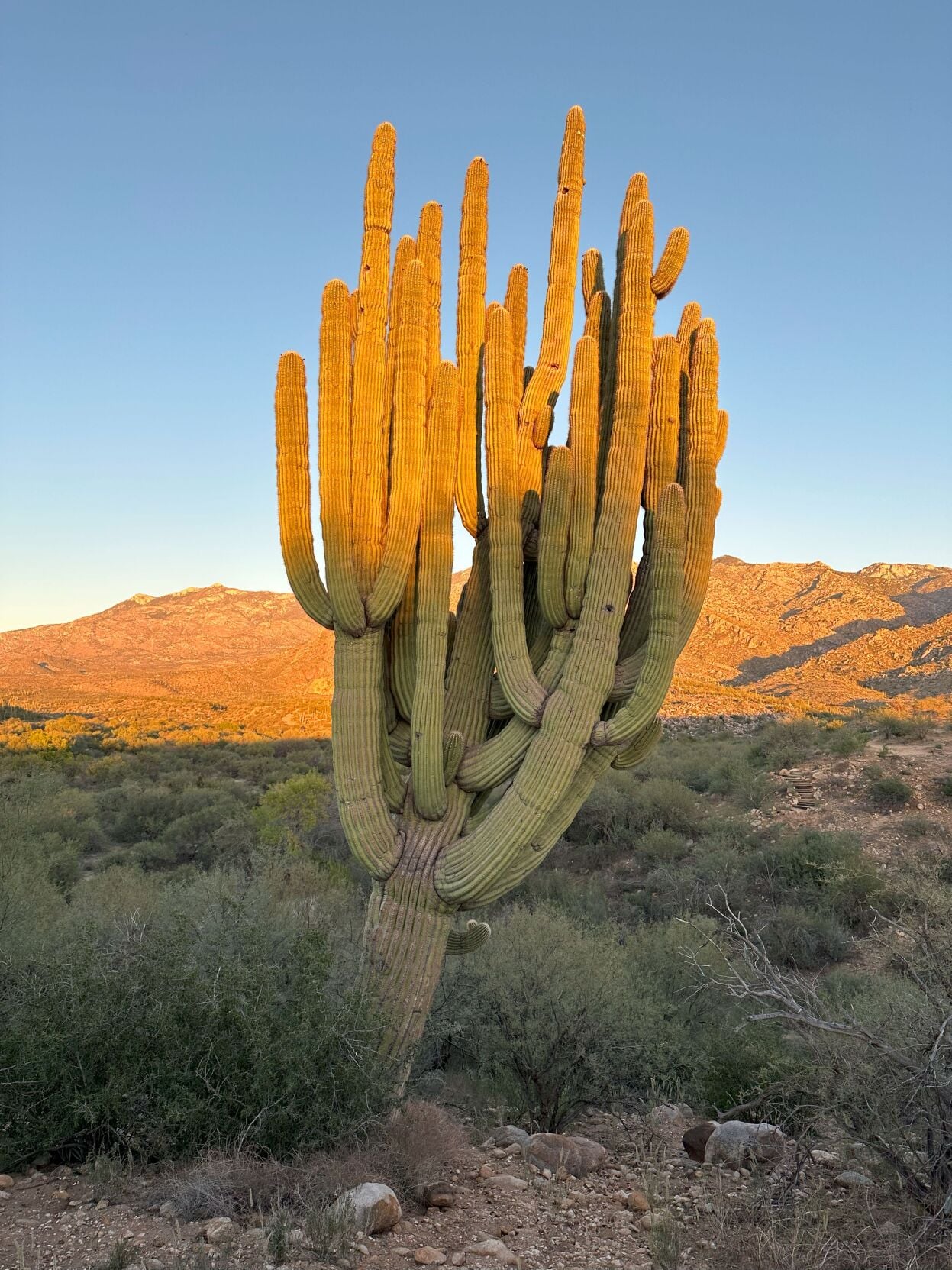
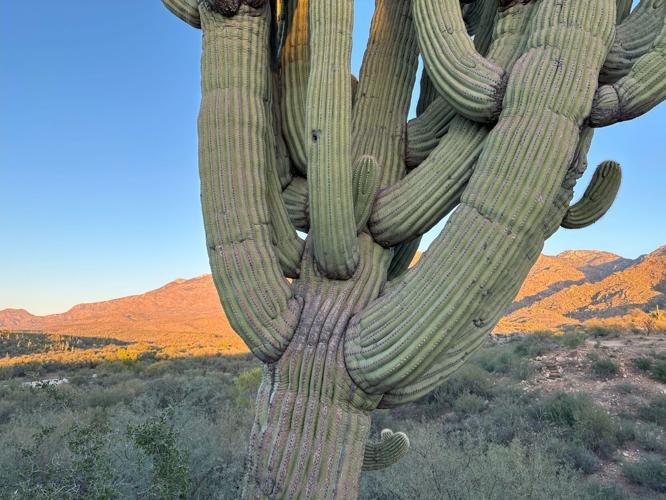
The sinking sun lights the top of a saguaro with more than 30 arms at Catalina State Park on Nov. 8, 2025, less than a year before it fell.
It’s unclear exactly when the saguaro came down. Haas said he first heard about it two or three weeks ago.
Park regulars have also noticed its sudden absence. The giant served as a landmark and a signpost for decades.
People are also reading…
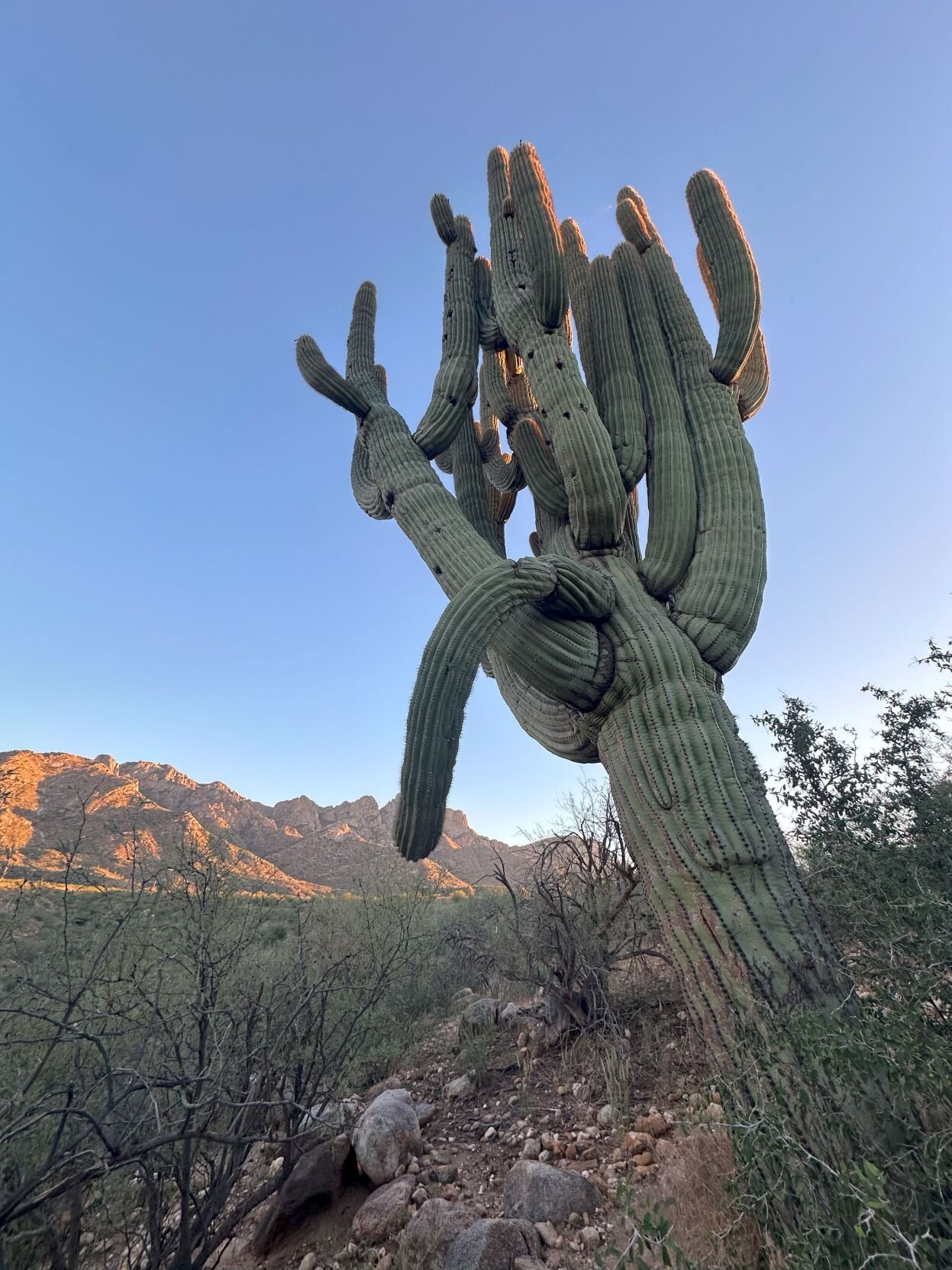
The “grandaddy” saguaro at Catalina State Park as it looked on Nov. 8, 2025.
“I am still grieving this. I nearly cried when we saw it,” said one commenter in the Tucson Hikes! Facebook group.
“We were just there two weekends ago, and we're devastated,” said another.

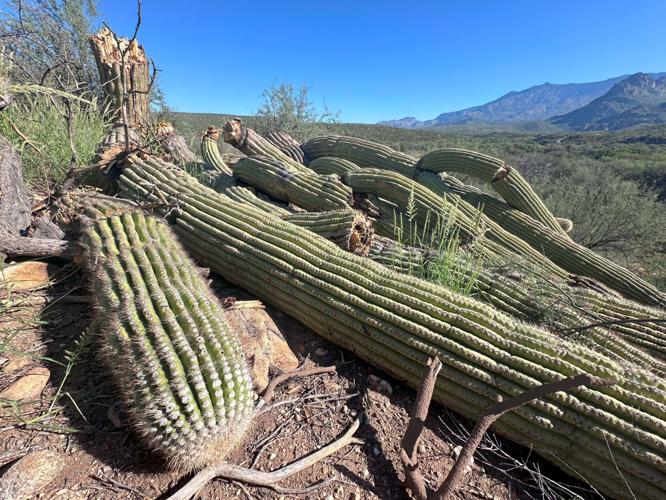
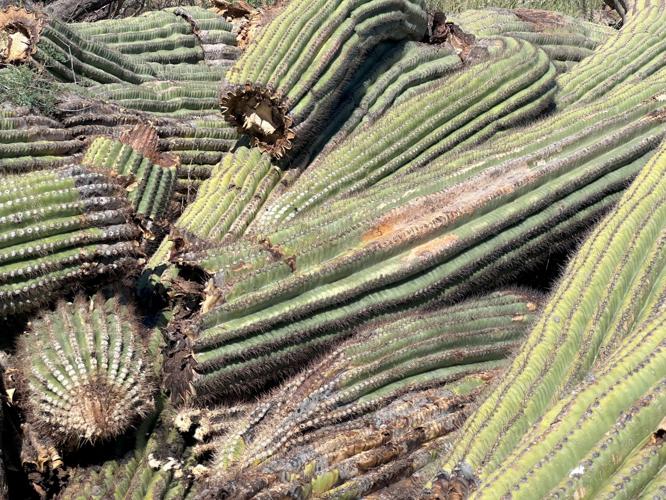
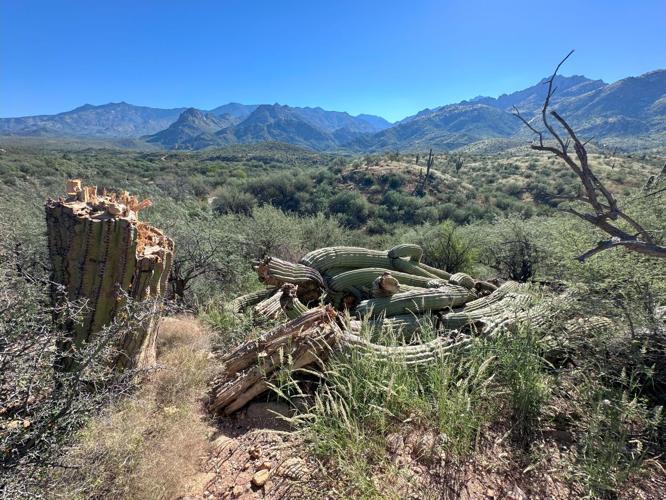
The once-towering cactus has been reduced to a pile of broken stems.
The well-armed behemoth could be seen in the distance from the park’s main road. There were no designated routes leading to it, but it was prominent enough to draw awe-struck visitors from the nearby Romero Ruins Trail or the west end of the Birding Trail.
The cactus had developed a noticeable lean before its trunk snapped about three feet above the ground, spilling its enormous bouquet of water-laden stems down the hillside.
Judging from the before-and-after pictures, one expert thinks the saguaro might have been taken out by a powerful summer storm.
“It could have simply died of old age, since it is certainly old, but the photographs from November of 2025 don’t indicate any signs of decline. The arms are mostly pointed up and appear to be healthy,” said Don Swann, a retired biologist who spent nearly all of his career at Saguaro National Park.
“I see the usual signs of aging such as epidermal browning in places, but it’s not bad," he said. "I don’t see any signs of oozing black liquid, which is sometimes called bacterial necrosis and indicates that the saguaro is not healthy and may be dying.”

The remains of a giant saguaro rests on a hillside at Catalina State Park on Tuesday, Oct. 6, 2026.
It’s not unheard of for powerful winds from summertime microbursts to topple multiple saguaros at once. One such “blow-down event” in 2023 knocked down or damaged about 1,200 of the cactuses in the Tucson Mountains District of Saguaro National Park, and Swann said a storm in mid-September of this year claimed 10 to 20 more in the same general vicinity.
“One thing about a saguaro with so many large arms is that the base is carrying a tremendous amount of weight, which would make it susceptible to falling or breaking,” he said. “The (Catalina State Park) saguaro was leaning in November, but it didn’t lean over and fall — it snapped.”

The saguaro, pictured here in Nov. 8, 2025, developed an obvious lean before it collapsed.
The fallen giant is located less than a quarter of a mile from another “granddaddy,” just off the Romero Ruins Trail, that drew a flurry of media attention in August 2022 when it collapsed after a monsoon storm.
Somehow, Haas said, news of that saguaro’s death traveled as far away as Germany, prompting one well-meaning reader from across the Atlantic to ask whether park officials were planning to stand the cactus back up.
The saguaro made headlines again the following year, when its lone arm left standing after the collapse unexpectedly produced its own small crop of flowers and fruit.

This saguaro might have lived for 200 years or so before collapsing sometime in September 2026 at Catalina State Park.
Haas said losing that one felt a little personal to him. Before it died, the cactus provided the backdrop for Haas family portraits for about four years in a row, he said, so his kids literally grew up in front of the thing.
Since then, though, he has returned to the remnants of the plant to marvel at the way it has become a habitat for insects and other critters, as the desert gradually reduced it to its skeleton.
“There is some sadness to it,” Haas said, but “it’s really amazing to see how it’s still being used.”



 'Dancing' saguaros: Geologist with Tucson roots makes seismic discovery