A New York City tradition that is more than a century old will end.
The City Council voted this past week to ban horse-drawn carriages, a historical tradition that's popular among tourists and fiercely opposed by animal rights groups.

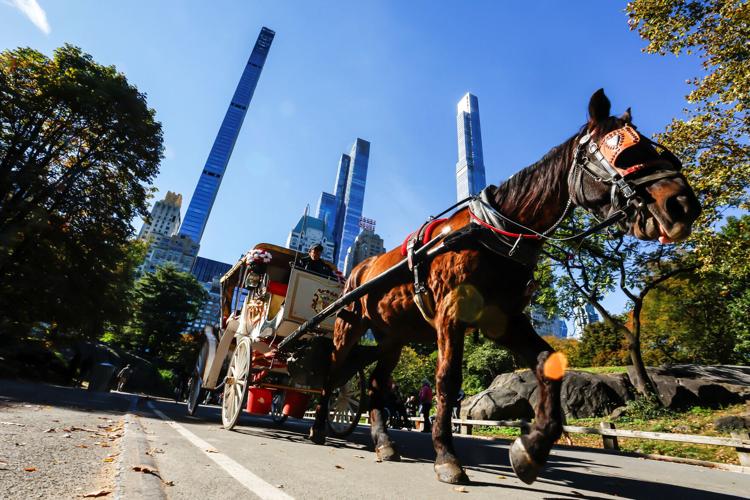
A horse pulls a carriage Oct. 21 through Central Park in New York City.
In the 40-7 vote Thursday, the council approved a measure that will phase out the operation of horse carriages in and around Central Park by June 2028.
"Today’s historic vote marks our commitment to animal welfare, public safety, and protecting workers," council speaker Julie Menin said in a statement.
Mayor Zohran Mamdani supported the ban. In early October, he declared that the horse carriage industry is "coming to an end in New York City."

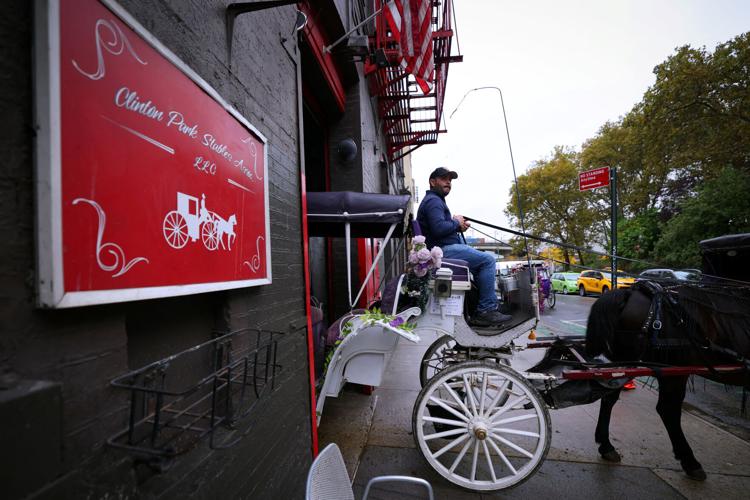
A handler guides a carriage horse Oct. 16 outside the Clinton Park Stables on Manhattan’s West Side.
Opposition grew
The city's horse carriages have traversed a loop in Central Park dating back to the 1800s. By the mid-20th century, the city limited horse-drawn carriage licenses to 68.
People are also reading…
Over the decades, the carriages became a tourism staple and appeared in iconic films and television shows, such as "Sex and the City," "Elf" and "Home Alone 2: Lost in New York."
However, in recent years animal rights groups and others increasingly called for the tradition to end, arguing the practice subjects horses to harsh unnatural conditions and physical exhaustion.

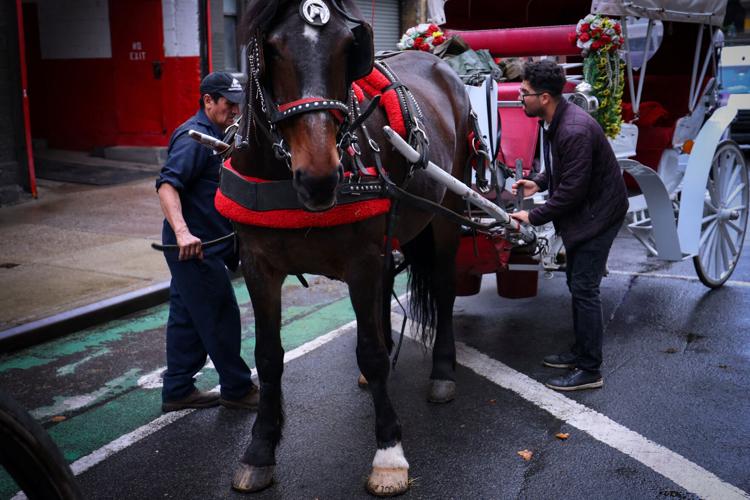
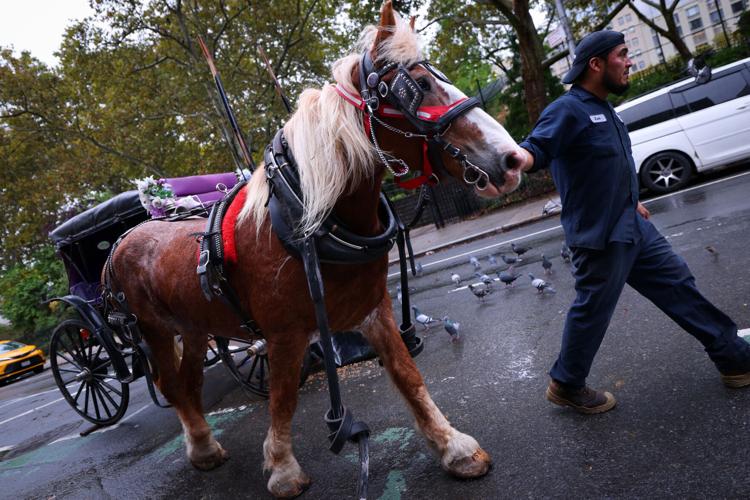
A driver of a horse-drawn carriage and a worker hook up a horse Oct. 16 outside Clinton Park Stables on Manhattan’s West side ahead of working in Central Park after Mayor Zohran Mamdani and the leader of the New York City Council agreed to ban horse-drawn carriages.
Support for the proposed ban grew after the death of Romanch Mahajan, an 18-year-old tourist from India. Mahajan was thrown from a carriage and died June 17 when the horse bolted after the driver stepped away to take a picture of Mahajan's family.
The legislation phasing out the longstanding tradition is named after Mahajan, whose parents appeared at last week’s council meeting. The family filed a $50 million notice of claim against the city government and expressed support for the ban.
Also in June, a horse named Deniz collapsed suddenly in Central Park while pulling a carriage with passengers, setting off another wave of backlash against the industry.
President Donald Trump, who is from New York, weighed in on the vote, criticizing the council's decision and calling horse carriages a "great tradition" that "will be missed."
"The Horse-drawn Carriage in New York City is a quintessential New York experience,” he said in a social media post. “So sad that, for political reasons, we will see it go!"

A driver and horse-drawn carriage leave Clinton Park Stables on Oct. 16 on Manhattan’s West Side.
Drivers in the lurch
Some who oppose the legislation say it does not adequately protect workers who rely on the carriages for their income. Officials say about 150 horse-carriage drivers work in the city.
Ahmet Bilici, 52, grew up on a farm in Turkey and became a carriage driver in 2003, shortly after immigrating to the U.S. He later became a business owner. A driver can earn a six-figure annual income giving rides that cost more than $70 for 20 minutes, and that income can double if the driver owns the business, he said.
"I have a license issued by the city. If I'm not doing anything wrong, how can you come and attack my business?" Bilici said as he waited for customers beside his carriage.

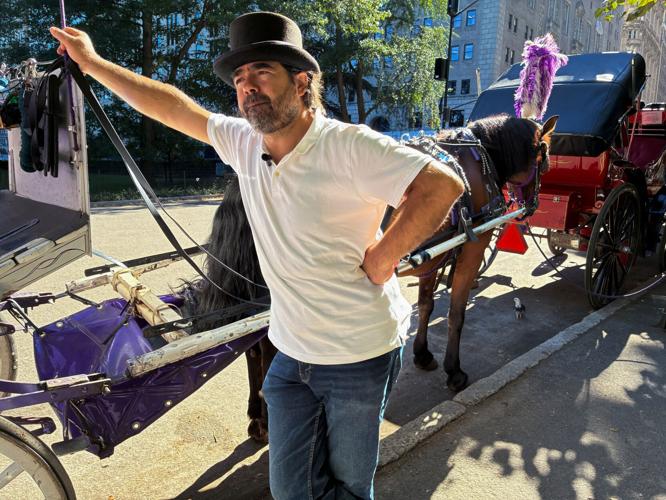
Horse carriage driver Ahmet Bilici, 52, stands Oct. 15 with his horse, Sheila, at a southern entrance of Central Park as he speaks to Reuters.
Because carriage licenses, also known as medallions, are limited and not sold on an open market, they are often passed down within families and can be worth hundreds of thousands of dollars.
Outside City Hall, carriage driver Alexus Lawson, 28, called the vote a “travesty.”
“New Yorkers want us,” she said, wearing a tie and a black top hat. “We’re not going down without a fight.”
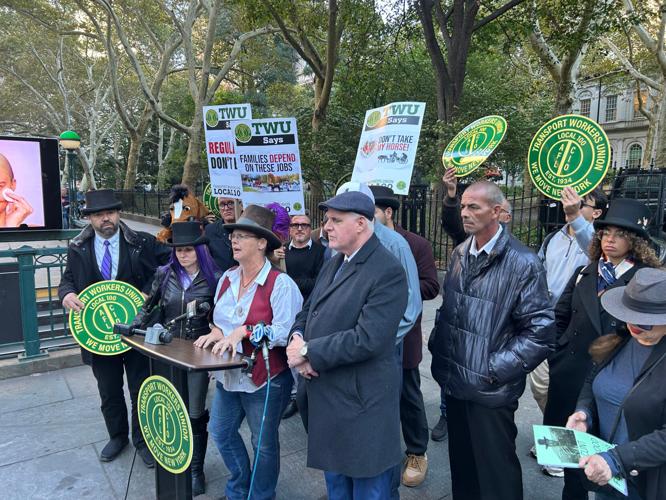
The union representing Lawson and more than 100 other carriage drivers, the Transport Workers Union of America, vowed to sue the city in an attempt to block the legislation from taking effect.
"If the NYC Council bans horse-carriage rides, hundreds of blue-collar drivers, owners, and their family members will be financially ruined and emotionally devastated," the union previously said in a statement on social media.

Members of the Transport Workers Union of America, which represents horse carriage drivers in New York City, speak out against the City Council's Oct. 22 decision to ban the carriages.

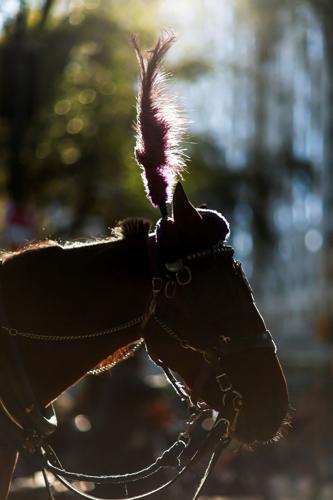
A carriage horse stands Oct. 21 in Central Park.
The bill requires the mayor’s office to develop a transition plan by April 2027 and to consider a program to compensate carriage operators for their businesses and help with the disposition of their horses. Under the proposal, the horses could not be slaughtered.
City Hall promised it is working toward a transition to help protect carriage workers.
"We have been working closely with the City Council, union partners, carriage drivers, animal welfare advocates, and community leaders to deliver a just transition that protects workers while ending horse-drawn carriages in Central Park once and for all," City Hall spokesperson Sneha Choudhary previously told USA Today.

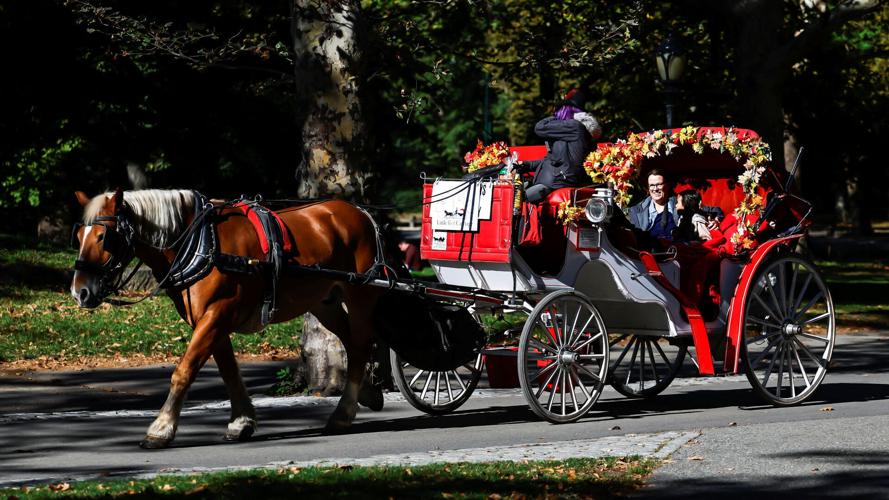
A horse and carriage operates Oct. 21 in Central Park in New York City.
Mixed feelings
"The horses in Central Park are iconic. We are as much a part of the city as the Statue of Liberty and the Empire State Building," Christina Hansen, a carriage owner and union shop steward, told Reuters. She spoke at the stables near the Hudson River in Manhattan, where most carriage horses spend their time when they are not working or taking mandatory five-week annual vacations at farms.
New York City is the latest major metropolitan area that voted to ban horse-drawn carriages. Over the past five years, cities including Philadelphia, Chicago and San Antonio outlawed the practice.
California residents Dan Padilla and his wife booked a carriage ride during their first visit to New York, thinking it might be their last chance to take one.
"I'm concerned,” Padilla said. “It's one of the things you think about when you think about Central Park."

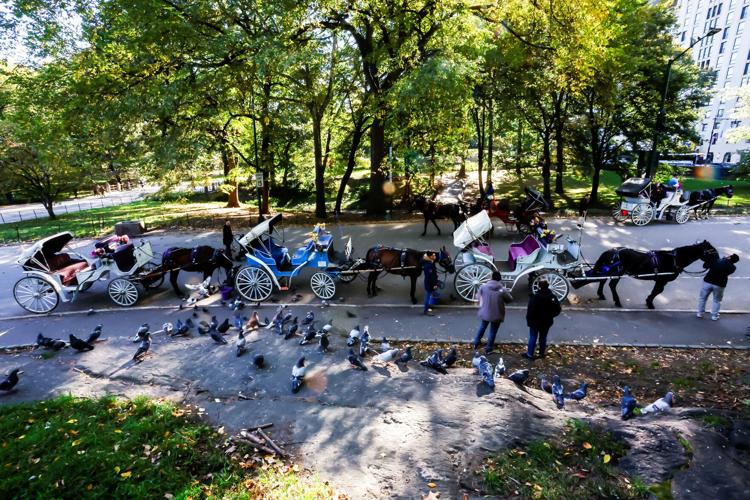
Carriage horses await passengers Oct. 21 in Central Park in New York City.
Lawyer Ron Shechtman, riding an electric bike through the park this past week, said that while he regrets the loss of a longstanding tradition, he would not miss navigating around horse manure. Though each horse is equipped with a bag defined in city regulations as a "manure-catching device," he said the devices are hardly foolproof. "They only work sometimes, I can tell you that.”
"These carriages have been here before any of us have been here," said Angelica Vega, a 45-year-old dog walker who has come to Central Park for 20 years, often three times a day. "It's going to be sad to walk in the park and not see them."
"It makes me sad to see the horses, personally," said Sage Stoyer, a 34-year-old hospitality worker who lives in Brooklyn. "I know a horse-drawn carriage was a normal thing, and now we have so many different alternatives that give us the same kind of experience without taking advantage of animals."