

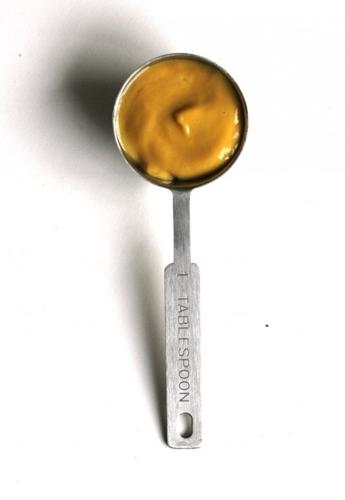
Lately, I've been on a homemade mustard kick. Think mustard, and your thoughts might veer first toward the bright yellow stuff in a squeeze bottle. Or maybe you prefer something a little less mild, as you reach for your favorite brand of Dijon or a spicy whole grain.
But have you ever tried making mustard from scratch? You won't believe how simple it is.
Essentially, mustard is nothing more than a combination of seeds and liquid.
Soak seeds in the fluid of your choice (water, vinegar, even a double-bock beer) until they're all softened and happy, flavor the mix as desired, then grind the seeds and, voilà, homemade mustard. (Starting the process with powdered mustard instead of seeds is even easier.)
I love that the condiment lends itself so readily to experimentation. Sweeten or spice the flavors here, manipulate the texture there, and fine-tune to create your own custom spread.
People are also reading…
Start with the seeds.
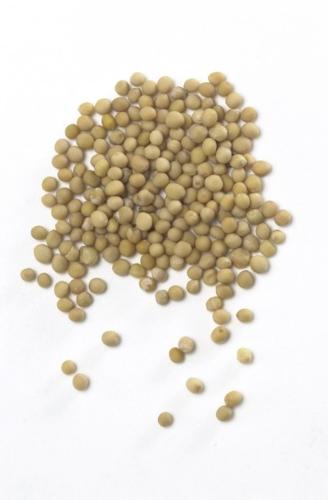
There are three types of mustard seeds: black, brown and white (it's actually off-white and is sometimes called yellow), each with varying degrees of heat or pungency. White and brown seeds can be found at most markets; black is a little tougher but can generally be found in Indian markets and gourmet cooking stores. You can find everything online.
Black mustard, Brassica nigra, is the smallest of the seeds, though it contains the most sinigrin, the compound that gives mustard its sharp punch (the burn you feel in the back of the mouth, throat and nose). Black mustard can be expensive, as the seeds must be harvested by hand.
Brown mustard, B. juncea, is a little more mild than the black and is used in most European prepared mustards. The brown seeds tend to be larger than the black but contain less sinigrin.
White mustard, B. hirta or Sinapis alba, is the mildest. Its large, pale seeds contain a slightly different compound, sinalbin. This mustard is also available pre-ground as a powder, or mustard flour.
The trick is learning to manipulate the pungency. You can make mustard with one type of seed (or powder) or go for a blend to vary the pungency and round out the sinus-clearing harmony.
Before grinding the seeds, they should be soaked in liquid - enough to submerge them. Depending on the seeds' age, they may absorb more or less liquid over a day or two, expanding as they soften. The choice of liquid can also make a difference in determining the heat of the mustard. Vinegar and water are basic. Water gives the mustard a cleaner, brighter heat than vinegar, though vinegar lends a wonderful tang. Or try wine, fruit juice or your favorite beer.
When adding the liquid, consider temperature. Mustard's punch will dissipate with heat; adding a warm or hot liquid, or cooking the mustard (some recipes are thickened with egg), can dull the flavor. To maximize pungency, use a cold liquid.
Then decide on additional flavors. A mustard can be as simple as a basic Chinese mustard, where ground powder is mixed with cold water to form a fiery fresh paste. Or it can be complicated, to give the mustard more depth.
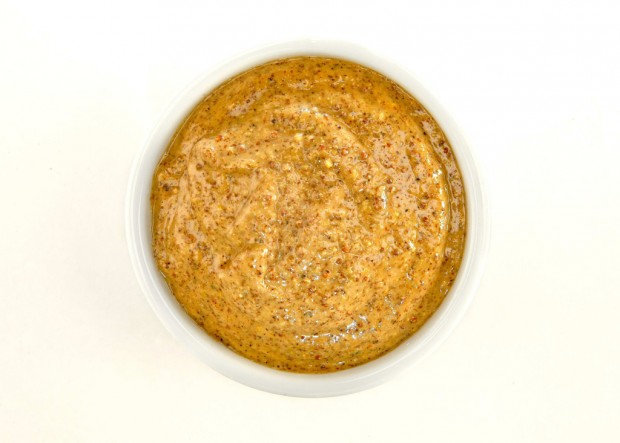
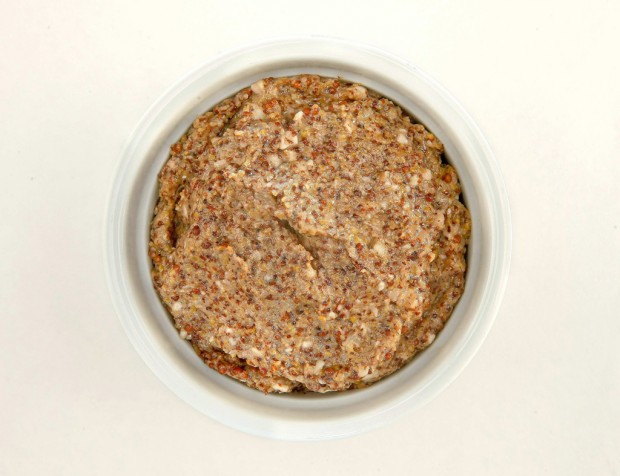
Once the seeds are softened, they'll grind easily. A number of recipes call for grinding dry seeds before soaking, but the seeds can be tough and difficult, giving your arm more of a workout than you might expect. Grind the moistened seeds in a food processor, then strain the mustard for a smooth, more "refined" product, or leave the hulls in the mustard for a more rustic texture.
Finally, give the mustard time to age. Patience is definitely a virtue here.
Herbed Honey Mustard
Makes: About 1 3/4 cups mustard.
• 2 tablespoons ( 3/4 ounce) brown mustard seeds
• About 3/4 cup (2 1/2 ounces) mustard powder
• 1 cups verjus or Champagne vinegar
• 1 1/2 teaspoons kosher salt
• 1/3 cup honey
• 2 eggs
• 2 egg yolks
• 1/4 cup plus 2 tablespoons chopped fresh fines herbs (a mixture of parsley, chives, tarragon and chervil)
1. Soak the mustard seeds: Place the mustard seeds and powder in a medium glass or ceramic bowl along with the verjuice. Set aside, covered (but not sealed airtight), for 24 hours.
2. Place the mixture in a food processor along with the salt and honey and process for 1 to 2 minutes until the seeds are coarsely ground.
3. Place the mixture in a large metal bowl, and whisk in the eggs and egg yolks. Place the bowl over a large pot of simmering water and whisk the mustard base until it thickens, 6 to 8 minutes. Remove from heat and whisk in the chopped herbs. Taste and adjust the seasoning and flavoring as desired. Mustard will keep for up to 1 week, refrigerated; the flavor may be a bit strong at first but will mellow as it sits.
Each tablespoon: 42 calories; 2 grams protein; 5 grams carbohydrates; 0 fiber; 2 grams fat; 0 saturated fat; 26 mg cholesterol; 3 grams sugar; 67 mg sodium.
Roman Mustard
Makes: About 2 1/2 cups
• About 3/4 cup plus 1 tablespoon (5 ounces) brown mustard seed
• 1/2 cup red wine vinegar
• 3/4 cup unsweetened red grape juice
• 1 1/2 teaspoons very coarse salt, such as Maldon
• 1 teaspoon cumin seeds, finely ground
• 1/4 cup (1 ounce) flaked almonds
• 1/4 cup plus 1 tablespoon (1 1/2 ounces) untoasted pine nuts
1. Soak the mustard seeds: Place the mustard seeds in a medium glass or ceramic bowl along with the vinegar and grape juice. Mix in the salt and cumin seeds. Set aside, covered (but not sealed airtight), for 36 to 48 hours.
2. Place the mixture in a food processor and process for 1 to 2 minutes until the seeds are coarsely ground. Add the almonds and pine nuts and pulse a few times just until the nuts are completely broken up, careful not to over-process.
Each tablespoon: 33 calories; 1 gram protein; 2 grams carbohydrates; 1 gram fiber; 2 grams fat; 0 saturated fat; 0 cholesterol; 1 gram sugar; 57 mg sodium.
Adapted from "The Mustard Book" by Rosamond Man and Robin Weir.
Beer and Caraway Mustard
Note: To toast caraway seeds, place them in a small skillet. Heat the skillet over medium heat, just until the seeds become aromatic, 1 to 2 minutes, shaking the pan occasionally to keep the seeds from burning.
Makes: About 1 2/3 cups mustard
• About 1/4 cup plus 3 tablespoons (2 1/2 ounces) brown mustard seeds
• About 3/4 cup (2 1/2 ounces) mustard powder
• 1 tablespoon toasted and crushed caraway seeds
• 1/2 cup water
• 3/4 cup flat beer, preferably stout or a dark ale
• 1 1/2 teaspoons kosher salt
• 2 1/2 tablespoons dark brown sugar
• 1 teaspoon Worcestershire sauce
1. Soak the mustard seeds: Place the mustard seeds, powder and crushed caraway seeds in a medium glass or ceramic bowl along with the water and beer. Set aside, covered (but not sealed airtight), for 24 hours.
2. Place the mixture in a food processor along with the salt, sugar and Worcestershire sauce. Process for 1 to 2 minutes until the seeds are coarsely ground.
3. The mustard will be very pungent at first. Cover and refrigerate for at least one week before using, to allow the flavors to mellow and marry.
Each tablespoon: 36 calories; 2 grams protein; 3 grams carbohydrates; 1 gram fiber; 2 grams fat; 0 saturated fat; 0 cholesterol; 1 gram sugar; 68 mg sodium
Dried cranberry mustard
Note: Unsweetened cranberry juice can generally be found at Trader Joe's as well as select health food and gourmet stores.
Makes: About 1 1/2 cups
• Scant 1/4 cup (1 1/4 ounces) brown mustard seeds
• About 1 cup plus 2 tablespoons (3 3/4 ounces) mustard powder
• 1/2 cup water
• 3/4 cup unsweetened cranberry juice
• 1 1/2 teaspoons kosher salt
• 1/2 cup sugar
• 1/2 teaspoon ground cinnamon
• 1/4 teaspoon ground cloves
• 1/2 cup chopped dried cranberries
1. Soak the mustard seeds: Place the mustard seeds and powder in a medium glass or ceramic bowl along with the water and cranberry juice. Set aside, covered (but not sealed airtight), for 24 hours.
2. Place the mixture in a food processor along with the salt and sugar and process for 1 to 2 minutes until the seeds are coarsely ground. Stir in the dried cranberries.
3. The mustard may be very pungent at first. Cover and refrigerate for at least a day or two before using.
Each tablespoon: 60 calories; 2 grams protein; 9 grams carbohydrates; 1 gram fiber; 2 grams fat; 0 saturated fat; 0 cholesterol; 7 grams sugar; 71 mg sodium.
Hard cider mustard
Makes: About 1 2/3 cups mustard
• About 1/4 cup plus 3 tablespoons (2 1/2 ounces) brown mustard seeds
• Scant 1/4 cup (1 1/4 ounces) black mustard seeds
• About 1/4 cup plus 2 tablespoons (1 1/4 ounces) mustard powder
• 1/2 cup cider vinegar
• 3/4 cup flat hard apple cider
• 1 1/2 teaspoons kosher salt
• 2 1/2 tablespoons sugar
• 1 Granny Smith or similar tart apple, peeled, cored and finely chopped
1. Soak the mustard seeds: Place the mustard seeds and powder in a medium glass or ceramic bowl along with the cider vinegar and hard cider. Set aside, covered (not airtight), for 24 hours.
2. Place the mixture in a food processor along with the salt and sugar, and process for 1 to 2 minutes until the seeds are coarsely ground. Add the chopped apple and pulse a few times to incorporate. This makes about 1 2/3 cups mustard.
3. The mustard will be very pungent at first. Cover and refrigerate for a few days (or to taste) before using.
Each tablespoon: 41 calories; 2 grams protein; 4 grams carbohydrates; 1 gram fiber; 2 grams fat; 0 saturated fat; 0 cholesterol; 2 grams sugar; 65 mg sodium.