Each year, thousands of Arizona residents email or call Rosie Romero’s radio show with questions about everything from preventing fires in their chimneys to getting rid of tree roots invading their sewer system. His goal is to provide answers that suit the specific lifestyle wherever someone lives in Arizona.
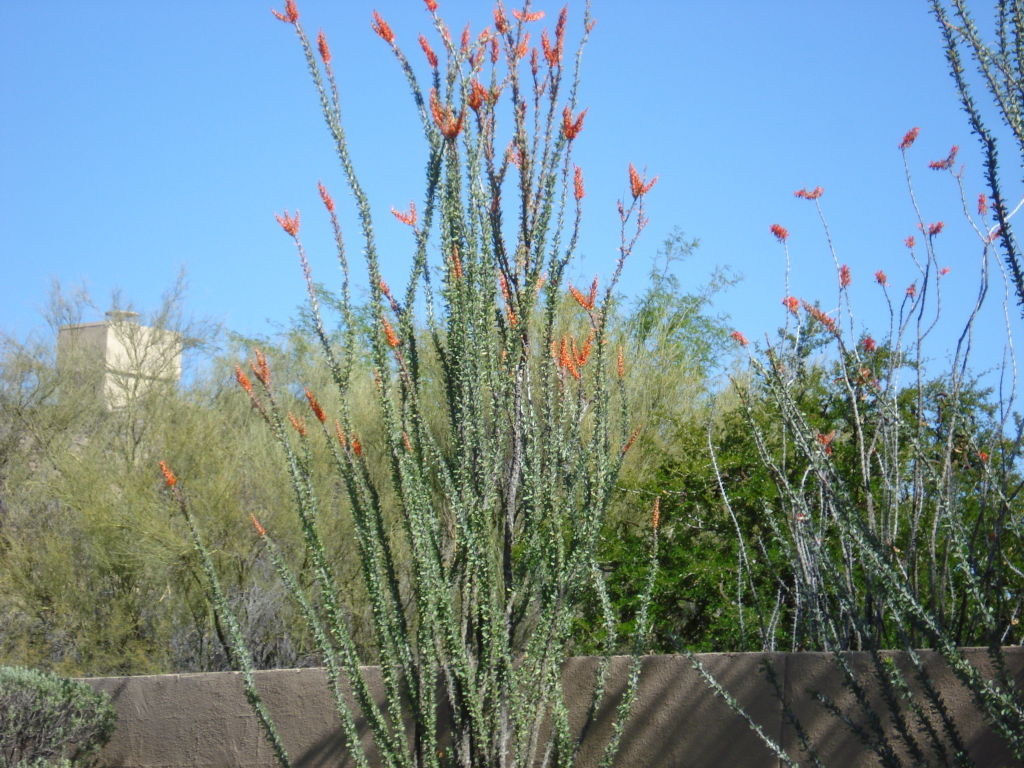
Q: Last fall I planted an ocotillo, which might have been a bad time to do it. Now all the ocotillos in my neighborhood have started to bloom and leaf out, and mine shows no signs of life or growth. Is my ocotillo worth saving?
A: Actually, ocotillos do take a long time to get started. Sometimes newly planted canes can take three or four years to leaf out. They’re a very unusual plant, and probably need some more time. They like lots of water, so you could try that as well. You can even water the dry canes once in a while. They often respond quickly after a rainfall. So have some patience and keep watering.
People are also reading…
There is a chance, however, that your ocotillo might never bear leaves or those trademark red flags. The problem is that nurseries often dig up a few canes from an established plant and then store them inside the nursery until they can sell them. Sometimes the canes sit too long, get really dry and then never perform.
Q: I had to have all the stucco around the edges of my windows replaced because of problems with leaks. Workers pulled the old stucco off to reflash the windows. Now I’m wondering how long I’ll have to wait before I can repaint the new bare stucco. I was told to wait four to six weeks, but does it have to be that long?
A: Four to six weeks is about right. But you can also buy a kit at the hardware store and test the moisture levels in the stucco to be sure it’s thoroughly dry. When you do paint, put a good primer on first; then apply the paint. That fresh paint will help your stucco shed water. After you paint the new areas, the fresh paint color will probably look very different from the paint already on the house. Eventually, you may want to repaint the entire house because it’s too easy to see where the new paint stops and the old begins.
Window flashing, of course, is material installed around the windows to keep water from entering gaps between adjoining surfaces. Wind-driven rainwater can find its way through even tiny spaces between the frame or casing of a window and the trim.
Q: Wild bees have been making tiny holes in the stucco in my house. Then the woodpeckers come along and start pecking at the holes; I guess they’re looking for insects or honey. How can we get the woodpeckers to go away?
A: You probably need to have a bee expert treat the entire section of holes with some kind of foam to get rid of chemicals that bees leave behind to attract other bees. Bee experts call those chemicals pheromones. Once the bees stop making the holes, it’s likely the woodpeckers will stop their visits.
Q: Is it possible to plant a banana plant in Tucson?
A: Generally speaking, it might be too cold in Tucson for bananas because of its higher elevation. But you may be able to grow a banana plant in a container inside an atrium where it could have shelter from the cold and hot, dry winds. Remember, if you want to plant some unusual plants, you should keep an eye out for the same kind of plant growing in your neighborhood. If something does well in your area, you will see a lot of it growing there.
For more do-it-yourself tips, go to rosieonthehouse.com. An Arizona home building and remodeling industry expert for 25 years, Rosie Romero is the host of the syndicated Saturday morning Rosie on the House radio program, heard locally from 8-11 a.m. on KNST-AM (790) in Tucson and KGVY-AM (1080) and -FM (100.7) in Green Valley. Call 888-767-4348.