


Those fascinating, wild critters crossing your yard can become destructive pests when their natural behavior clashes with how you garden.
Pack rats, birds, rabbits and other vertebrates can ruin a well-coiffed landscape or bountiful food garden. They can attract predators that create a safety hazard for humans and pets.
Two pest-control experts suggest that before you use lethal methods to rid your yard of pests, adapt your landscape and garden to the realities of nature.
One of those realities is that humans change nature's balance.
"When you build a house out in the desert, things are no longer natural," explains Kris Brown, owner of Mr. Pack Rat.
Humans create easy pickings for wildlife with reliable water and food sources and more densely planted vegetation for habitat.
People are also reading…
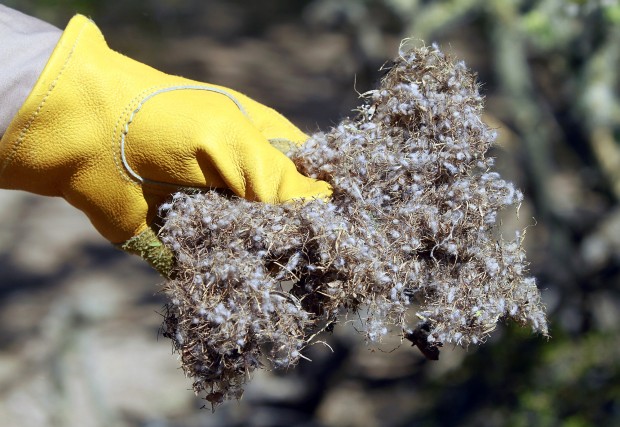
A developed area, with more habitat and fewer predators, can foster 30 to 40 pack-rat nests an acre, for example, compared with the naturally occurring four to six nests per acre, says Brown.
Because developed areas become oases, animals flock to them, says Rick Frey, owner of Arbico Organics. "It's like the movie: Build it and they will come," says Frey, a longtime organic gardener.
Here are nonlethal, nontoxic ideas to make landscapes less attractive so wildlife won't come so often or be so destructive.
Prevention - not poison
Simply killing pests is an ineffective method of pest control, says Kris Brown, who specializes in removing pack rats.
Poisons can kill predators as well as the pests, he says. And toxic alternatives can't kill pack rats faster than they can reproduce.
That's why both he and organic gardener Rick Frey preach constant vigilance and prevention.
Brown advises a complete walk-through of the landscape at least twice a year to eliminate nesting spaces.
Frey maintains that pest control should be thought of as a regular part of gardening.
"We have to go into constant surveillance, constant monitoring, constant application," he says.
Getting along
Sometimes adapting the yard to allow some destruction is easier than striving for a pristine one.
• Eliminate above-ground emitters in a drip irrigation system. Then there isn't a water-overflow problem when a critter chews on tubing tips to get water.
• Grow crops that are less attractive to certain wildlife, such as chiles, radishes and carrots.
• Plan on losing some fruits and vegetables to the critters while growing enough for your needs.
• Eliminate the "snack bar," says Frey, by growing fruits and vegetables in various places in the yard instead of all in one garden area. For instance, tomato plants can be located among plants that critters aren't interested in eating.
Landscape maintenance
Pack rats and other rodents love the cover provided by a densely planted yard, says Brown, who has focused on nontoxic, nonlethal pest control since 1997.
"It's all about open space" when it comes to controlling the critter population, he says.
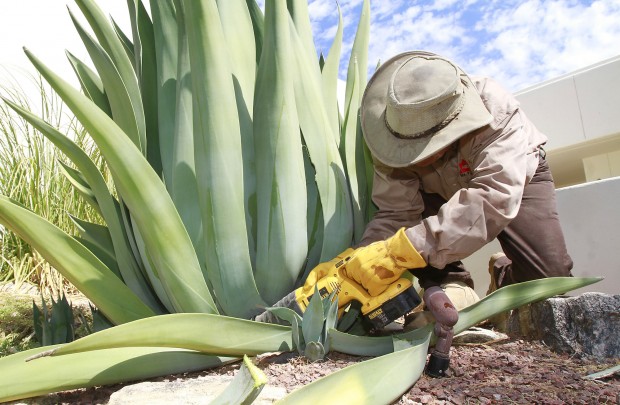
• Remove ground-hugging and horizontal limbs and leaves of succulents such as prickly pear, cholla, desert spoon and agave.
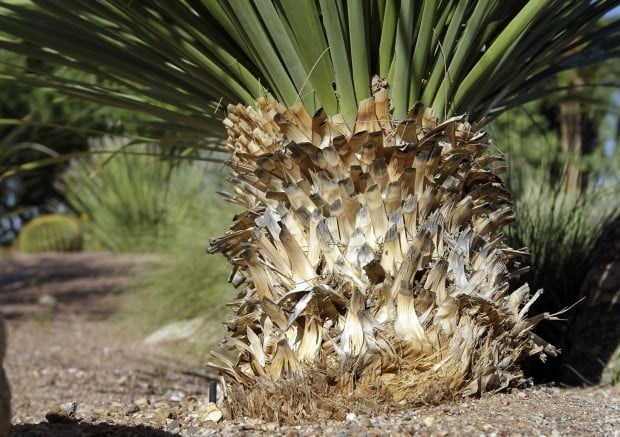
• Do not allow yuccas or other plants to grow in clumps that create hidden spaces.
• Use rocks to fill cavities in tree trunks, rock walls or other hardscape elements.
• Train rosemary and other woody ground cover to grow as bushes to keep most of it off the ground.
• Keep landscape plants away from walls.
Deterrents
Barriers and repellents can deter all but the most determined pests.
• Surround a food garden with a fence or, even better, an enclosure made of hardware cloth. Dig the structure deep into the ground to deter burrowing rodents. This is "the absolute best way" to protect fruits and vegetables, says Frey.
• Create cages of hardware cloth for individual plants. Install a removable top for easy access to the plant.
• Attach plastic netting on trees to keep birds away. Loosely placed shade cloth isn't enough to deter them, Frey says.
• Spray plants with a liquefied mixture of chiles. Commercial repellents work similarly by creating undesirable scents or tastes.
• Scare off critters with sounds, plastic models of predators or shiny objects. However, according to the Arizona Master Gardener Manual, "most animals soon habituate to them and they become ineffective."
• Encase underground irrigation in pipe or surround by gravel to discourage burrowing rodents.
Human habitat
Our outdoor-living habits often encourage critters to stop by.
• Place potted plants away from one another to eliminate small nesting spaces between them.
• Eliminate nesting spaces that are created when a potted plant is placed into a larger, empty one.
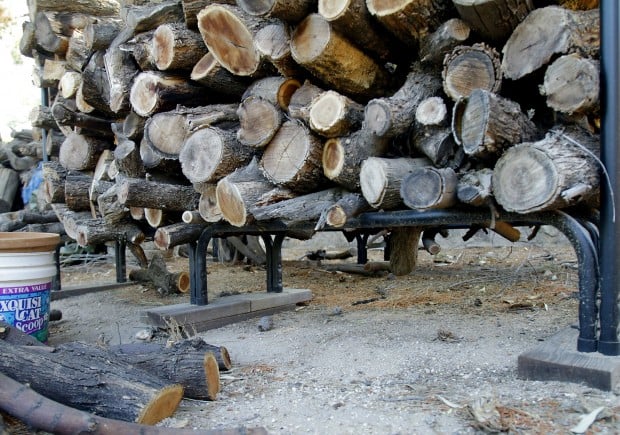
• Eliminate small spaces around the compost bin such as among the slats in a pallet or holes in construction blocks. Locate the bin well away from a wall.
• Remove or cover food sources such as pet food, garbage and scraps for the compost pile.
Resources
• Arbico Organics, 825-9785, www.arbico-organics.com
• Mr. Pack Rat, 529-9191, www.mrpackrat.net
• Master Gardeners, 626-5161.
Contact local freelance writer Elena Acoba at acoba@dakotacom.net