

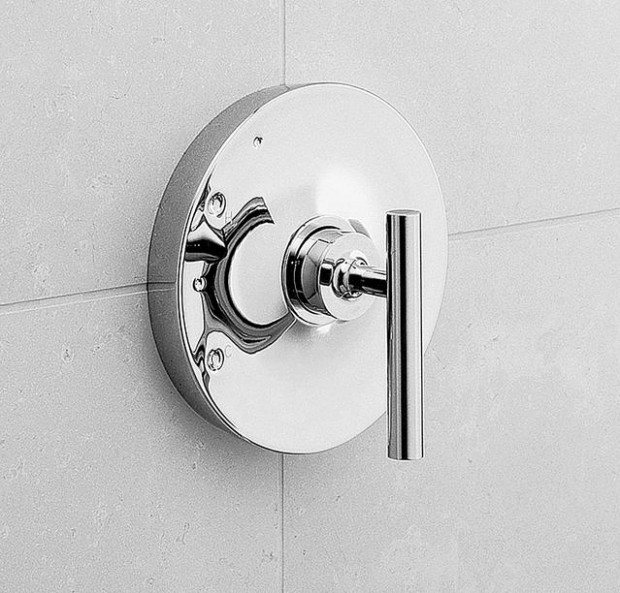
Q My wife and I have a plumbing issue that needs to be settled. A few months back, we had a new one-handle mixing valve installed on our shower and tub to replace our old three-handle valve system. Our issue is that everywhere else in the house we get steaming hot water, but the shower does not get very hot water anymore. My wife says it's hot enough, but we live in a cold climate and I like a really hot shower! I'm convinced that there's something wrong, while my wife says the new valve is fine and she doesn't want to pay a plumber to check it. Is this valve working normally? We both agreed we'll listen to you.
— Bill and Linda, Alaska
A The fact that you live in a very cold climate will make you a little more sensitive to a hot-shower issue. So I do understand your frustration and why you want a hotter shower than normal. However, I think your wife may be on the right track with this one. Your old three-handle tub and shower valve was basically a hot and cold water faucet connected together with a tee leading to the shower head. That type of valve usually has no scald protection to regulate the hot-to-cold water ratio going through the valve, and if the cold-water flow slows down, mostly all hot water could go to the shower, causing safety concerns.
People are also reading…
Protecting your family from scalding water is serious business, and you made a smart move by removing the old-style valve and bringing your shower up to date. Nowadays, according to most local codes, your new shower valve should be an anti-scalding valve. That means the hot-cold ratio stays at a safer mix, even if the cold-water flow is restricted. Along with the scald protection, many new mixing valves also are set to regulate the shower temperature to remain below 120 degrees for safe operation. Normal showering temperatures run around 100 to 105 degrees, so you can still take a little hotter than normal shower, but you do need to get used to the limits that your new valve sets.
With all that said, I suspect your new mixing valve is working fine, and simply measuring the water temperature will confirm this. As far as your other fixtures still getting very hot water, remember: Most water heaters will instruct you to set the temperature below 125 degrees. If you lower your water heater settings to your manufacturer's instructions, you'll have a safer plumbing system and save some money, since you'll be using less fuel.
● Ed del Grande is a certified master plumber.