

Each year, thousands of Arizona residents email or call Rosie Romero’s radio show with questions about everything from preventing fires in their chimneys to getting rid of tree roots invading their sewer system. His goal is to provide answers that suit the specific lifestyle wherever someone lives in Arizona.
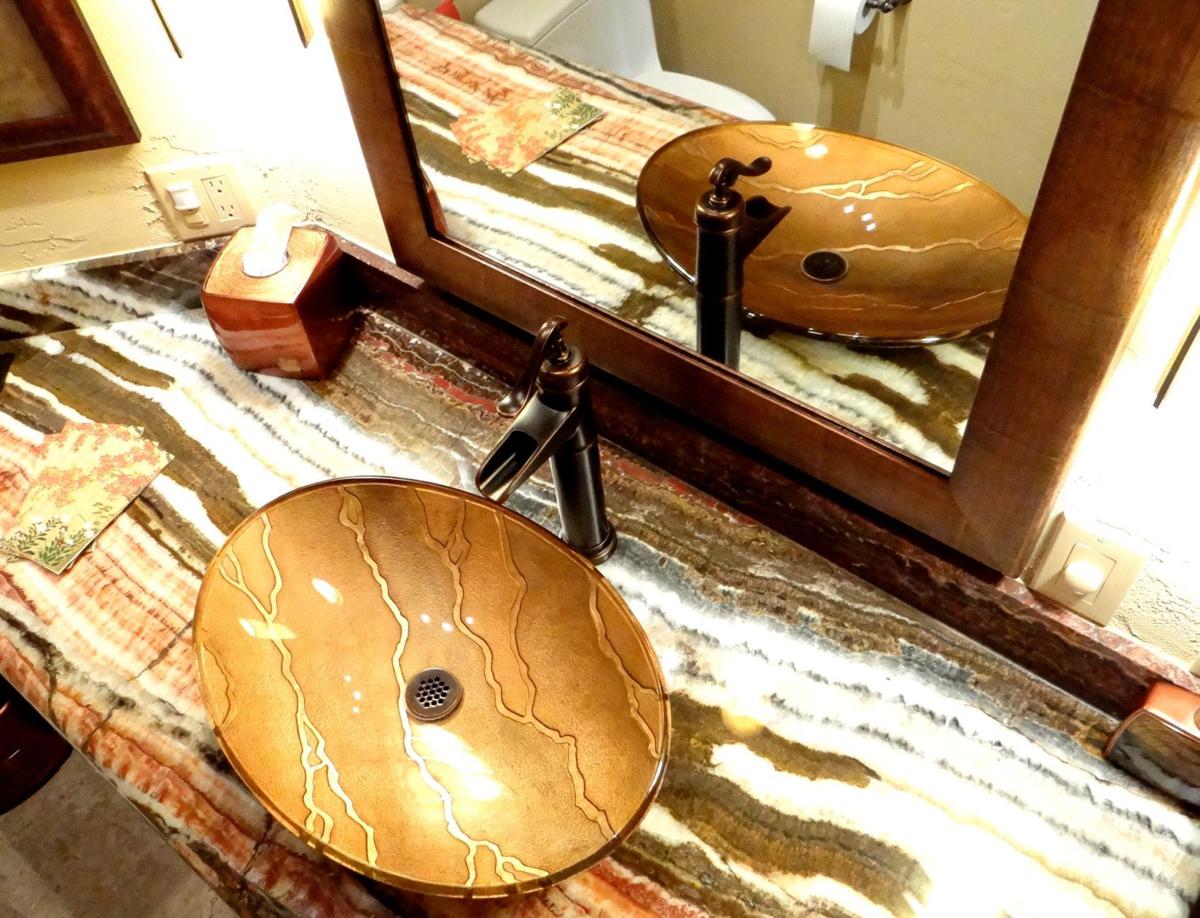
Q: I am resealing my granite countertops one year after they were installed. At the time, the fabricator recommended a sealant that is supposed to be applied to clean countertops and then allowed to sit for five minutes before you wipe it off. I followed the instructions exactly, but now there is a haze that is difficult to get off. How can I remove that haze without buffing for hours? I don’t want to take off the new sealant.
A: This is a common problem with granite. Generally, over time the haze goes away after you wipe down your counters as you clean periodically. But if you want to act now, try using a damp towel followed by a dry towel to remove the haze. If that doesn’t work, a mixture of dish soap and water applied with a microfiber cloth should clean it up. And finally, we notice that some sealing compounds recommend using more sealer on the granite to soften up the haze and remove it.
People are also reading…
Q: We are building a new home, but cannot afford to build a slump block house that has a 2x4 wall inside. Instead we are using a 2x6 frame with stucco. What would you recommend for improving on this wall system that could be affordable – foam board, vapor barrier, wall insulation?
A: The kind of stucco system that you’re having built is often called the “Western One Coat”; it’s pretty much the industry standard here in Arizona. To click it up a notch or two, we like a little better vapor barrier that allows water vapor to pass through it, thus keeping the wall assembly dry while stopping liquid water from passing into your home. Tyvek is a very good product; it’s more durable than the 7-pound tar paper normally used and it has better permeable characteristics.
So starting from the inside, the wall assembly will consist of: half-inch dry wall; R19 fiberglass batt insulation, your 2x6 framing members, the Tyvek material, one-inch foam board, the stucco finish coat, one coat of Eff stop primer, followed by two good coats of 100 percent acrylic house paint.
Q: We want to install a misting system on our patio and had a technical question. Is a 200 psi (pounds per square inch) motor big enough to produce mist — rather than drips – from 14 feet of tubing installed across the middle of our patio? Is clear tubing OK or would copper or stainless steel be better?
A: A 200 psi pump would not supply the pressure you need to properly mist the water at each nozzle. Typically, a high pressure misting system should have a 1,000 psi pump. To go along with high pressure, you need to use 316L stainless steel tubing. Any other tubing product will burst as soon as the high pressure hits it. That stainless steel tubing has to be used throughout the system, from the point where it leaves the pump to the end of the misting line.
Equally important for getting the mist is having the correct orifice diameter at each nozzle location. Too large an orifice will not adequately “atomize” the water; it will come out as an uncomfortable spray. Again, due to the high pressure involved, the orifice connections need to be welded to the stainless steel tubing to prevent them from being blown off and maybe even causing damage or a personal injury. Because you need all these special components, we recommend that homeowners not try to install these systems. There are so many areas where someone could get hurt by not using proper materials.
For more do-it-yourself tips, go to rosieonthehouse.com. An Arizona home building and remodeling industry expert for 25 years, Rosie Romero is the host of the syndicated Saturday morning Rosie on the House radio program, heard locally from 8-11 a.m. on KNST-AM (790) in Tucson and KGVY-AM (1080) and -FM (100.7) in Green Valley. Call 888-767-4348.
