


Porkchop the mini-pig visits Southington High School's Collaborative Learning Program in Connecticut with her owner and trainer Jessica Moffo. Porkchop also visits nursing homes and birthday parties as she works toward earning her official therapy pig certification.
HARTFORD, Conn. — With more than 1,000 followers on Instagram, Porkchop the therapy mini-pig is hamming it up all over Connecticut, bringing joy to schools, nursing homes and now, birthday parties.
Her bright disposition aside, Porkchop even poops out tomato seeds that have produced a bumper crop of the cherry variety.
"I take her everywhere," said Porkchop's mom and trainer Jess Moffo, an animal control officer at Woodbridge Regional Animal Control. "She lightens my heart, and I see the effect she has on other people. ... She's so gentle and caring."
Porkchop returned last week to Southington High School's Collaborative Learning Program because her visits last year were so positive for students. Students love helping Porkchop through her obstacle course by feeding her blueberries.
People are also reading…
"Porkchop is just a wonderful break for our students," said Kristine Frattini, a social worker at the school. "Porkchop changes the mood of the day."
Moffo, who lives in Waterbury with her husband, four dogs and Porkchop, has been working with the mini-pig over the past year to earn her official therapy pig certification. That official designation will allow them to add hospital visits to the itinerary.
The idea of helping people through animals came from Moffo's memory of how her late grandmother with dementia so beautifully connected with her whenever she visited with her dog.
Moffo is doing Porkchop's training herself through the American Mini Pig Association's program. When Porkchop masters a skill, Moffo sends the association a video to prove it. The skills Porkchop needs to master include gentle treat-taking, walking among people, coming when her name is called, obeying the commands sit, stay and leave it and walking up stairs.
Once Porkchop is officially certified, Moffo plans to visit children and veterans in hospitals.
Moffo originally planned to train a therapy dog but decided to switch species when her cousin offered her a piglet in exchange for farm work. Moffo has never second-guessed that decision.
When Moffo got Porkchop, she weighed only 10 pounds and had blond hair with black spots. Now she's 50 pounds with tan, black and white hair. She's part potbelly, part Juliana pig.
Moffo said she gets some wisecracks about Porkchop's name — and some snarky remarks such as "Pass me the barbecue sauce," but she assures them Porkchop is like a daughter to her and will never be someone's food.
"You just think of a pig as food," said Moffo, who gave up pork after getting Porkchop and is working toward vegetarianism. "She personally is so above and beyond, it makes people fall in love with her."
Photos: Porkchop the therapy pig is a big ham

Kameron McIntosh, 16, greets Porkchop the therapy pig at the door of a classroom at Southington High School in Connecticut.

Anthony Caminiti, from left, Nicholas Simeone and Jalen Erazo greet Porkchop at Southington High School.

Kameron McIntosh, 16, passes Jessica Moffo a drawing of Porkchop, the therapy pig.
Greta Perrin, the recreation director at The Willows in Woodbridge, a nursing home/rehab facility, said Porkchop visits every other month.
"The residents love that she comes to each one of them and they can feed her," Perrin said. "Everyone can pet her. A few people held her. It absolutely makes their day."
One resident who wouldn't get out of bed for six months finally got up and out when she heard Porkchop was coming, Perrin said.
"She's definitely therapeutic, and residents aren't afraid of her," Perrin said.
Even though it's not a business, but rather a volunteer gig, Moffo recently made a birthday party appearance with Porkchop. Now she has two more parties booked. She sometimes accepts tips.
"The kids thought it was the coolest thing ever," said mom Michelle Follert, who threw the party for her 4-year-old daughter Olive.
Follert, who had many activities at the party, said she wanted something educational and fun that wasn't "a big deal," to organize and achieve. She heard about Porkchop from her son's former teacher.
The kids at the party learned a lot from Moffo and got to see Porkchop's tricks and feed her fruit, a lesson she said was healthy for the kids, too.
Moffo had trouble at first getting her husband, Chris Moffo, to accept Porkchop into their home, which already included four big dogs. But eventually he "surrendered," she said, having been charmed by Porkchop.
She's so well trained that when Porkchop hears "It's bedtime," she runs right into her room. She's also potty trained and has a specific grunt for being let out to go.
In her therapy pig role, Porkchop sits on laps, accepts hugs and does a few tricks such as spinning maneuvers and obstacle courses with jumping included.
"She's not only helped others, she's helped me," Moffo said. "Seeing what she does for these other people, it makes me feel like she's making a difference. You can definitely see they're overjoyed."
These 10 houseplants are safe for your pet
Keeping pets safe while adding beauty

One way to watch over your furry friends is to choose pet-friendly houseplants for your home.
While houseplants have the ability to bring life to a room and purify the air, a drawback is that many houseplants are toxic to animals. Here are 10 plants that add beauty to your home without worry.
First, keep in mind that while many plants are technically safe for cats and dogs, it’s best to eliminate temptation and place all houseplants out of reach. This will prevent possible tummy aches and digestive problems in your pets. If a pet ever does ingest a plant, make sure to watch them closely for signs of a negative reaction. Just because a plant is nontoxic for cats and dogs doesn’t mean ingesting it will make them feel good.
African violet

Photo by Sixteen Miles Out on Unsplash
Want pet-safe houseplants with blooms? Look no further than African violet. This versatile, hardworking houseplant is right at home with your pets. It comes in a range of purple hues, and it’s low maintenance and thrives without bright light.
Aluminum plant

The variegated gray-and-green leaves of this plant make it an attractive option for the home. It’s one of many great easy-care houseplants safe for pets.
Christmas cactus

Unlike their dangerous holiday counterpart amaryllis, Christmas cacti are not poisonous for pets like cats and dogs. The cactus may cause intestinal discomfort if ingested, but overall it’s a safer choice than many other festive plants.
Friendship plant
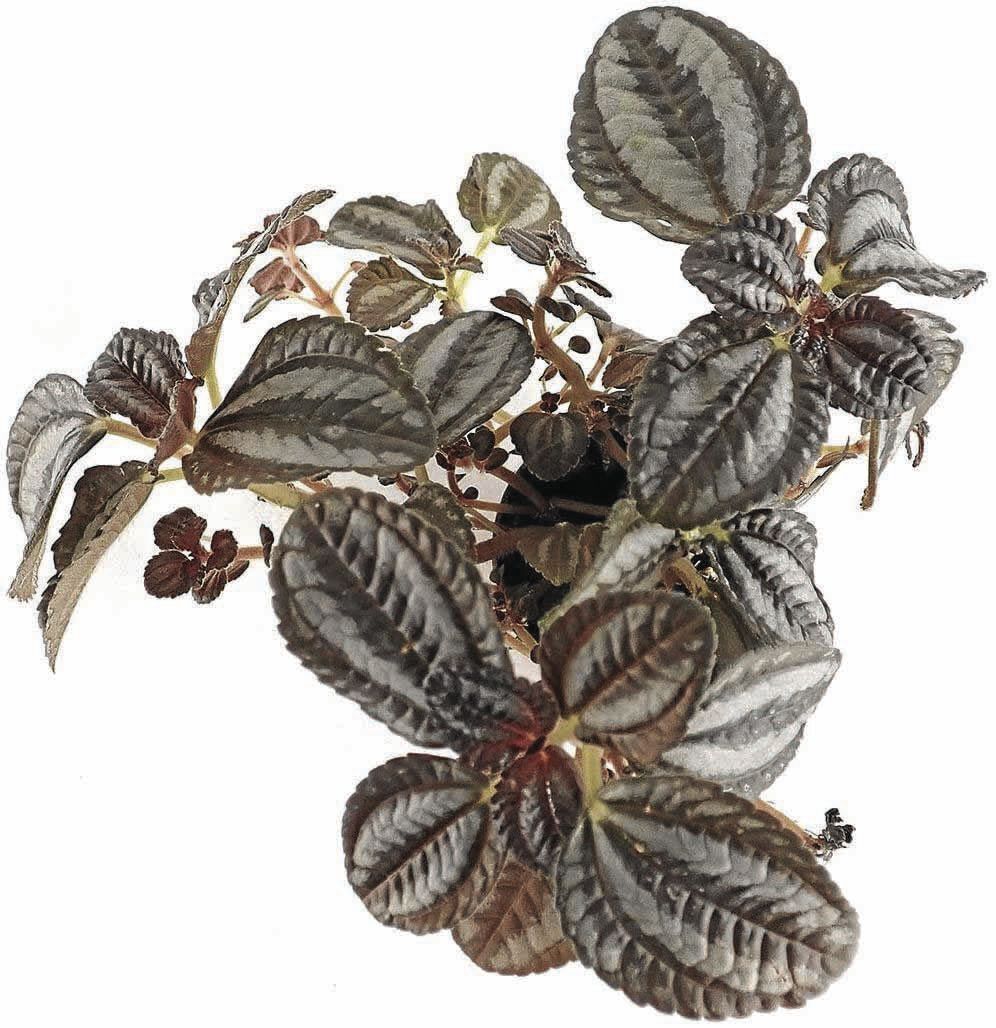
This plant is named for the ease with which it can be divided and shared—so if you happen to receive such a gift, rest assured it’s safe for your cats and dogs. But beware, pets may be especially drawn to the fuzzy, crinkly leaves.
Certain kinds of herbs

Indoor herb gardens are an easy, fun way to add fresh flavor to your cooking. But not all herbs are created equal when it comes to pet safety. Standards like lavender and oregano are off-limits, but pets are fine around basil, sage and thyme.
Peperomia

This quirky plant has blooms that resemble tubes of lipstick, and is safe for cats and dogs alike. A native of the tropics, it thrives in bright light and loves being outside in the warmer months.
Parlor palm

This is the perfect solution for pet owners looking to add a small tree indoors. Safe for cats and dogs, it’s also great for green-thumb beginners.
Polka dot plant

This plant is perfect for adding a fun splash of pattern to miniature gardens, terrariums, mixed containers and more. Available in colors such as white and pink, it’s as versatile as it is whimsical.
Prayer plant

Topping out at 6 to 8 inches, this plant is ideal for small spaces such as bookshelves and end tables. Its red, cream and green leaves curl up at night, giving it its name. What’s more, it’s one of the easiest houseplants you can grow.
Some succulents

Many of the most popular succulents — including hens and chicks, echeveria and rosettes — aren’t problematic. However, with so many varieties on the market, it’s best to research each individual plant.