

Moments after giving birth, Megan Sneary clung to her husband's reassuring words: "It's not her face. She's going to be OK."
Their daughter, Cora, had a cleft palate, which is a split or opening in the roof of the mouth. Sometimes it involves the hard palate along the front or, as in Cora's case, the soft portion at the back of the mouth.
Cora would need surgery, ongoing medical care and therapy for issues related to her hearing, eating and speech. She also has congenital heart disease, which is related to her birth defect.
The Snearys, who also have a 5-year-old son and a 5-month-old daughter, might be driving Cora around to doctor visits and therapy sessions.
Instead, they take her to one place: Tucson's Children's Clinics.
Hidden within the maze of parking lots and buildings on the Tucson Medical Center campus, Children's Clinics offers medical care and therapy for children with complex health-care needs.
People are also reading…
It is also home to one of only two Arizona cleft care teams recognized by the American Cleft Palate Association. The other is Barrow Children's Cleft and Craniofacial Center at St. Joseph's Hospital in Phoenix.
"The treatment protocol for cleft-affected children tends to be sequential, with one specialist's services often being dependent upon those of another," said Colleen McHugh, a medical social worker who coordinates the clinics' orofacial team.
"Maneuvering through this level of care coordination, while possible through individual providers' offices, can be a very complicated process."
Cleft palates and cleft lips occur during the first two months of pregnancy. According to the Mayo Clinic Web site, the lip and palate usually fuse together but sometimes this doesn't take place, or occurs only partially, which leaves an opening or "cleft."
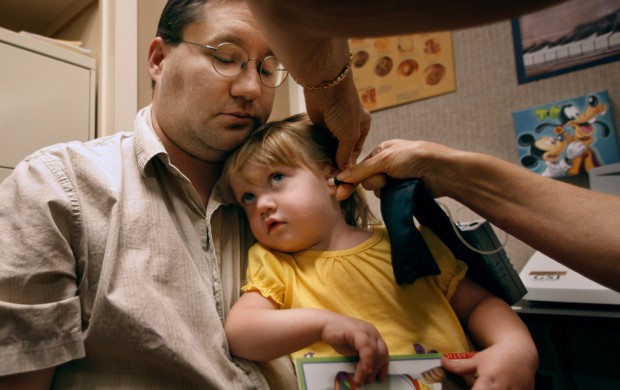
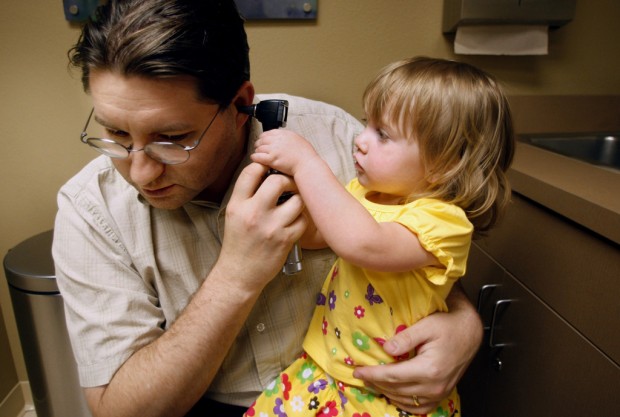
Dr. David Parry, a pediatric ear, nose and throat specialist who works with Cora, said trouble with hearing, speech and swallowing is typical for cleft patients.
Cora is small for her age, but developing well. She turned 2 in January, but still wears clothing for toddlers half her age.
"It was harder for Cora to eat during those first six to nine months before she had the surgery and that might have slowed her development," said Aaron Sneary, a computer security evaluator at Fort Huachuca.
The couple worked with one of the clinics' pediatric dieticians to help Cora.
"She was using more calories trying to eat than there were calories in her food," said Megan Sneary, cultural and recreational supervisor for the city of Sierra Vista.
Cora has scored poorly on hearing and speech tests a couple of times, but it's being addressed.
"The last time, they determined that her (ear) tubes had come out and fluid had built up in her ears," Aaron Sneary said. New tubes were put in a month or so ago.
"It was amazing. She came out from under the anesthesia and was already more clear. And since then, we've seen a significant improvement in both speaking clearly and hearing what you are saying."
• • •
On any given day, up to 150 children and teens visit Children's Clinics, said Jill Bemis, CEO of the non-profit facility.
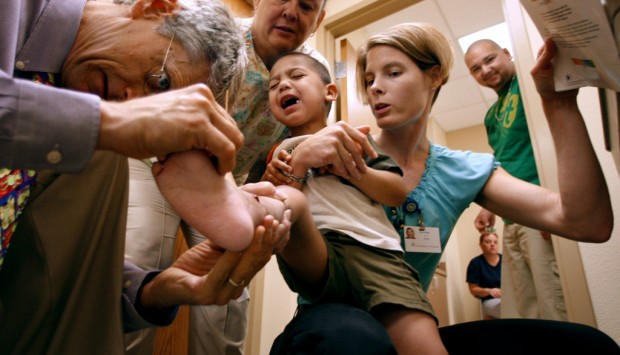
In addition to cleft-palate and cleft-lip patients, Children's Clinics provides medical, dental and therapeutic care for children with cerebral palsy, spina bifida and muscular dystrophy, as well as other illnesses and disabilities.
"While all children can get care here, it's especially designed for children who have complex issues and need multiple-care providers," Bemis said.
Visits are scheduled when specialists are available. Parents and caregivers find their way around using a color-and-animal coded system, which decorate the four clinical suites. There is also a corridor with laboratory and X-ray services.
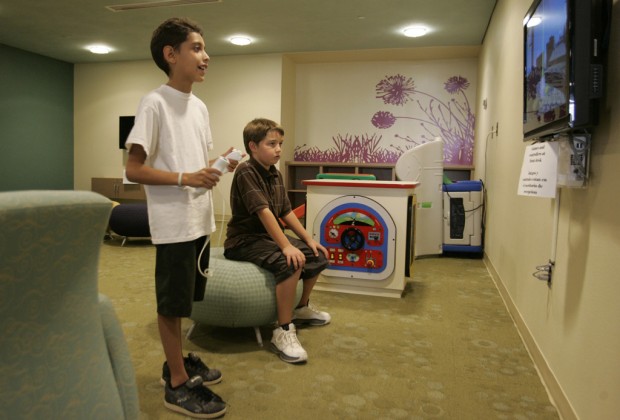
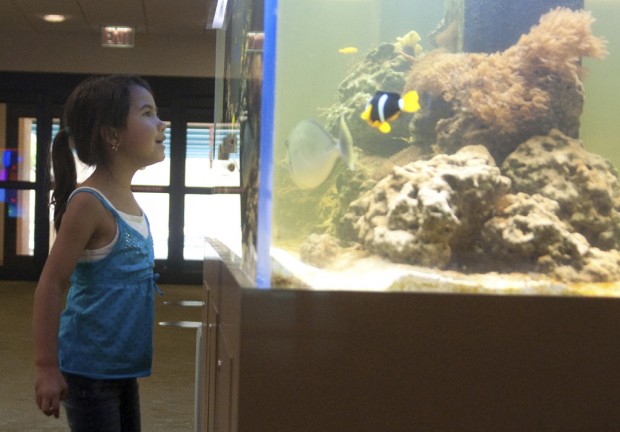
Extensive renovations on the two-story 38,000-square-foot building were finished last fall. The colorful main lobby includes an interactive light wall, movies, computers and a giant salt-water aquarium. Each unit has an outdoor patio.
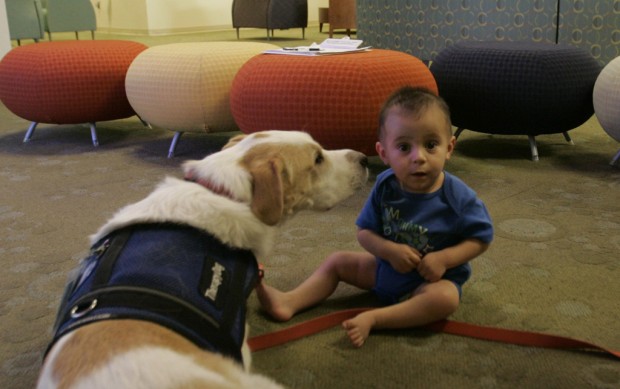
In addition to medical professionals, therapy dogs - including Bemis' own pup, Eliot - circulate the floors to help comfort and empower young patients.
Not all of the patients have special medical needs. About 1,300 patients, some siblings of children with special needs, visit one of the clinics' two full-time pediatricians.
"Because we are the only comprehensive, multidisciplinary, multi-specialty clinic in Southern Arizona, it is also important to have these services available to families who have resources and private insurance, not only to low income residents," she said.
Bemis said they are slowly getting the word out, and thinks many haven't heard of the clinic.
Typically, the focus has been on children covered by Children's Rehabilitative Services, which, according to the Arizona Department of Health Services website, provides family-centered medical treatment, rehabilitation, and related support services for children under age 21 with qualifying chronic and disabling conditions who are enrolled in the Arizona Health Care Cost Containment System (AHCCCS).
• • •
Megan and Aaron Sneary let people know about Children's Clinics whenever the chance arises.
Recently, they were at a restaurant in Sierra Vista and noticed a Haberman bottle - used for feeding babies with cleft palates - sitting on a nearby table. They approached the family.
"We found out quickly that they were not aware of the cleft palate team (at Children's Clinics). The doctor had given them a Haberman but that's it," he said. Aaron Sneary said the baby was a few months old and the couple were looking into options for surgery.
"They had no idea. They were just sort of in the dark," Aaron Sneary. "Really, the only reason we knew about it was because we had the baby in Tucson."
Cora will continue to need medical attention as her body changes and grows, and her parents are relieved all of her medical files and appointments will be in one place.
"We didn't have to have the same tests repeated over and over again, and the docs can all easily see what the others are saying," Megan Sneary said. "There are no files going from one side of the city to the other."
Aaron agrees.
"The people are all just amazing. They are all really dedicated," he said. "You can tell this is their passion, that they do this because it really matters to them."
By the numbers
20,500
Number of clinic visits between July 2009 and June 2010
70
Number of staff workers
60
Number of physicians holding clinics on-site
Learn more
To learn more about Children's Clinics, its volunteer opportunities and whether enrolling might work well for your child, call 324-5437 or visit www.childrensclinics.org. Donations can be made online or by telephone.
Did you know
Children's Clinics, 2600 N. Wyatt Drive, was founded by nonprofit Square & Compass in 1947 as a pediatric polio clinic. The current facility formed in 1991 as a non-profit corporation affiliated with Tucson Medical Center and University Medical Center. It offers more than 25 medical and dental specialty clinics, primary care and therapy services for children with and without special needs.
Services at Children's Clinics are provided by community physicians, University Physicians Healthcare, and Children's Clinics staff and therapists. Square & Compass supports Children's Clinics through contributions, both for construction and patient care.
Contract reporter Patty Machelor at 806-7754 or pmachelor@azstarnet.com.