New achievement awards from state school superintendent Tom Horne delighted thousands of Arizona families while broadcasting Horne’s name widely before an election.
For the first time in his four-year term, Horne sent a "certificate of high achievement" along with a personal letter on Arizona Department of Education letterhead to all 88,000 public school students who scored in the top 10% of a standardized test. Many families received the mailing June 30 or July 1.
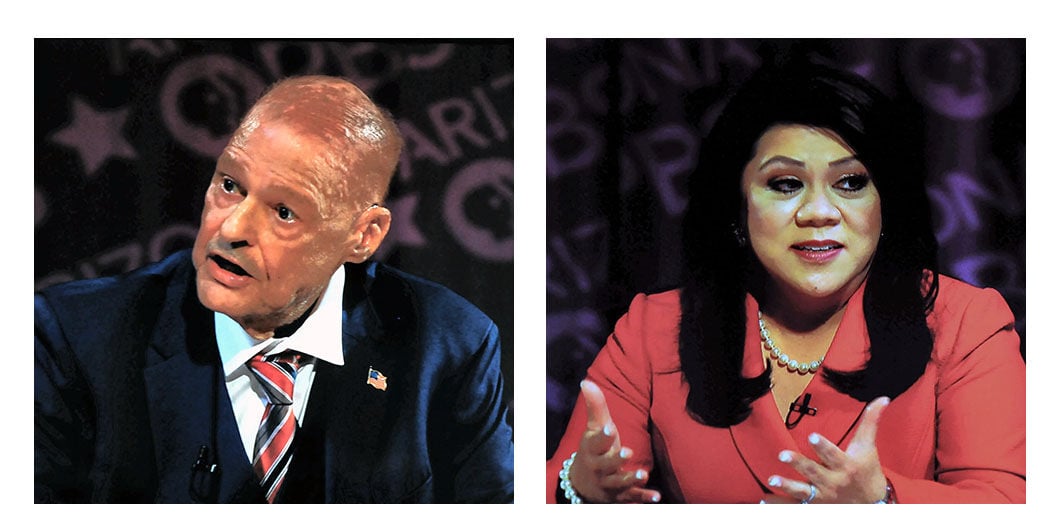
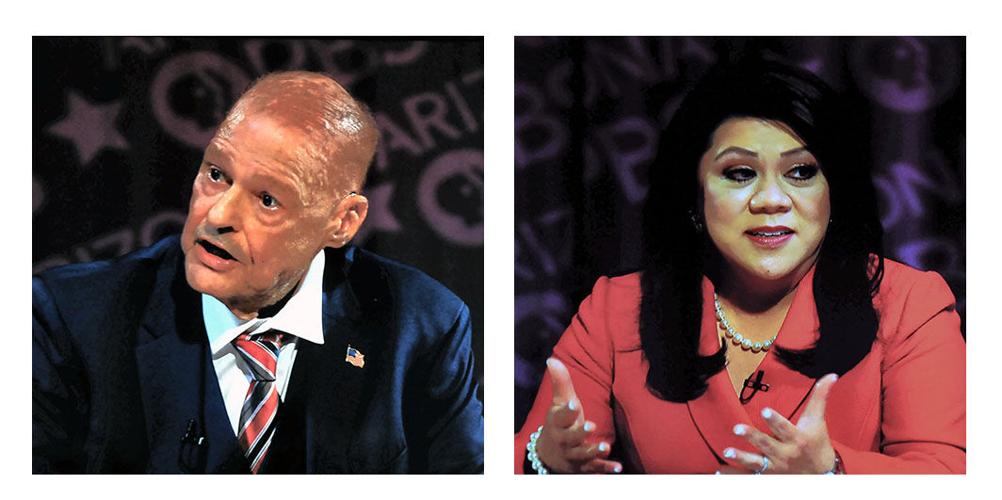
Incumbent state schools chief Tom Horne sent 88,000 public school students an achievement certificate along with a personal letter, prompting concerns that it was a move to boost he name before the July 21 primary. Challenger Kimberly Yee, the state treasurer, did not comment.
Students and their families accepted the certificate with pride.
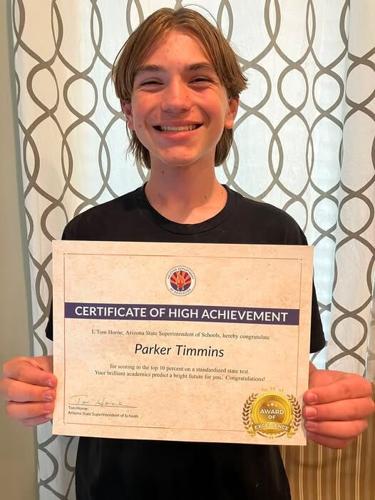
"Your brilliant academics predict a bright future for you!" the certificate reads. Containing just 46 words, the certificate features Horne's name twice.
"I felt very honored to be able to have it, especially because I put a lot of work into the grades I’m getting right now," said Parker Timmins of Gilbert, a 14-year-old who will start high school in the fall. "I feel it’s a really cool way to show that I deserve getting this award and to be acknowledged."
People are also reading…
His mother, Autumn Timmins, posted her son's photo with the certificate on Facebook.
"We even went and got it framed," she said.
Some political observers saw the mailing cynically, wondering if Horne did it just to boost his name ID before the upcoming election.
Horne, a Republican who's being challenged in the July 21 primary election for his job by state Treasurer Kimberly Yee, told The Arizona Republic the mailing "absolutely" had nothing to do with his reelection campaign.
Horne approved the mailing in April after staff determined the agency possessed unused federal funds, he said.

Parker Timmins, a Gilbert student on his way to high school, was one of 88,000 students who received one of the new achievement awards from the Arizona Department of Education in 2026.
"We found we had this money there, and this was one of the possible uses," he said, adding he didn't believe "anyone" could think anything improper had occurred. The timing of the mailing was based on when scores came in from the standardized tests given at the end of the school year, he said.
The total cost was $180,000, which was "cobbled from administrative dollars available to us," said Doug Nick, the agency's spokesperson.
Yee declined comment about the mailing.
While trying to win reelection as state attorney general in 2014, Horne was accused by critics of waiting until an election year to release money and air ads to help people with mortgage problems.
Other elected officials have been accused of similar schemes to spread their name from their office.
A 2015 formal opinion by former state Attorney General Mark Brnovich suggested a case could be made for a campaign violation for apparently routine agency mailings or ads.
"... Routine communications are presumed to be permissible," the opinion states. "But that presumption may be rebutted by evidence that the communication meaningfully deviated from the routine in a manner that objectively indicated it had the purpose of influencing an election in violation of the statutory prohibitions."
Arizona lawyer James Barton, a campaign expert who typically represents Democrats, said an argument could be made that the mailing violates campaign-finance law by unlawfully using state resources to promote a candidate, but it would not be easy to prove. After a formal complaint, a court would have to make a ruling "in the middle of an election, and nobody likes doing that," he said.
"It is smarmy," Barton said of the mailing. "I don't know if it's illegal."