
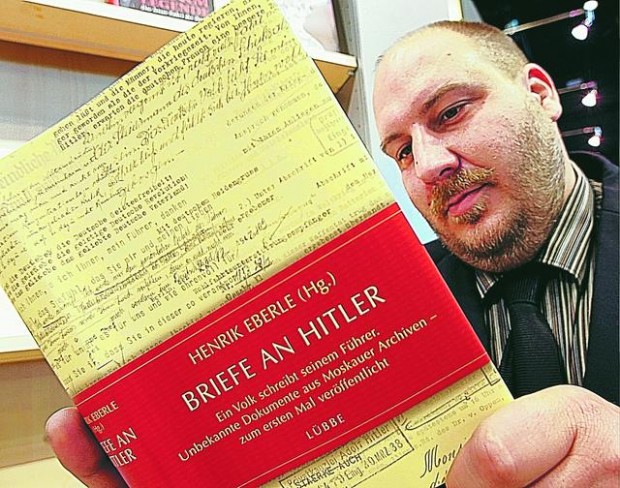
BERLIN — The letter carefully printed in a child's hand seems innocuous, nothing more than the expression of a young crush: "I love you so much. Write me — please. Many greetings. Your Gina."
The recipient: Adolf Hitler.
The 1935 letter is one of 300 in a new book "Briefe An Hitler" — "Letters to Hitler" — by German historian Henrik Eberle. He examined 20,000 letters in Russian archives.
The letters give a unique glimpse into the minds of Germans during the Nazi era, from party sycophants and ordinary citizens to political opponents and Jews suffering under the Nazi regime.
"It is important to show the whole picture," Eberle said. "There are totally normal people's feelings, and then there are also the thoughts of the prominent people."
The Nazis kept meticulous records, and the letters were carefully stored in Berlin. They were seized by the Soviet army at the end of World War II and taken to Moscow.
People are also reading…
While some individual letters have been previously published — like one from World War I hero Gen. Erich Ludendorff complaining of diminishing freedoms under the Nazis — the vast majority have never been seen by the public.
The 476-page book, which is being presented this week at the Frankfurt International Book Fair, is available only in German. Publishers Gustav Luebbe GmbH & Co. said there are no immediate plans for an English edition.
By 1945, the letters dwindled. Hitler got 10,000 birthday cards in 1938, Eberle said; in 1945 he got under 100.


 Northwest Tucson's Uptown project lands 2 restaurants, tasting room