

MOSCOW — Yulia Khrushcheva sat in the afternoon shadows of her Moscow kitchen, her delicate fingers brushing back her silver blond hair, talking of the anguish of seeing her family's reputation under attack.
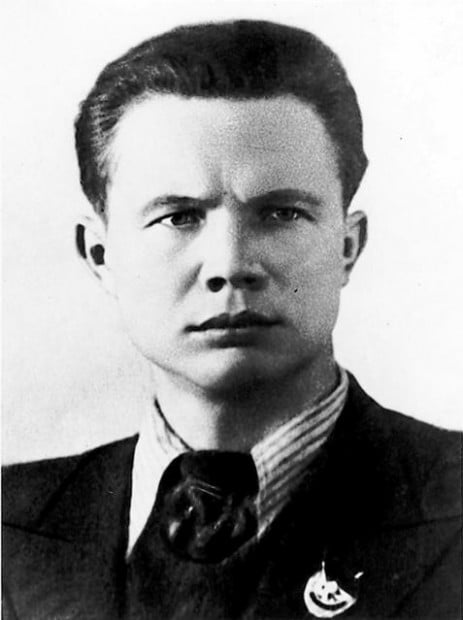
The 68-year-old granddaughter of former Soviet leader Nikita Khrushchev has filed a series of lawsuits against a state-owned TV network for airing a docudrama that, she says, falsely depicts her father, Leonid, as having been shot as a traitor in World War II.
These allegations of her father's treachery, which historians dismiss, have been published more than a dozen times in books, magazine articles and newspapers in the post-Soviet era, and sometimes she cannot bring herself to read them. "I am not that brave," she says.
Some members of the Khrushchev family and others say the persistent rumor is part of a quiet battle of political symbols, in which the champions of a strengthened state have tried to weaken democratic institutions.
People are also reading…
The aim, they say, is to burnish the reputation of strong leaders, such as former President Vladimir Putin and Stalin, by tarnishing that of Khrushchev — who denounced Stalin's mass arrests, executions and deportations in a secret 1956 speech to the Communist Party leadership that later became public.
The tactic, they say, is to smear the son with a bogus charge in order to defame his famous father, and then to claim Khrushchev's celebrated speech was actually motivated by a desire for revenge.
"This is not about Khrushchev or Stalin, it's about the future of Russia," said Sergei Khrushchev, Leonid's half brother and a senior fellow at the Watson Institute for International Studies at Brown University.
Part of epic struggle
Irina Shcherbakova of the Memorial, a Moscow human rights group, said authorities "undoubtedly" help spread the rumors of Leonid Khrushchev's alleged execution, as part of Russia's epic struggle between authoritarianism and reform — of which Stalin and Khrushchev are the two icons.
"The reason these rumors persist ... is rooted in the fate of the country, when reformers are considered to be weak and tyrants strong," she said.
Some political analysts see the attacks on Khrushchev's memory as a settling of scores among the descendants of Soviet-era elites rather than any state-orchestrated campaign to undermine reform.
"I don't think Khrushchev is of any interest to today's Russian government," said Masha Lipman, an analyst with the Carnegie Moscow Center, who has often been critical of the Kremlin.
Khrushchev is generally recalled in the West as the shoe-banging Soviet leader who confronted a youthful President John F. Kennedy during the Cuban missile crisis. But in Russia, he may be best remembered for the 1956 speech.
To those who defend Stalin's memory, the story of Leonid's supposed treachery suggests the speech was an act of vengeance.
According to official accounts, Senior Lt. Leonid N. Khrushchev, a fighter pilot, disappeared during an air battle near the town of Zhizdra southwest of Moscow on March 11, 1943. Leonid's fellow pilots presumed that the 26-year-old's plane had been shot down and he was killed. Neither he nor his aircraft was ever found.
His death certificate says he died on the day of the air battle. He was posthumously awarded the Order of the Great Patriotic War.
William C. Taubman of Amherst College, who wrote a Pulitzer Prize-winning 2003 biography of Nikita Khrushchev, flatly rejects stories of Leonid's alleged defection and execution. "I'm convinced Leonid was shot down and killed in the war, and that he was neither a captive nor collaborator of the Germans," he wrote in an e-mail.
Claim repeated since 1991
However, a small but persistent group of authors have reasserted the claim repeatedly since the 1991 Soviet collapse.
In a 2004 encyclopedia titled "The Epoch of Stalin: The People and the Events," Vladimir Sukhodeyev wrote that Nikita Khrushchev fell to his knees and begged Stalin to spare Leonid's life. "Stalin asked him to stand up and get a hold of himself," Sukhodeyev wrote.
Khrushchev, who died in 1971, did not mention the rumors about the circumstances of Leonid's death in his memoirs.
According to the Khrushchev family, the KGB spread rumors of Leonid Khrushchev's execution as part of an effort in the 1960s to rehabilitate Stalin following Nikita Khrushchev's ouster and the rollback of his reforms. Khrushcheva said she first heard the tales in the late 1980s, presumably as part of a campaign against Gorbachev's reforms.
"It's not the truth. It is rumor," she said. "But then it became widespread."
Sergei Khrushchev said he believes the tales likely have at least the tacit endorsement of authorities. "Nothing happens in Russia without the support of the government," he said.
Putin's office — he is now prime minister — would notcomment. Alexei Pavlov, a spokesman for President Dmitry Medvedev, said the Kremlin had no connection with the broadcast and could not comment.


 Tucson to get a Teso Life store


