

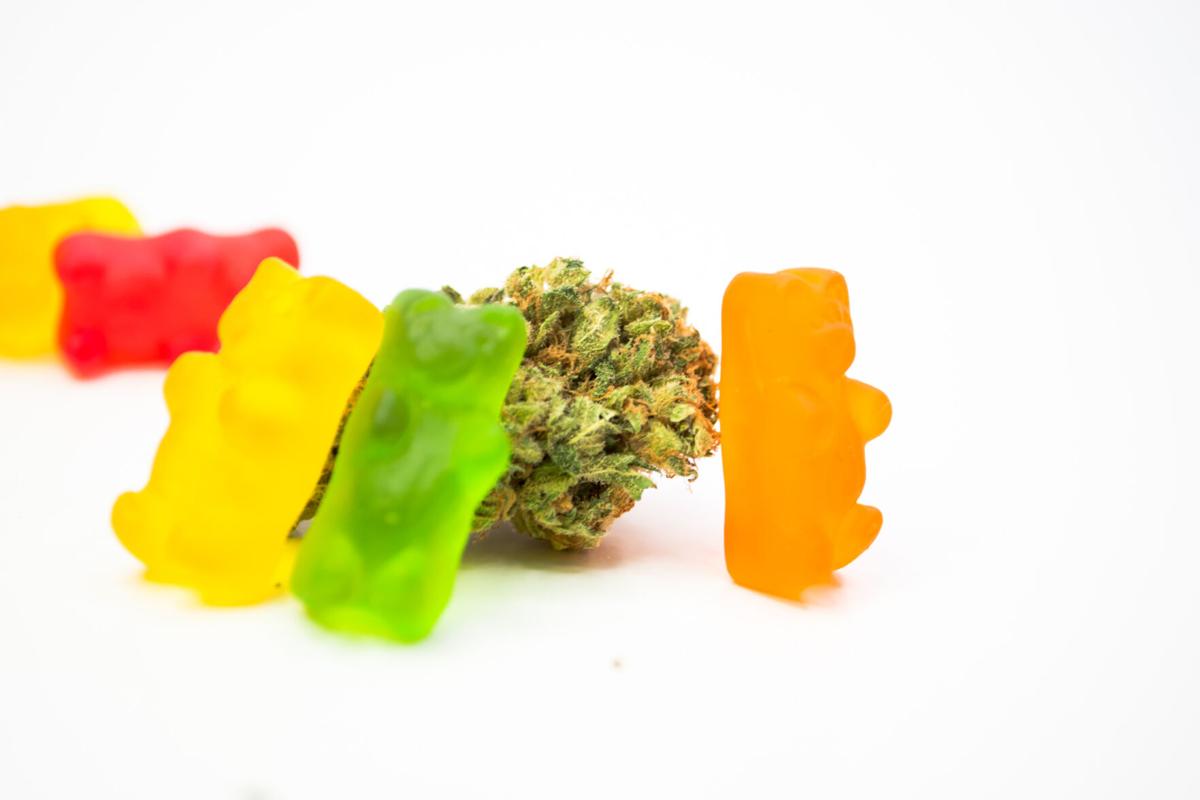
You’ve probably seen the headlines: “Edibles pose risk to children,” or “Rise in calls to poison control centers for marijuana intoxication in kids.” As more states move to legalize cannabis for adults, the number of products (and problems) falling into the hands of children seem to be multiplying.
Now in response, the Arizona Dispensaries Association is partnering with Arizona Poison and Drug Information Center to “create an awareness campaign” about the dangers of unintentional cannabis ingestion, especially for young children.
“The partnership really came about when we observed a news story that had come across maybe four or five months ago talking about the increased accidental ingestion of cannabis by children,” Ann Torrez, executive director for the ADA, said.
In a press release announcing the partnership, poison control confirmed 739 cases of cannabis-related incidents in 2022, over half of which involved children. Of the 394 pediatric cases, 60% involved a hospital visit.
People are also reading…
Steven Dudley, director of the Arizona Poison and Drug Information Center, confirmed that the number of incidents involving very young children (younger than five years old) increased as well, up to 210 cases last year alone.
He said that, with cases involving children that young, ingestion of some sort of edible product is usually the culprit. While some full-grown adults might have problems with edibles, especially if taken unknowingly, it’s a whole different story for very small children.
“A lot of the time, we're talking about weight-based dosing,” Dudley said. “Ten milligrams for an adult of 160 pounds and 10 milligrams for a child who weighs 30 pounds, 20 pounds, those are two completely different scenarios.”
According to the National Capitol Poison Center, the effects of cannabis edible ingestion for young children can include vomiting, dizziness, difficulty walking, a rapid heart rate, drowsiness, confusion, and breathing difficulties.
In severe cases, hallucinations, an abnormally slow heart rate, and low blood pressure may occur.
The rise in cases isn’t unique to Arizona, either. In Colorado, the number of reports received by the Rocky Mountain Poison and Drug Safety rose from 56 in 2017 to 151 in 2021.
To help combat the rise here, the ADA and poison control partnership is taking an educational approach.
First, the organizations are starting an awareness campaign to better educate consumers, especially parents of young children, about the negative effects of cannabis edibles for children and teens.
As part of that effort, the ADA is distributing window clings to its member dispensaries across the state that include a QR code guiding consumers to the ADA website with a link to education and information regarding safe and responsible cannabis usage on the ADA website.
As part of this education campaign, there is also an emphasis to make the public aware of the potential danger posed by "unregulated products."
"There's legal marijuana in the dispensaries for anyone over the age of 21," Torrez said. "But more concerning is the amount of unregulated products that are in the marketplace. That happened as a function of the Farm Bill."
Torrez is referring to hemp and hemp derived products (HDPs) that can be purchased over the counter in a growing number of locations throughout both Arizona and the rest of the country. Those hemp products aren't currently subject to similar scrutiny as products sold in state-licensed dispensaries.
What's the difference between hemp and marijuana?
Both are considered cannabis, but from there, the differences are part science, part politics.
In the United States, cannabis plants that contain more than .3% tetrahydrocannabinol (THC, the main psychoactive compound found in cannabis) are legally considered marijuana. Any plants containing less are hemp plants, by definition.
Marijuana is still federally prohibited, although 21 states and the District of Colombia have passed some form of adult-use legalization. Hemp on the other hand operates "in a sort of gray area," said Sully Sullivan, director of the Hemp Industry Trade Association of Arizona.
That "gray zone" is due to the passage of the 2018 Farm Bill in Congress. The legislation removed hemp from the U.S. Drug Enforcement Administration’s schedule of Controlled Substances which allowed for hemp and most hemp products to be produced and shipped across state lines.
It also opened the door for HDPs that can contain cannabinoids that are similar (or in some cases, identical) to those found in marijuana.
In Arizona, all medical and recreational marijuana and marijuana-derived products are overseen by the Arizona Department of Health Services and are subject to a litany of state-mandated tests and standards before being eligible to be on dispensary shelves.
However, hemp and HPDs produced in Arizona are overseen by the state Department of Agriculture, to a point.
"The department comes out to their fields and collects samples," Sullivan said. "They do tests on the samples to make sure that they're not greater than 0.3% Delta9 THC. That's where their regulatory oversight ends, with a small asterisk."
Unlike marijuana, there isn't a state-mandated battery of tests levied on hemp and HDPs. That makes those products, which also don't have to be sold within the confines of a state-licensed dispensary and aren't bound by the state's borders, potentially more dangerous according to Torrez.
"The only difference here has been because these (HDPs) fell under a federal regulation," she said. "It's left a big gaping area for interpretation. And that interpretation is what's leading to some of these problems."
Torrez compared the difference between HDPs and products sold in dispensaries to another common vice commodity: alcohol.
"It doesn't matter if alcohol is manufactured from corn or grapes or whatever," she said. "It falls under the purview and the guidance of an intoxicating substance and is governed under that, and this is no different. The only difference here has been because this fell under a federal regulation."
Competing legislation
The ADA and Torrez had advocated for a recent bill, SB 1453, making it's way through the Arizona statehouse until last week. It would have mandated HDPs be sold in state-licensed dispensaries, limited HDPs to sales within the state, mandated in-state testing standards similar to legal marijuana and perhaps most consequentially, would have brought the industry under the eye of AZDHS.
"We were really hopeful that that would be well received and understood very clearly by our are legislators as a methodology to put a stop in this activity," Torrez said.
Sullivan however isn't entirely convinced it's hemp products that are driving the spike in reported calls to poison control. He pointed to the seemingly scatter-shot availability of HDPs.
He noted that, because of the varying range of products that can be derived from hemp and the varying legality of those products and compounds from state-to-state, many traditional places minors or others might come across those products simply don't carry them.
"If you go around to smoke shops, not all of them, but some will sell Delta8 products," he said. "You'll go into other smoke shops where they don't have it and they don't wanna touch it because they don't want to risk being raided or getting in trouble."
Sullivan did acknowledge that hemp products sold over the counter in convenience and grocery stores and other non-traditional spots have had problems in the past and agreed with Torrez that the hemp industry in Arizona needs more regulation.
It's just he thinks that should come from the department of agriculture, not AZDHS. Sullivan and HITA are advocating for a separate piece of legislation, SB1271. It recently passed in the state Senate and moves on to the House.
Similar to the ADA-supported legislation, it would create a testing regimen similar to the one marijuana products are subject to and add extra licensing layers for distributors and sellers. However, it would keep the industry under the purview of the Arizona Department of Agriculture.
That's where it belongs, according to Sullivan.
"The Department of Agriculture's regulatory framework has been regulating hemp since the inception of the hemp program and are the obvious department to do so, since hemp is an agricultural industry," he said.





 Historic bank vault now new Tucson speakeasy


