

Fall is in the air, and local chefs are teaming up with the nonprofit Ishkashitaa Refugee Network to bring new meaning to seasonal harvests with the Gastronomic Union of Tucson (GUT) Global Flavors Fall Festival at 5 p.m. on Sunday, Oct. 1, at Tucson Village Farm, 2201 E. Roger Road.
“These renowned local chefs are pairing up with refugee chefs — we call them home chefs — from Uganda, Burundi, Syria, Cuba and other countries,” said Christina Early, chair of the board of directors for the Ishkashitaa Refugee Network (IRN). “They take food from their countries and give it a Southwestern twist — a fusion of global flavors. The whole idea is to introduce people to tastes from other countries. We are really excited and grateful to GUT chefs and the Tucson Village Farm for providing the venue for this unique event.”
The event is illustrative of the nonprofit’s efforts to integrate refugees and asylum seekers from Africa, Asia, Latin America and the Middle East into the community while promoting cultural equity and simultaneously reducing food waste and food insecurity.
People are also reading…
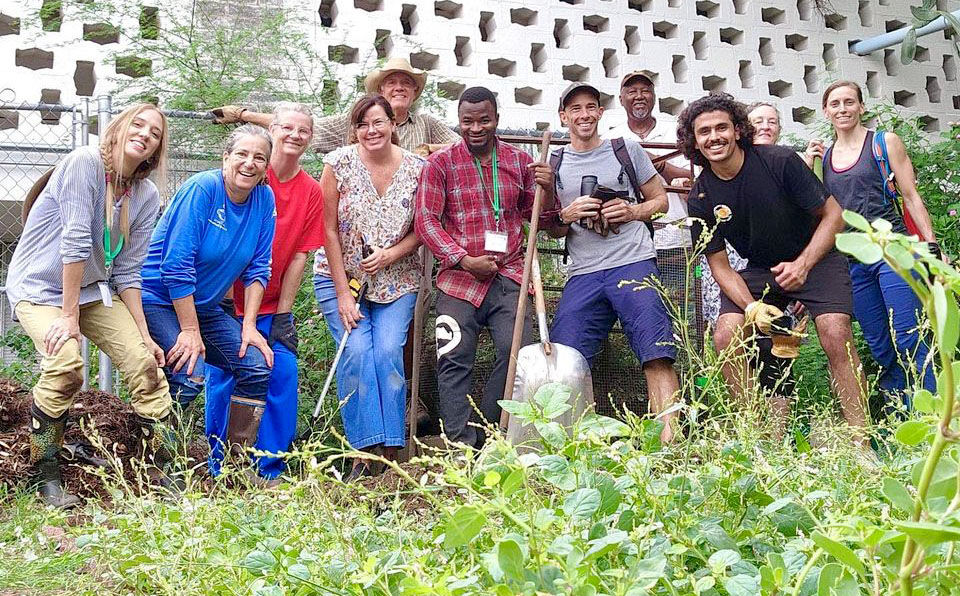
During the past 20 years, IRN has become known for gleaning and harvesting nearly 5 million servings of locally-grown fruits and vegetables that would otherwise go to waste. Volunteers — working side-by-side with refugees — harvest from yards and gardens across the region; at least 50% of the bounty is donated to refugee volunteers and their families, and the remainder is distributed to food banks and nonprofits that serve those who are food insecure.
“We average at least 70,000 pounds of citrus and up to 150,000 pounds of diverse fruits, vegetables, nuts, edible weeds and produce every year. We are always looking for groups to help us harvest,” said Barbara Eiswerth, executive director and founder of IRN.
She emphasized that IRN is not a resettlement agency but an organization that provides education, social opportunities and other resources to assist refugees with integration. Harvesting helps refugees learn to navigate the city, practice English skills, and make friends in the community.
“After the harvest, they share in the bounty of the day and can take citrus or produce back to their families and neighbors. It gives them a sense of self-dignity to provide for their families and friends. Most people don’t realize what it is like to be a refugee and come to a country with very little and then try to rebuild your life. We want to help them rebuild,” said Early.
Events such as the upcoming fall festival provide education and insight for refugees and the public alike, according to Devon Sanner, who spearheaded the event. Co-owner of Zio Peppe with Mat Cable, Sanner is the founder of GUT and a member of the board of directors of IRN. He said that attendees can expect a beautiful evening with diverse samplings such as Trinidad-inspired stew with oxtail; Burundi dishes such as Ugali, an African polenta, and Sombe, a stew of cassava leaves; and a range of distinctive cuisine from the Caribbean, Africa, Middle East and South America.
“This is such a great opportunity for GUT chefs who want to pair up with cooks from other parts of the world whose cuisine we seldom get to experience,” said Sanner. “We have the chance to learn from home cooks who know cuisine from Afghan, Syria and other countries, not academically or from a recipe book, but from grandma’s kitchen. It is an opportunity for all of us to learn and stretch ourselves.”


