

Pascua Yaqui Tribe
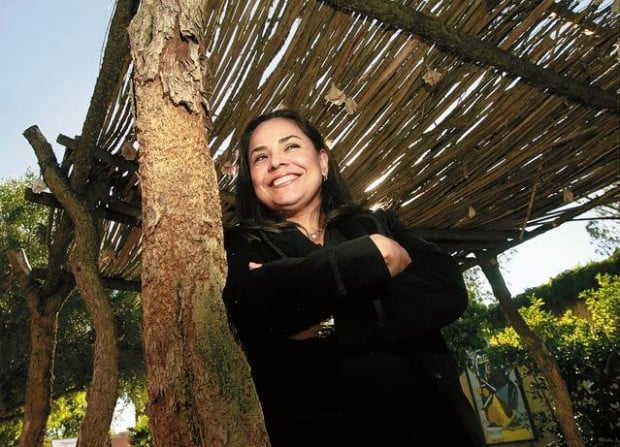
Herminia Frias, chairwoman of the Pascua Yaqui Tribe, is the first woman elected as its top leader.
She said she is challenged by the role. "I want to build and make our government stronger so that it can continue moving forward and improve services for the people," said Frias.
The 33-year-old biochemist, who is studying for a master's in public health at the University of Arizona, is head of a nation with 14,600 enrolled members. Nearly 4,000 live on the reservation. The tribe has 1,395 acres southwest of Tucson, off West Valencia Road and South Camino de Oeste.
The Yaqui originate from the Río Yaqui Valley in Sonora and are descendants of the ancient Toltecs. The name Yaqui was given to the Yoeme, which means "people," by Spaniards who arrived in Yaqui territory in 1533.
People are also reading…
The Yaqui fled Mexico because of government persecution in the late 1800s, and by the early 1900s a large group settled permanently in Arizona, working for the railroad and as farm laborers in Tucson, Yuma and Phoenix.
In addition to the reservation, Yaqui live in four main communities: Old Pascua Village, east of Interstate 10 and south of West Grant Road in Tucson; Barrio Libre,in South Tucson; Yoem Pueblo, in Marana; and Guadalupe, near Phoenix.
Learning culture and history
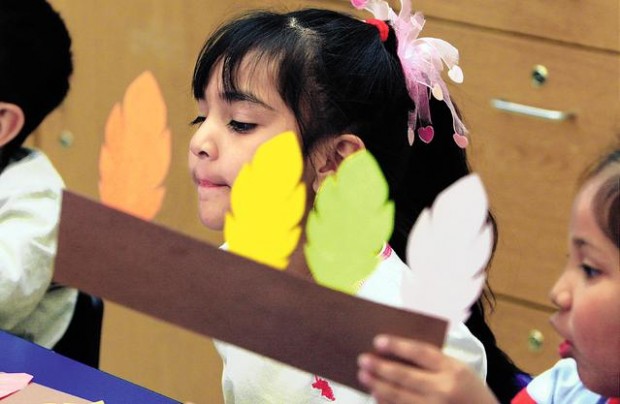
At the tribe's Pascua Yaqui Pre-School, some 130 children ages 3 to 5, are learning the Yoeme language through songs, greetings, colors and numbers, said Mary Helen Coleman, education coordinator for the center, which receives gaming dollars to run programs.
They also are learning about their history and about Yaqui soldiers who fought against persecution in Mexico and fled to the United States and also faced battles with U.S. soldiers, said David Jaimez, a staff member at the center.
Jaimez and Jesus Cordova gathered historical photographs from relatives and friends to put up in a display case at the preschool. "We want to pass on history about our warriors and freedom fighters who were brave and made sacrifices to help their people," said Jaimez, in reference to a photograph taken Jan. 9, 1918, near Arivaca.
He said Yaqui soldiers engaged in border fights with the 10th Cavalry in Southern Arizona. In one battle, Jaimez recalled that a group of Yaqui soldiers stayed behind and fired at 10th Cavalry troops so that fellow Yaqui could make a run for it and go back into Mexico.
Benefits of gaming
Chairwoman Frias sees gaming "as the economic engine" that helps provide program services to tribal members, and in turn helps improve their quality of life.
The tribe's gaming enterprises, Casino del Sol and Casino of the Sun, employ 1,300 and Pascua Yaqui government employs 840, ranking the tribe as No. 4 in minority-run workplaces in Star 200, a business supplement that ranks the top 200 employers in Southern Arizona.
Projects under construction that are being supported by gaming include a $4 million wellness center and a $3 million elderly center.
The wellness center will serve more as a recreational center, with fitness programs to prevent illnesses, Frias said. It will have a swimming pool and a gymnasium. Additional phases will include a $1.5 million park with ball fields.
She said the elderly center should be completed by summer and will be much larger than the present building, which was constructed about 40 years ago.
Seniors at the center have filled two large display cases with folk art depicting celebrations, historical photographs and mementos.
María Francisca Valenzuela, 76, is among some 350 elders who eat daily at the center. She was accompanied by Concepcion Molina, 59, and Gerarda Romero Alvarez, 64, both from the Río Yaqui in Sonora.
"We come to visit friends and family," said Molina, adding that the center is "the heart of the reservation for the seniors."
"This is where we share our lives, tell stories, and talk about our problems," said Molina. "We do exercises and also arts and crafts. We sew skirts, blouses, aprons and make paper flowers."
The elders also go on field trips and have gone to the Río Yaqui and Río Mayo in Sonora, Old Tucson Studios and Arizona-Sonora Desert Museum and for picnics at Reid Park.
"We are all one big family here," Valenzuela explained while eating a lunch of calabazitas con queso, beans and tortillas.
Chef David García Dominguez prepares the meals and comes from a long line of cooks. His great-grandmother, the late Loreta Lucero Alvarez, was a midwife and traditional cook at Old Pascua Village.
She prepared the foods for the religious ceremonies, baptisms, weddings and funerals.
Now Dominguez is giving a part of himself, something he was taught. "I am giving the elders the love that I received from my great-grandmother," he explained.
Casino del Sol
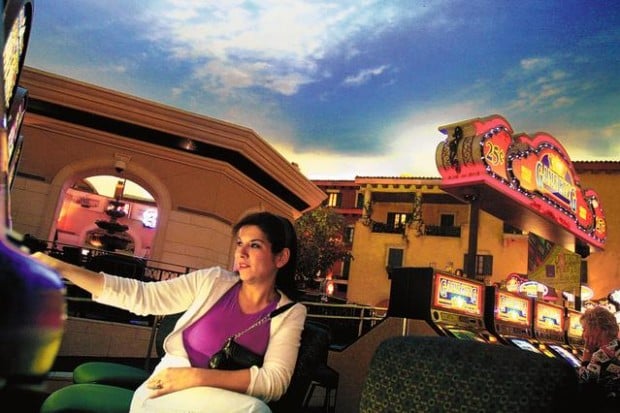
Casino del Sol offers a Mediterranean-style architecture, luring newcomers and old customers alike to the slot machines and card games. Patrons can also gamble at Casino of the Sun, the original establishment located east of the newer site.
Live bands play within Casino del Sol regularly as patrons try their luck at striking it rich. Others enjoy satisfying their appetites with deli sandwiches, hamburgers or brick-oven pizzas.
Offerings also include tacos, burritos or fine dining at Bellissimo — known for its lobster tails and Alaskan king crab legs.
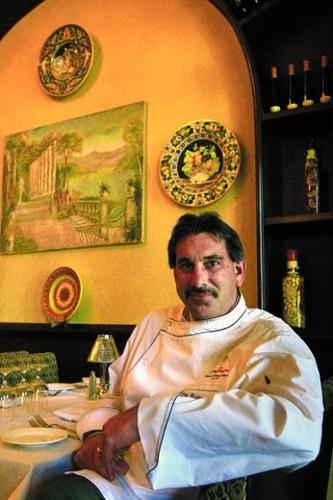
"I create for everybody's needs," said executive chef Tracy Castleman. "We are very diverse here. We have something for everybody."
Castleman is also known for his desserts. Among his creations are Gateau Riche, an almond-brittle shell with ice cream and fruit; Baci cheesecake, an Italian hazelnut chocolate cake; and Chocolate Fortune, a warm chocolate sponge cake.
Anselmo Valencia Tori Amphitheater
This outdoor venue can seat nearly 5,000 and has presented international stars such as Luis Miguel, Alejandra Guzman, Paulina Rubio, Ricardo Arjona, Enanitos Verdes and Ramon Ayala y Sus Bravos del Norte.
Comedians Carlos Mencia, Joey Medina and Alex Reymundo have also taken the stage before large crowds.
In addition to Latino pop, rock and country acts at the amphitheater, Casino del Sol is also creating city acts — such as the 2nd Annual Casino del Sol Tucson Tamal & Heritage Festival. The Dec. 2 event drew more than 5,000 who came to enjoy music and taste different types of tamales. Nonprofit organizations throughout Southern Arizona were invited to make and sell the food to help raise money for worthy causes.
Easter ceremonies
In February, the public is invited to the Yoeme Lenten ceremonies on the reservation and at four Yaqui communities.
Three of the communities are in Tucson at West 39th Street and South 10th Avenue, West 44th Street and South 16th Avenue, and at Old Pascua Village, east of Interstate 10 and South Fairview Avenue. The fourth is in Guadalupe, south of Phoenix and east of Interstate 10, off Baseline Road.
The ceremonies begin on Ash Wednesday and continue up to Easter Sunday. It is a blending of Catholicism and Yaqui culture and spirituality. There is a dramatization of the Passion of Jesus Christ.
During Lent, ceremonies are held each weekend. Visitors are not allowed to bring cameras, cell phones or video or audio recording devices.


