

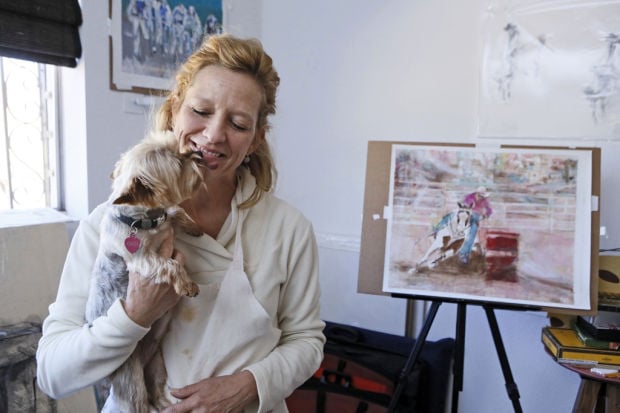

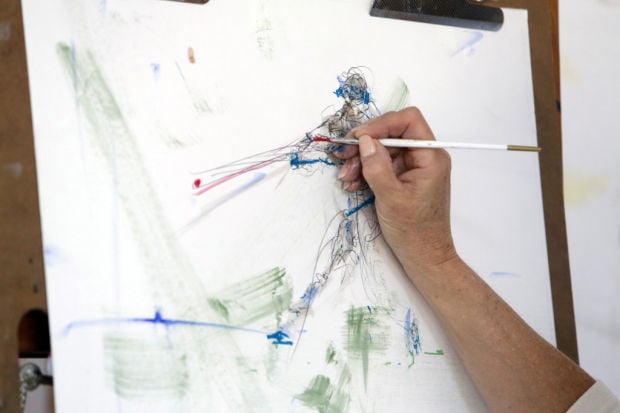
With the stereo rocking, Patricia Redding eyes the tennis player staring back at her from her easel.
Crisp, sharp strokes of the paintbrush bring the acrylic figure to life, ready to leap off the paper.
Redding, a Tucson artist, is drawn to athletes. She’s in awe of their willpower, their fierce determination.
She works quickly, with intense emotion. A pencil snaps as she draws powerful strokes. “That means we’re getting somewhere,” she says.
In the sunlit studio of her Tucson home — with striking views of the Santa Catalina Mountains and her two dogs at her feet — Redding feels the strongest, the most alive.
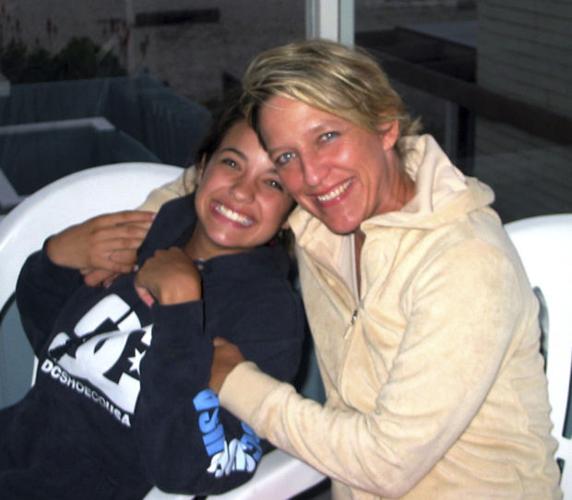
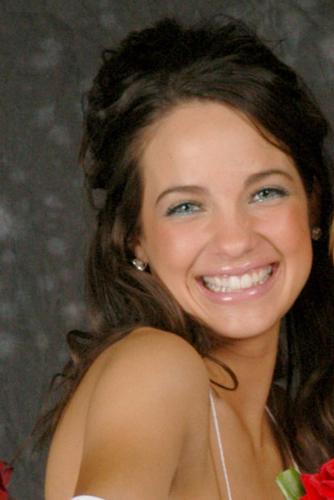
After her sweet, funny, athletic, gorgeous daughter Juliana Redding, 21, was murdered in 2008, Patricia wasn’t sure she would survive. Days, weeks and years passed with no arrest.
People are also reading…
Then there was breast cancer. Redding believes stress from losing her daughter caused the aggressive cancer to invade her body.
Her art — and the love of her family and friends — pulled her through.
She had always been drawn to art, but career, family and life left little time for it. After Juliana’s murder, art was the one thing that called to her. It held meaning for her, and could perhaps help her reinvent herself in her new life.
Art saved her.
Sadness, love pour out
Four months after her daughter’s murder, Redding started to draw.
She took an art class at The Drawing Studio in Tucson, and then another. She took several art classes at Pima Community College, encouraged by her teachers along the way.
In Juliana’s bedroom, she set up an easel that her husband had given her as a gift. She was inspired by her love for her only daughter.
The paintings came — some easily, others more challenging. She poured out her frustrations and her sadness and her love for her child on paper.
Through her art, Redding recreated life. And now her work is capturing national attention.
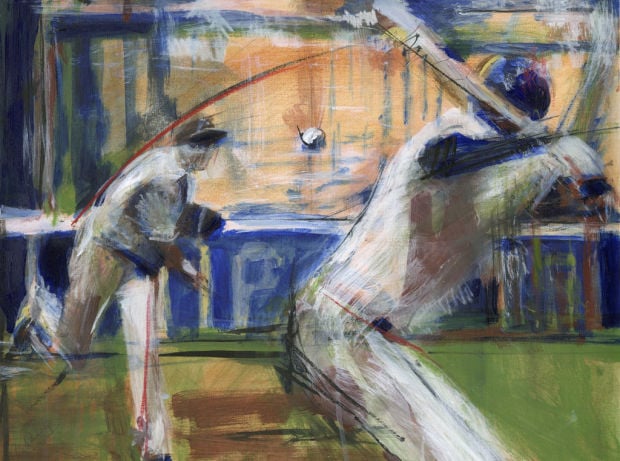
Redding recently had 18 pieces on display for 12 months in an exhibit at the Tucson International Airport called “Sporting Arizona.” She’s had pieces at the gallery at Tohono Chul Park, Coos Art Museum in Coos Bay, Ore., and in showings in Colorado, Indiana and Missouri.
She showed at the National Art Museum of Sport in Indianapolis, and is showing starting in January at the Herberger Theater Center in Phoenix.
When the family was again faced with devastation this past June — Juliana’s suspected murderer was acquitted — Redding continued to seek solace at the easel.
“My best painting happens when I am really emotional,” she says. “It helps to get all of your emotions out. I love the perseverance of the athletes I paint. Juliana’s favorite saying was, ‘Never, ever, ever, ever, ever give up,’ by Winston Churchill. That’s what it’s about.”
DEVASTATING CALL
Redding and Greg, her husband and best friend of 34 years, lived a life of beauty with their two children, blessed with family and good health.
After graduating from Salpointe Catholic High School, Juliana left Tucson for college, drawn to the excitement of Los Angeles. She had success in modeling, but dreamed of being a businesswoman one day, and perhaps opening her own boutique.
Juliana adored her family, and was constantly in touch through phone calls, text messages and visits home.
On March 15, 2008, she played golf and had an early dinner with a girlfriend before opting for a night on the couch with her favorite “Seinfeld” reruns.
The following evening, Redding received a call. Neighbors were worried about Juliana. She had not been seen that day, and her dog was running around in the apartment. The young woman appeared to be missing.
Her car was parked in front of her Santa Monica bungalow, but she was not answering the phone or door. Redding feared Juliana had been abducted, and she called police.
Santa Monica police found her strangled in her home, with Gigi, her beloved Yorkshire terrier, nearby. The intruder had turned on the gas, apparently hoping burning candles would ignite.
Juliana’s family flew to Los Angeles, devastated by the loss of their girl. Two years would pass before an arrest was made.
The suspect arrested was Kelly Soo Park, who prosecutors said was an “enforcer” for Dr. Munir Uwaydah, a physician Juliana had briefly worked for and dated. Prosecutors theorized that Juliana was murdered after her father pulled out of a business deal with the doctor.
There were numerous delays, but the case finally went to trial in May 2013. With the suspect’s DNA in the bungalow and on Juliana’s neck, tank top and cellphone, the family felt confident about getting a conviction. “Never in our wildest imagination did we believe we would not win this case,” Redding says.
The defense did not deny that Park’s DNA was at the crime scene, but said it was unclear how it got there. They said the defendant lacked motive for the heinous act.
When the jury came back with a verdict of not guilty, the emotions of devastated friends and family boiled over in the courtroom. In a July statement following the verdict, the family said it “strongly disagreed” with the verdict. “Our family is deeply saddened and shocked with the verdict of acquittal for Kelly Soo Park in the murder of our daughter, Juliana Redding,” the family wrote. “We believe the evidence against the defendant is enormous and extensive and that justice has not been served.”
BATTLING BACK
Back in Tucson, Redding spends several hours nearly every day in her studio.
As a young woman, she was offered an art scholarship to Southern Methodist University in Dallas. She instead opted for a career in information technology after graduating from the University of Arizona.
She worked in IT at the UA Medical Center for 22 years, then left her job a couple of years ago to concentrate on her art.
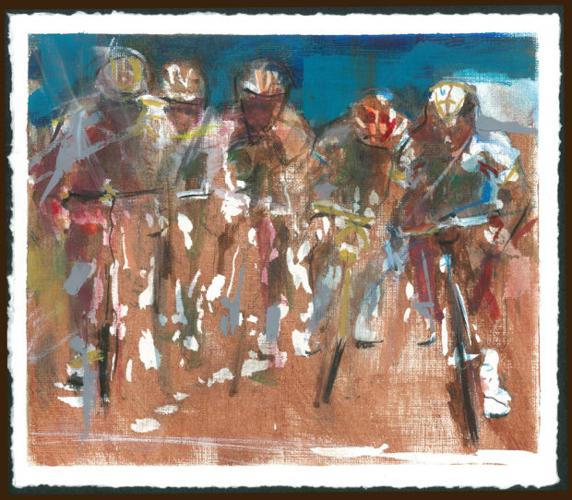
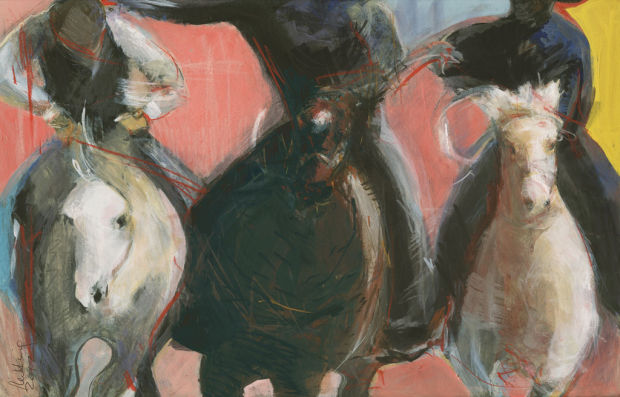
Baseball players and bicyclists have been among her favorite subjects to paint. She recently developed a passion for rodeo, drawn to the action.
Redding also credits art for helping her survive aggressive breast cancer, diagnosed a year after the murder.
“It was bad. The tumor was big. It was growing into the chest wall,” she says.
While she was prepared for a mastectomy, her physician told her of a clinical trial being conducted by a UA oncologist.
She underwent seven months of chemotherapy, followed by radiation. Treatments left her weak and ill. Day after day she would lie by the pool on a recliner, sketching.
“The tumor was dissolved into my body,” she says. “People travel all over the world to get the level of health care I received, and I live just up the street. I felt fortunate.”
Through it all, Juliana’s little dogs, Gigi and Tiny,have been at her side.
“The dogs are always with me,” she says. “They help me heal.”
A TIME FOR HEALING
Patricia, Greg and their son Patrick support one another through their ordeal, along with other family members.
“In some ways, we are still locked in 2008,” Redding says. “What was the jury thinking? The jury process is really flawed.”
The case continues to capture media attention. CBS’ “48 Hours” aired a show on the investigation last week and “Dateline NBC” has a show in the works.
“I think about Juliana all the time,” Redding says. “I kept so many things from our precious children. I still find little pieces of Juliana’s stuff, memories of her.”
She clings to a note Juli wrote her when she was away on a business trip. Her daughter was about 8.
“Mom, I miss you. Mom. I love you,” she wrote.
“This is what saves me,” Redding says.
Redding says she, her family and her daughter’s friends get frequent signs from Juliana. “They often come in the shape of a heart. We find hearts everywhere — in stones, leaves, everywhere.”
She writes them down in a book crammed with notes and papers, called the “Juli Sign Book.”
“These signs help. This void is going to be with us for the rest of our lives, and these signs help.”
Some days are full with memories of the joy that Juliana brought. Others are a struggle to get through, weighted down with loss.
“But I’m not searching anymore,” Redding says. “I have found what I am. I am an artist.”


