

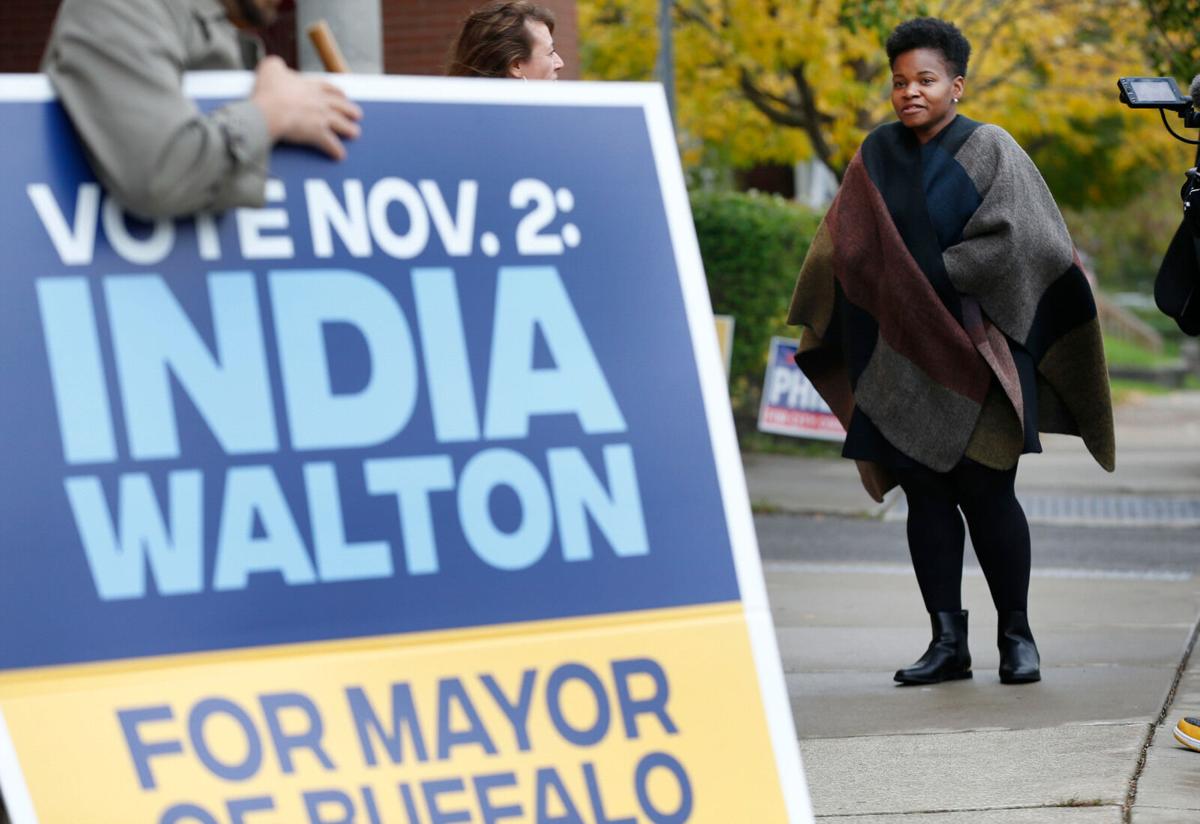
India B. Walton may have hit her mayoral campaign's high point back on Oct. 23 when Rep. Alexandria Ocasio-Cortez of the Bronx endorsed the avowed socialist during a rally at downtown Buffalo's Town Ballroom.
Perhaps the nation's most visible progressive, Ocasio-Cortez was praising Walton's effort to repeat her Democratic primary win against Mayor Byron W. Brown's write-in campaign in the general election – and, in the process, establish a democratic socialist bulwark in New York's second largest city.

Election officials will not begin examining the actual write-in votes until Nov. 16 when all absentee and military ballots are returned to the Board of Elections.
"Don't give her a win," Ocasio-Cortez told the cheering crowd that had stretched in a long line outside the ballroom before entering. "Give her a mandate."
But Walton acknowledged Wednesday that results of Tuesday's election for mayor make it unlikely she will win, let alone gain a mandate. And now, in the aftermath of Brown's apparent write-in victory, questions surround whether Buffalo was ever ready to follow the progressive path her primary victory seemed to have charted.
People are also reading…
Instead, many of the city's political veterans say Brown's general election numbers show a return to the city's long reputation as a bastion of conservative Democrats wary of socialist agendas like Walton's. And if Brown had mounted a primary effort with the intensity of his general election campaign, they wonder if her low turnout win would have occurred in the first place.
Some political pros said the seeds of Walton's disappointing performance were those she sowed on primary night and in the weeks afterwards, when she failed to broaden her base of support beyond the most progressive of progressives.
"There's an overwhelming majority of people in the City of Buffalo who believe you can't rule through a bullhorn," said North Councilmember Joseph Golombek Jr., a Brown supporter who referred to Walton's familiar image while leading last year's protests against the death of George Floyd at the hands of Minneapolis police. "People were angry about George Floyd, but that was an issue that happened elsewhere."
Those protests first propelled Walton into the spotlight, and Buffalo liberals and national figures eventually rallied to her campaign. She gained backing from progressive Sens. Bernie Sanders and Elizabeth Warren, while groups like the Working Families Party supplied tactical and financial support. Walton never veered from the party's left wing during the general election, and touted her philosophy despite the failure of other socialists to win a major American mayoral contest in more than six decades.
Working Families Director Sochie Nnaemeka late Tuesday attached an optimistic view to Walton's effort.
“No matter the final results, it’s clear that Buffalo is undergoing a major transformation," she said. "India Walton has shown what’s possible when working people come together and challenge the political status quo."
Asked immediately after her June primary win whether she considered herself a socialist, Walton said: "Oh, absolutely! The entire intent of this campaign is to draw down power and resources to the ground level into the hands of the people."

"The people chose four more years of the Brown administration," Brown said in his speech. "The people chose one of the greatest comeback stories in our history."
But in Brown's victory remarks Tuesday night, he said Buffalo voters could not embrace Walton's "ill-conceived" ideas. And even her supporters acknowledged that when Brown launched a full-fledged general election campaign – unlike his lackluster primary effort – Walton's liberal base was overwhelmed by more traditional Democrats.
"I told her that defunding the police was a losing issue," said political consultant Michael A. Darby, who worked on the Walton campaign's latter stages and noted Walton's inability to find the right audience for her ideas.
"Most people don't mind a progressive candidate," he said, "but most voters tend to be older and don't want radical change."
Other Walton backers like Gregory B. Olma say another candidate might have successfully carried the socialist banner. A Democratic zone chairman and Walton advisor, Olma said the campaign could never overcome "the personal foibles of the candidate," including a past arrest and failure to pay parking tickets.
"The general public was never really critical of her agenda, but the Brown campaign successfully made a campaign issue of her stumbles," he said, "even though they paled in comparison to the federal investigations of his City Hall.
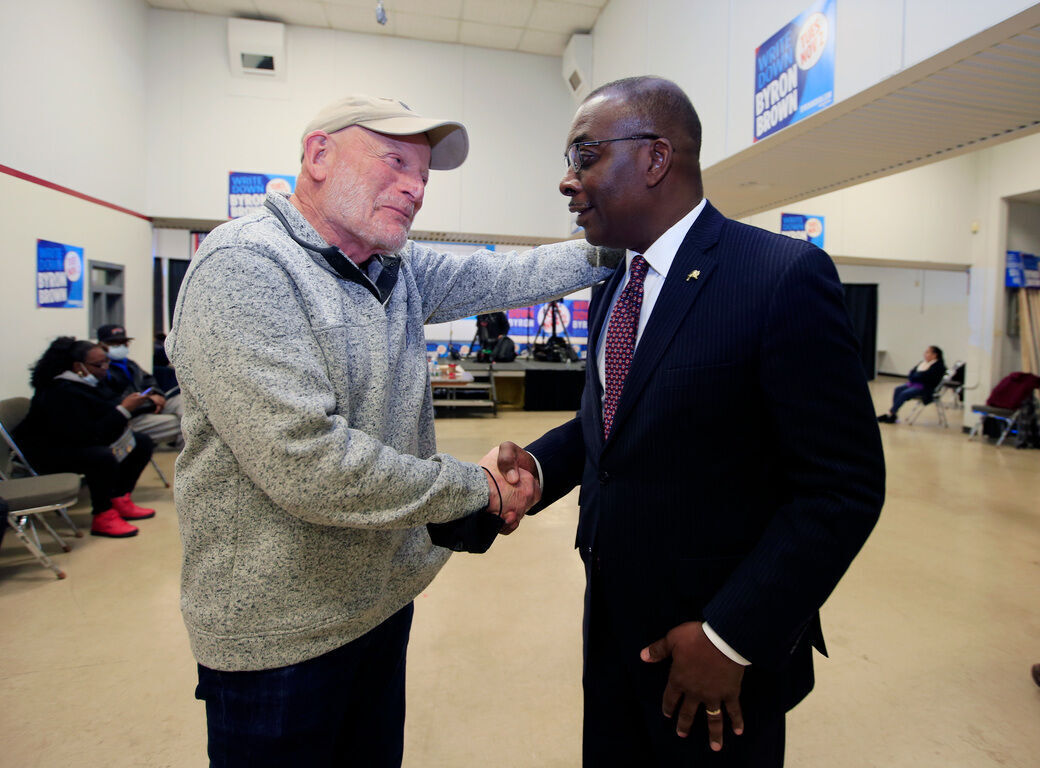
Real estate developers like Douglas Jemal and Carl P. Paladino clung to the Brown campaign, pouring money into his effort in hopes that they could save the development-friendly administration. And it worked.
"Nothing points to anyone saying 'I won't vote for her because she's too lefty.' It was more like 'I pay my parking tickets, why can't she?' "
Another Walton supporter, Erie County Democratic Chairman Jeremy J. Zellner, again criticized "outsiders" – whether for Brown or Walton – meddling in Buffalo affairs. But even after supporting Walton in the general election, he acknowledged that her philosophies did not resonate with the city's voters.
"Obviously, it was a clear message that this town is not for socialism," Zellner said.
Other major figures in New York State politics have injected the idea of socialism in Buffalo into the statewide political discussion. Rep. Thomas R. Suozzi of Nassau County, viewed as a possible candidate for governor next year, also came to Buffalo in October to support Brown and denounce his opponent's agenda.
"Byron Brown's victory tonight is a clear triumph of core Democratic values over the far left socialist agenda," Suozzi said early Wednesday.


