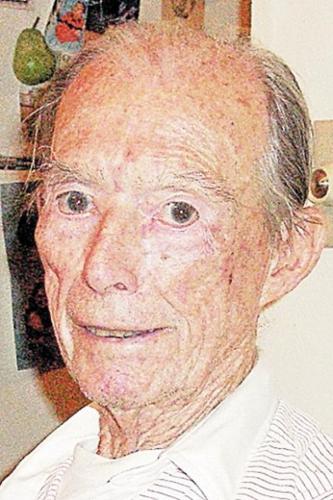
Bill Gleason didn't need to work when he and his wife, Rosemary, retired to Tucson in 1984.
He'd been a successful business executive in Iowa and had retired early, at 62, when Rosemary's health began to fail.
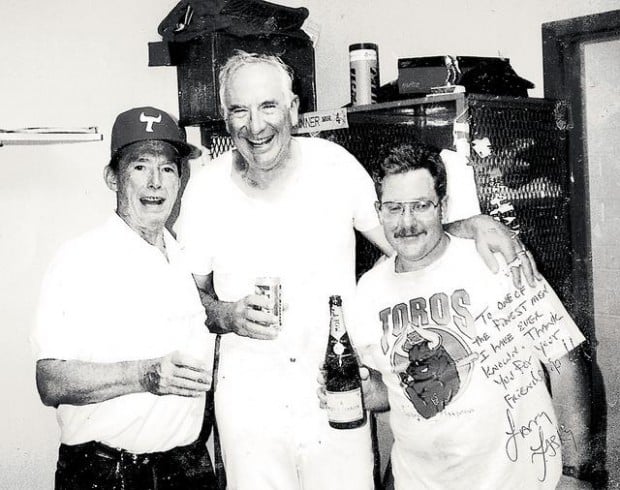
But he needed to keep busy, especially after his wife died in 1989, so Gleason signed on as clubhouse manager for the Tucson Toros, the minor-league affiliate of the Houston Astros.
Gleason spent 1985 to 1997 at Hi Corbett Field in Reid Park washing uniforms, maintaining stockpiles of fruit, candy, gum, sunflower seeds and Otter Pops, ordering equipment and rubbing down six to eight dozen balls per game with the legendary Delaware mud that helped the pros keep a grip on the ball.
The minor-league players benefited from Gleason's experience as the general manager of a major department store.
People are also reading…
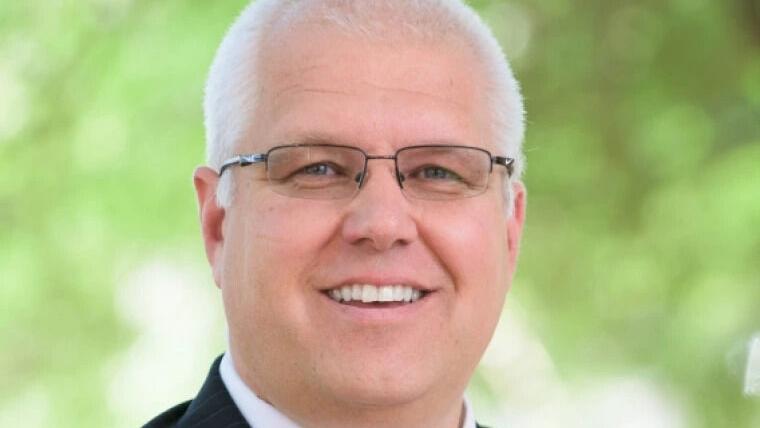
"Because he was the retired executive, he wasn't your normal clubhouse manager," said his son, Tim Gleason, commissioner of the Ohio Athletic Conference, who used his sports contacts to land the clubhouse job for his dad.
"He was way beyond expectation. This man was a well-polished executive and brought all his administrative and executive skills into that clubhouse, and the players were amazed at how efficient everything was because they weren't used to it. You don't get that kind of efficiency on the minor-league level from a clubbie."
Many former Toros players who were called up to the Big Show remembered their minor-league clubhouse manager, staying in touch and sending cards at Christmas, said his grandson, Matthew Shadonix of Dallas. Gleason was a father figure to many players, who called him "Mr. Bill" out of respect.
Even though Gleason had been out of baseball for a decade, it was still a personal blow for many of his former colleagues and ballplayers when he died of cancer on April 13 at 86.
"Mr. Bill was great. He was the best. He made everybody feel they were important. He treated everybody well," said former Astros player Scooter Tucker, of Florida, who was in and out of Gleason's Tucson clubhouse from 1992 to '94. "He always brought us fruits and vegetables to eat — he was a big fan of celery. He thought if we ate well we'd play better.
"His big advice was for us to take care of ourselves. The ability we were given, we couldn't get the most of that unless we took care of ourselves and ate right and got enough rest. If guys played anywhere else, they appreciated what they got when they got to Mr. Bill. It was a complete different atmosphere," Tucker said.
Shadonix was 10 when he started helping his granddad in the clubhouse.
"I wanted to be a bat boy more than anything, and my grandpa and my mom decided to keep me away from the foul-mouthed players, so I never got to do that, but after the game I'd get to go with my grandpa into the clubhouse and see these guys," he said. "I thought it was the best thing ever to pick up the players' jockstraps and dirty towels.
"My grandpa saw Babe Ruth hit a home run. He'd been a baseball fan his whole life, so getting to do this was pretty cool," Shadonix said.
Gleason's income was generated from tips and clubhouse dues paid by the players. He used the funds to buy the food and supplies for the Toros.
Not all the players could afford to pay the dues, though, his son said. When future multi-million-dollar National League pitcher Darryl Kile arrived in Gleason's clubhouse, he didn't have the money for dues. Mr. Bill waived the fee, handed Kile $50 and told him to go buy groceries, Tim Gleason said. After Kile was called up to the Astros in 1991, he returned to the Toros clubhouse to see Mr. Bill.
"Darryl Kile looked up my father, and he had a fistful of 50-dollar bills. He stuck them in my dad's pocket and he said, 'Mr. Bill, go buy some groceries. I'll never forget what you did for me,' " Tim Gleason said.
"Bill took most of the clubhouse dues and put it back into the guys," said former Toros trainer Larry Lasky, of Florida. "He kept the guys loose. They loved him. They would fly him to Houston for the (Astros) games because all the players remembered him."
One trip to Houston for a three-day, three-game weekend lasted a week. The Astros kept winning, so management paid Gleason's expenses and kept him in town as a good-luck-charm until the streak broke.
Gleason also took extra steps to keep his Triple-A players motivated. He hand-made name tags for all the players' lockers, and when they did well in the game — hitting a double or getting an RBI — he pasted a shiny foil star to their name tags.
"These guys used to compete for how many stars they used to have," Shadonix said. "There used to be lobbying after the game. They'd say, 'Mr. Bill, didn't you see what I did out there?' It wasn't just home runs. It was if you made a heady play, you stretched a single into a double, or if you didn't stretch a single into a double because you knew you'd get out. It wasn't if you did the amazing thing; it was if you did the right thing."
When a player was moved up to the bigs or out of the ballclub, Gleason put his name tag on what he called "The Gone But Not Forgotten" board. If a player dropped back down to the minors, Gleason peeled his name tag off the board and put it back on his locker with the season's worth of stars still intact.
"He loved being the father figure to the players and, like the 'Gone But Not Forgotten' and the stars and stuff, he went the extra mile to make the players feel comfortable," said Eric May, who joined the Toros' front office in 1996.
"With him, it wasn't about how good they were, it was about the kind of person they were," said former Toros General Manager Mike Feder. "He didn't care if a guy was a major-league prospect or a guy who's been around."
World Series-winning pitcher Curt Schilling may have spent more time in Gleason's clubhouse than on the field during his time in Tucson, Shadonix said.
"(Schilling) used to almost miss his starts or forget to go home because he was a World War II buff, and he found out that grandpa was at the Normandy invasion and the Battle of the Bulge and served with Patton," Shadonix said. "Curt Schilling, the multimillion-dollar player, recognized grandpa was a piece of living history."
Gleason became a part of Tucson baseball history in 1998, when he retired from the clubhouse. It was the season the new Tucson Electric Park opened. It was much more difficult for Gleason, then 75, to negotiate all of the stairs in the new venue when he was weighted down with ice, food and cleaning supplies. Still, he never lost his love of the game, his grandson said.
"He'd still follow the players and watch baseball every night on TV during the season," Shadonix said. "All the stories you hear about players now doing the wrong things, there wasn't any of that in Tucson. My grandpa was never disappointed in a player."
Life Stories
This feature chronicles the lives of recently deceased Tucsonans. Some were well-known across the community. Others had an impact on a smaller sphere of friends, family and acquaintances. Many of these people led interesting — and sometimes extraordinary — lives with little or no fanfare. Now you'll hear their stories. Past "Life Stories" are online at go.azstarnet.com/lifestories.

 Nancy Guthrie's Tucson neighbors: Life with streamers 'unbearable'