

New York Republicans are howling over new State Legislature lines released late Tuesday following a Democrat-controlled reapportionment process that stands to reduce even further the GOP's already weak influence in Albany.
Major conflicts include pitting incumbent Democrat Timothy M. Kennedy of Buffalo against incumbent Republican Edward A. Rath III of Amherst in a new 63rd Senate District. And in the Assembly, Democrat Monica P. Wallace of Lancaster is breathing easier, say GOP observers, after the neighborhoods of potential Republican opponents this fall are absent from her newly drawn district.
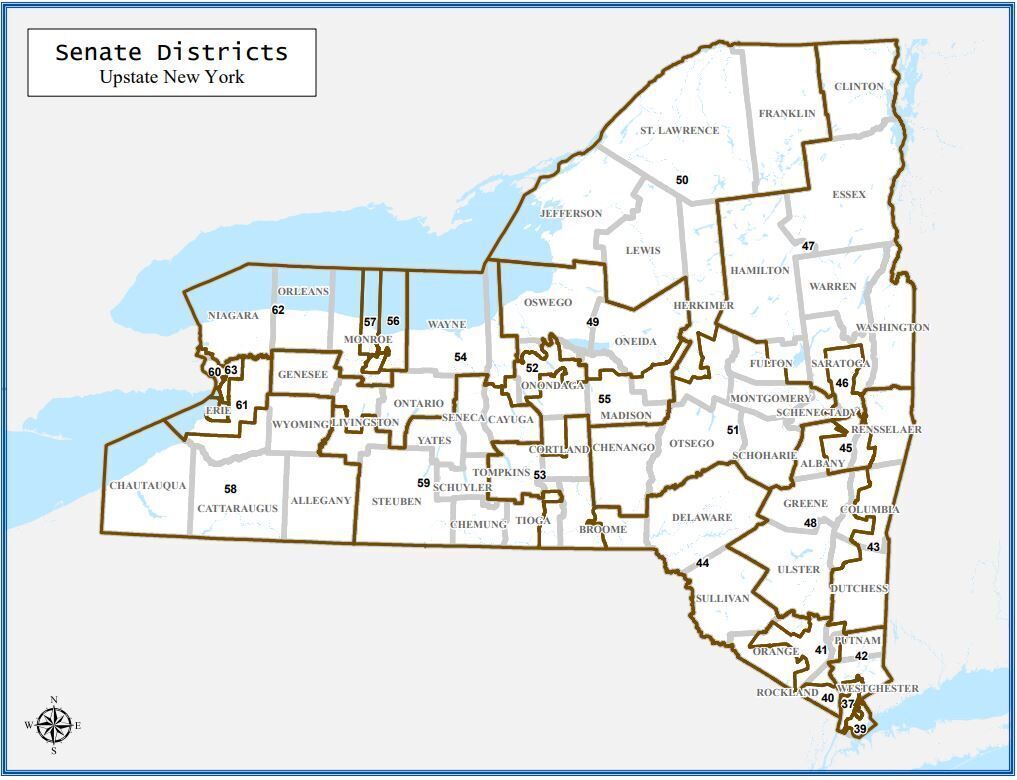
While nobody expected any approval from the Republican Party, GOP officials are promising a court challenge in conjunction with Thursday votes on the State Legislature's redistricting plan for New York's Senate and Assembly districts, writes The News' Robert J. McCarthy.
Most observers predict an uphill fight for Rath against Kennedy in a Democratic district, but the senator's office said late Tuesday that "regardless of what the district lines look like, Senator Rath will continue to represent the best interests of all New Yorkers as he has since taking office in 2021.”
People are also reading…
While nobody expected any approval from a Republican Party now vastly outnumbered in the Capitol, GOP officials are promising a court challenge in conjunction with Thursday votes on the plan (votes for congressional lines are Wednesday). The GOP response reflected a general complaint that Democrats were violating at least the spirit of a 2014 state constitutional amendment calling for an Independent Redistricting Commission to draw new districts on a non-partisan basis.
That panel, made up of an equal number of Democrats and Republicans, deadlocked, and the responsibility shifted to lawmakers in Albany, where Democrats control both the Assembly and State Senate.
"Democrats’ closed door map making is a shameless, partisan example of gerrymandering at its worst," said Senate Minority Leader Robert G. Ortt of North Tonawanda. "We anticipate a court challenge, and are confident that a challenge will ultimately be successful."
State Republican Chairman Nicholas A. Langworthy said the plan subverts the intent of the 2014 amendment.
"If allowed to stand, these lines will draw a stake through the heart of democracy and put their one-party supermajority rule on steroids," he said, "albeit ensuring New York’s total and permanent destruction.”

"The fact that New York could end up with such an egregious congressional map represents a failure for the state’s new redistricting process," wrote Nathaniel Rakich, a senior elections analyst at the FiveThirtyEight election blog.
And Jesse Prieto, executive director of the Erie County Republican Party, called the maps a "heinous attempt at legalizing rigged elections by gerrymandering towns."
"It is abundantly clear that massive GOP gains across Erie County in 2021 have scared Democrats from Larkinville to Albany enough that they diced up towns like Lancaster and buoyed districts to Buffalo to try and tilt the scales," he said. "I’d add that it is shameful for Tim Kennedy and Sean Ryan to knowingly cut a WNY Senate District when our end of the state needs every voice it can get to shout down New York City interests."
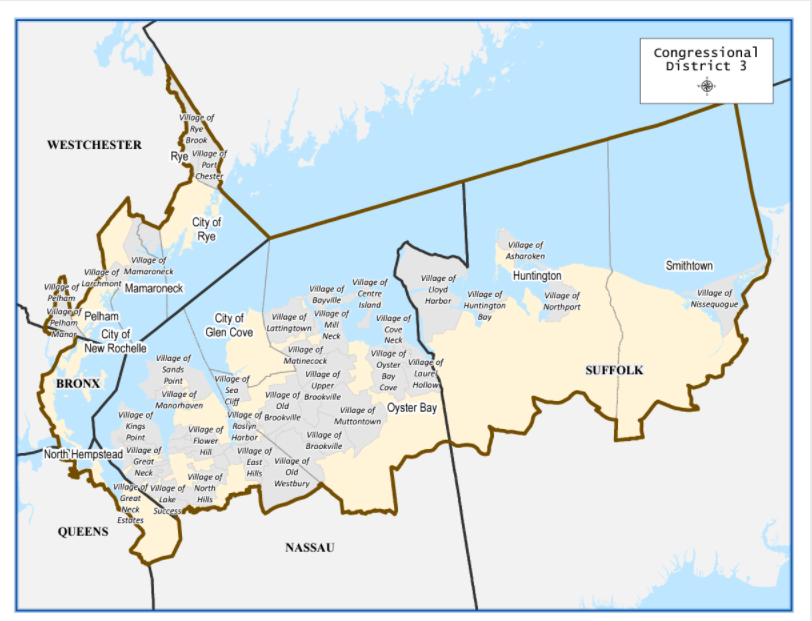
While the maps don't violate the federal Voting Rights Act, "the rest of the lines are so heavily gerrymandered they will be non-competitive," said Susan Lerner, executive director of Common Cause New York.
Erie County Democratic Chairman Jeremy J. Zellner said late Tuesday he had not yet studied the maps and would reserve comment.
Some other highlights of the new plan, which could be delayed if Republicans file lawsuits as promised, include:
• Republican Sen. Patrick M. Gallivan of Elma is now compacted entirely into Erie County after previously extending into Wyoming and Livingston.
• Kennedy remains safely ensconced in friendly turf, even while losing the Democratic stronghold of Cheektowaga. Gallivan, while appearing to remain generally strong, faces a new challenge by picking up Cheektowaga.
• Republican Sen. George Borrello of Chautauqua County moves into Erie for the first time with new territory in the county's southern towns.
• Democrats strengthened Assemblyman Patrick B. Burke of Orchard Park by splitting Orchard Park. His address in the town now aligns with friendly areas in South Buffalo, while Republican David J. DiPietro inherits many GOP voters in the town's southern half.
• Veteran Republican Assemblyman Steve Hawley of Genesee County moves into Erie for the first time with a presence in Newstead.
• Democratic Sen. Sean M. Ryan's Buffalo address is linked to Lackawanna and Hamburg by a narrow strip along the Buffalo waterfront that extends very slightly inland.
The Legislature's new maps follow the work of the Independent Redistricting Commission resulting from the 2014 amendment aiming to reduce partisan gerrymandering when district lines are redrawn every 10 years. The process resulted in different sets of maps drawn by the two caucuses, with no members willing to break ranks. In that case, the amendment then requires the Legislature to submit its own version of the state and congressional maps.


