
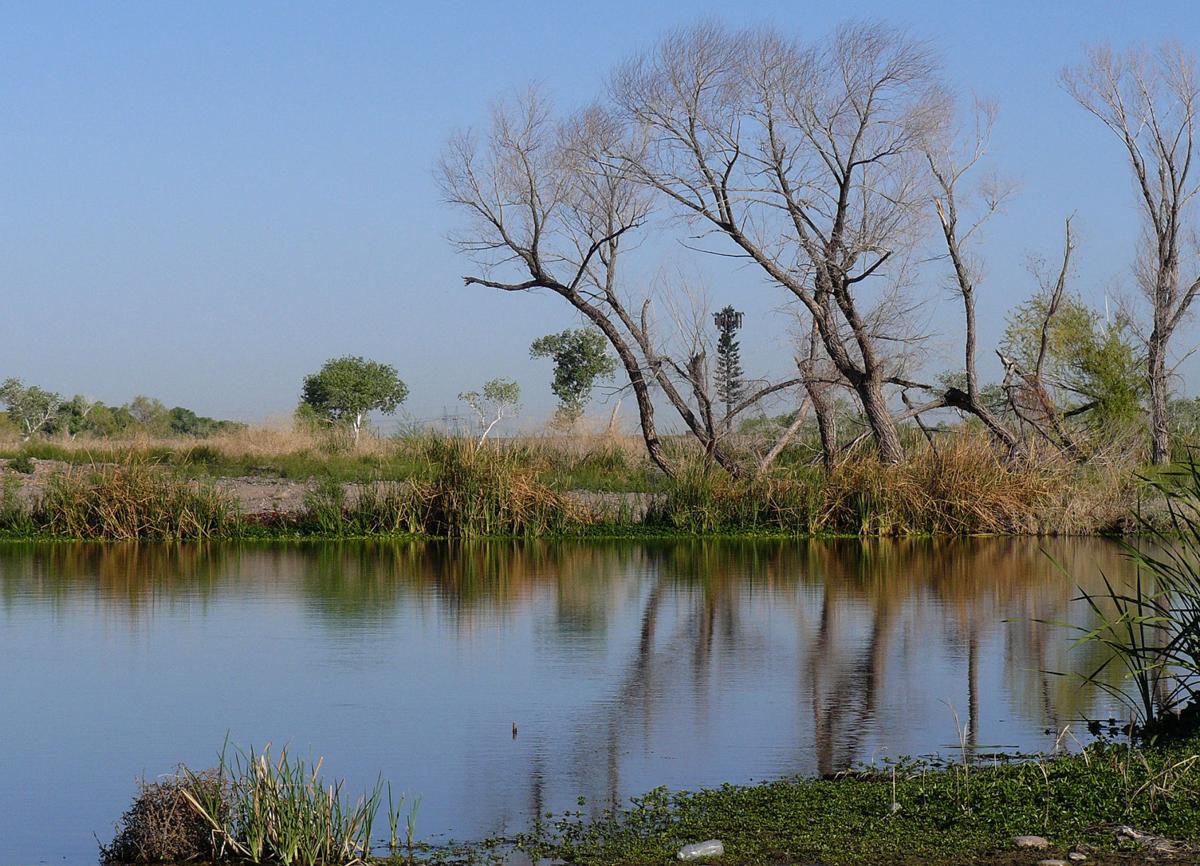
Pascua Yaqui Council members called it “a blessing.”
They were talking about $900,000 in federal funds that will be used to bring water to the tribe’s lands for irrigation, the first fruits of an effort last year by members of the state’s congressional delegation to win $150 million in federal funding for water projects around the state.
“Water is sacred to a lot of tribes and a lot of Arizonans. For us, it’s a blessing,” Pascua Yaqui Chairman Peter Yucupicio said at a news conference Tuesday announcing the funding. “We started looking at this, and we said, ‘This will help us now and in the future.’ ”
The money comes from an Army Corps of Engineers fund dedicated to water infrastructure projects in Arizona. Under the bill, local governments can enter into agreements with the corps for water, wastewater treatment, environmental restoration and other projects. The Army would pay 75% of the cost of the project, and the local government would assume all operating costs once the work was completed.
People are also reading…
The $150 million Arizona fund has no time limit and is available until all the money is spent. Rep. Greg Stanton, D-Phoenix, who was the lead sponsor of the measure, said it is based on similar programs that other states have enjoyed.
“The 75/25 cost-sharing model is the same as other states that benefit from this program,” said Stanton during Tuesday’s news conference with Pascua Yaqui officials. “Arizona will now be able to benefit from this existing program, and we’re adopting the cost-sharing models that were already in place.”
The program started as a bill sponsored last spring by Stanton and four other Arizona House members, before it was rolled into a larger water-funding bill over the summer. Stanton ultimately got language from the bill incorporated into a 5,593-page budget bill that included the $900 billion COVID-19 stimulus package signed Dec. 27 by then-President Donald Trump.
The Pascua Yaqui project is not mentioned in the bill, which does specify several other projects in the state, including the Tres Rios wetlands and flood management projects for Rio de Flag, Tonto Creek, the Little Colorado and lower Santa Cruz rivers, among others.
About 30 volunteers took part in the pickup organized by Caterpillar Inc. in partnership with Tucson Clean and Beautiful and the Sonoran Institute. In addition, several employees worked with the Sonoran Institute on riverbed litter quantification studies. These simple surveys identify and categorize trash found with in 10 meter by 10 meter square areas with the goal of learning ways to control pollution at its source and coming up with strategies to better capture trash once it has reached the riverbed. Here, Luke Cole with the Sonoran Institute explains more about the surveys. (Josh Galemore/Arizona Daily Star)
According to Stanton’s office, the Pascua Yaqui reservation has no surface water or groundwater wells and gets its drinking water from the city of Tucson. But growth on the reservation is expected to stretch the supply of potable water to its limits. The plan to pipe in non-potable water from the Central Arizona Project for irrigation on the reservation is designed to relieve pressure on the drinking water supply.
“This project is a component of the tribe’s efforts to protect and preserve its water to meet the growing needs across the entire reservation, and I am so excited that this will be the first project in Arizona to receive these critically important funds,” Stanton said Tuesday.
Tribal officials said they have been worrying for some time about how to meet their future water needs, and that Tuesday’s announcement was “a great day to really take a breath of fresh air.”
“We also have communities from Scottsdale, Guadalupe and all the way down the freeway from here, the reservation. We cannot ignore it,” Yucupicio said.
“If some day they all decide to move to the reservation then, you know, we’re in trouble,” he said. “But this is certainly helpful.”
30+ historic photos of the Santa Cruz River through Tucson
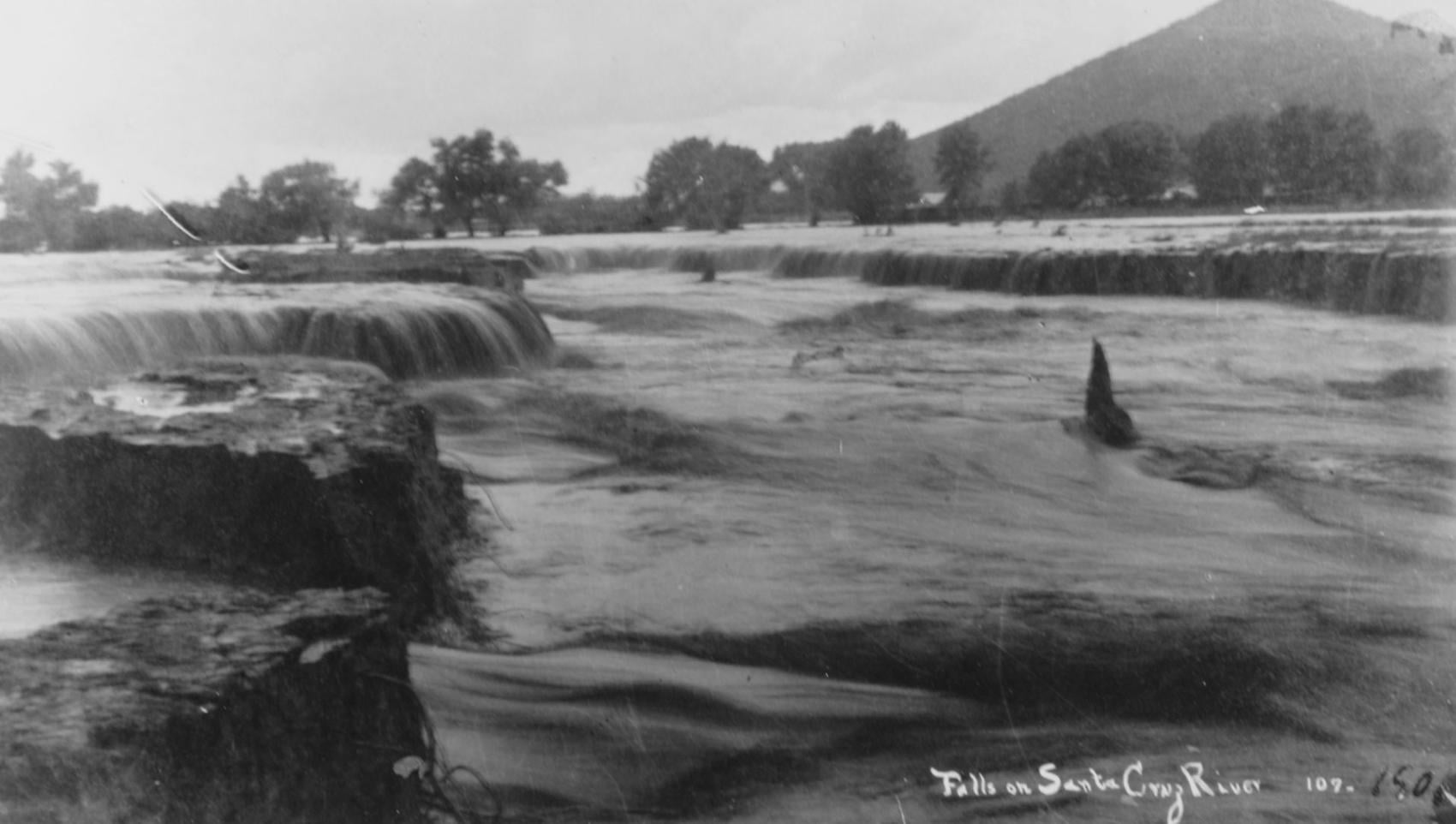
Waterfalls on the Santa Cruz River in 1889 near Sentinel Peak in Tucson.

Girls in Santa Cruz River,1889-1890.
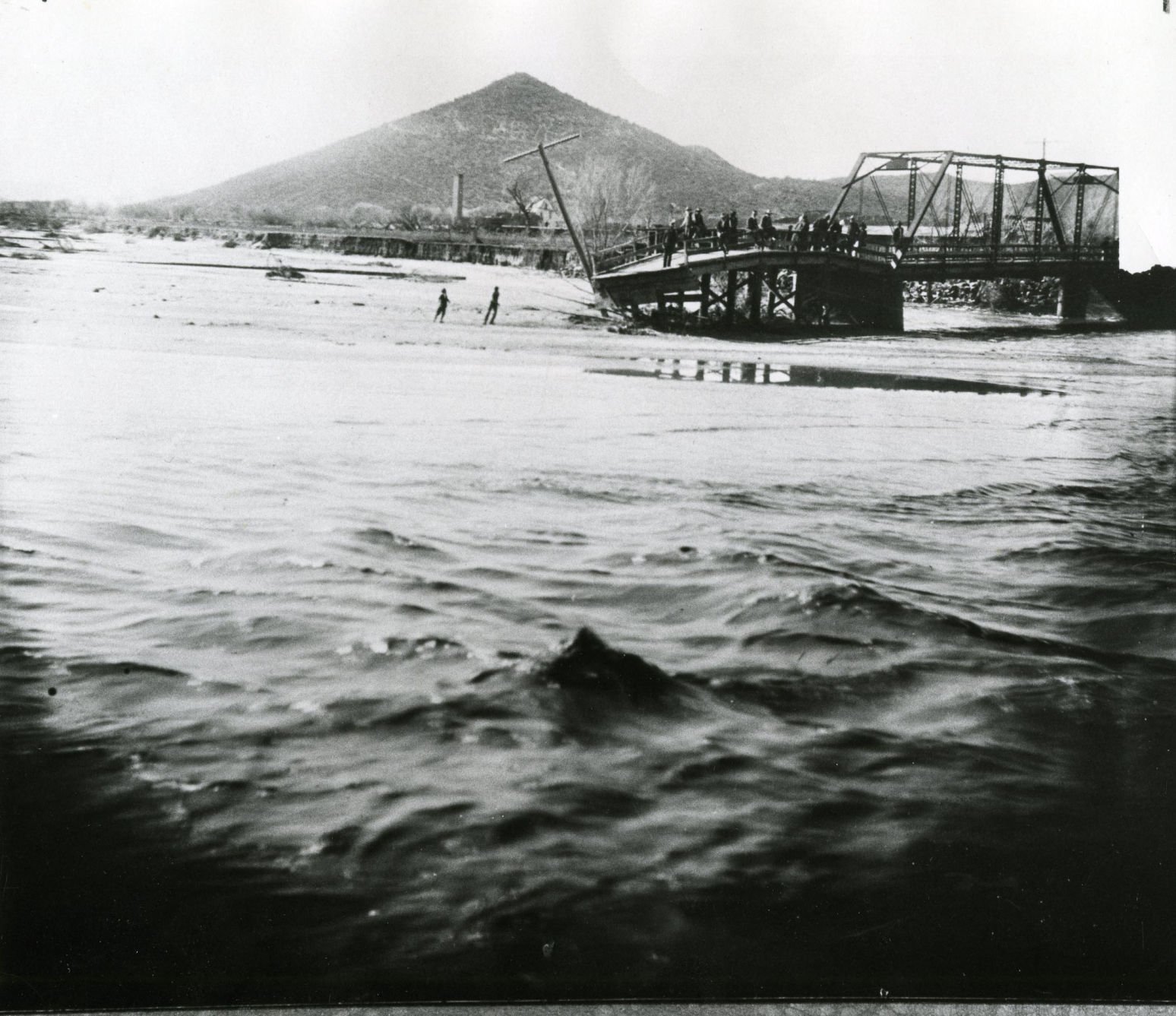
A bridge over the Santa Cruz River near Sentinel Peak in Tucson washed out during flooding in 1915.
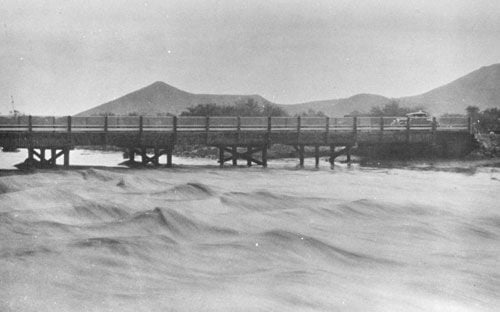
Santa Cruz River at St. Mary's Road bridge in 1931.
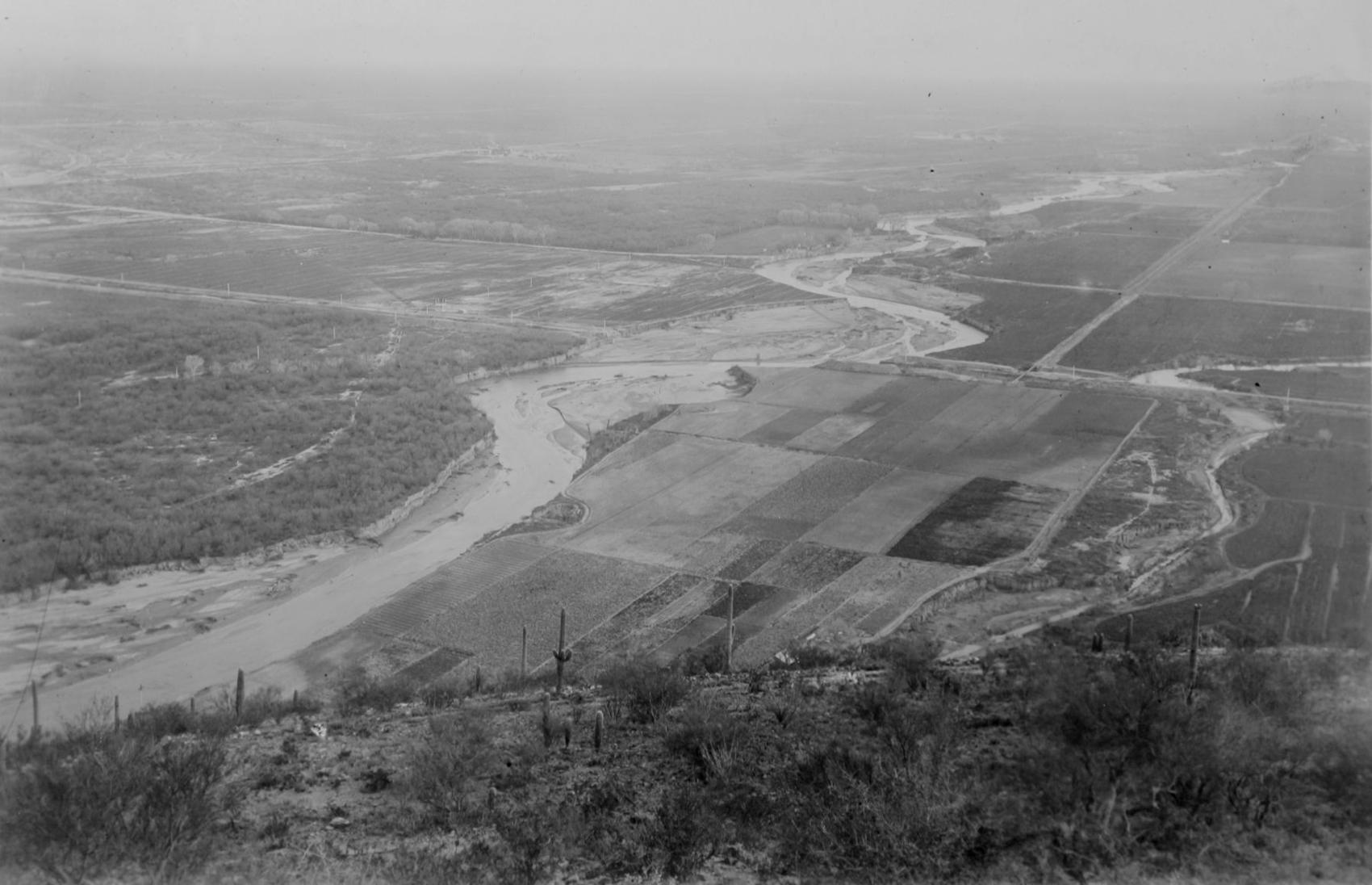
The Santa Cruz River flows north as seen from Sentinel Peak in Tucson in the early 1900's.
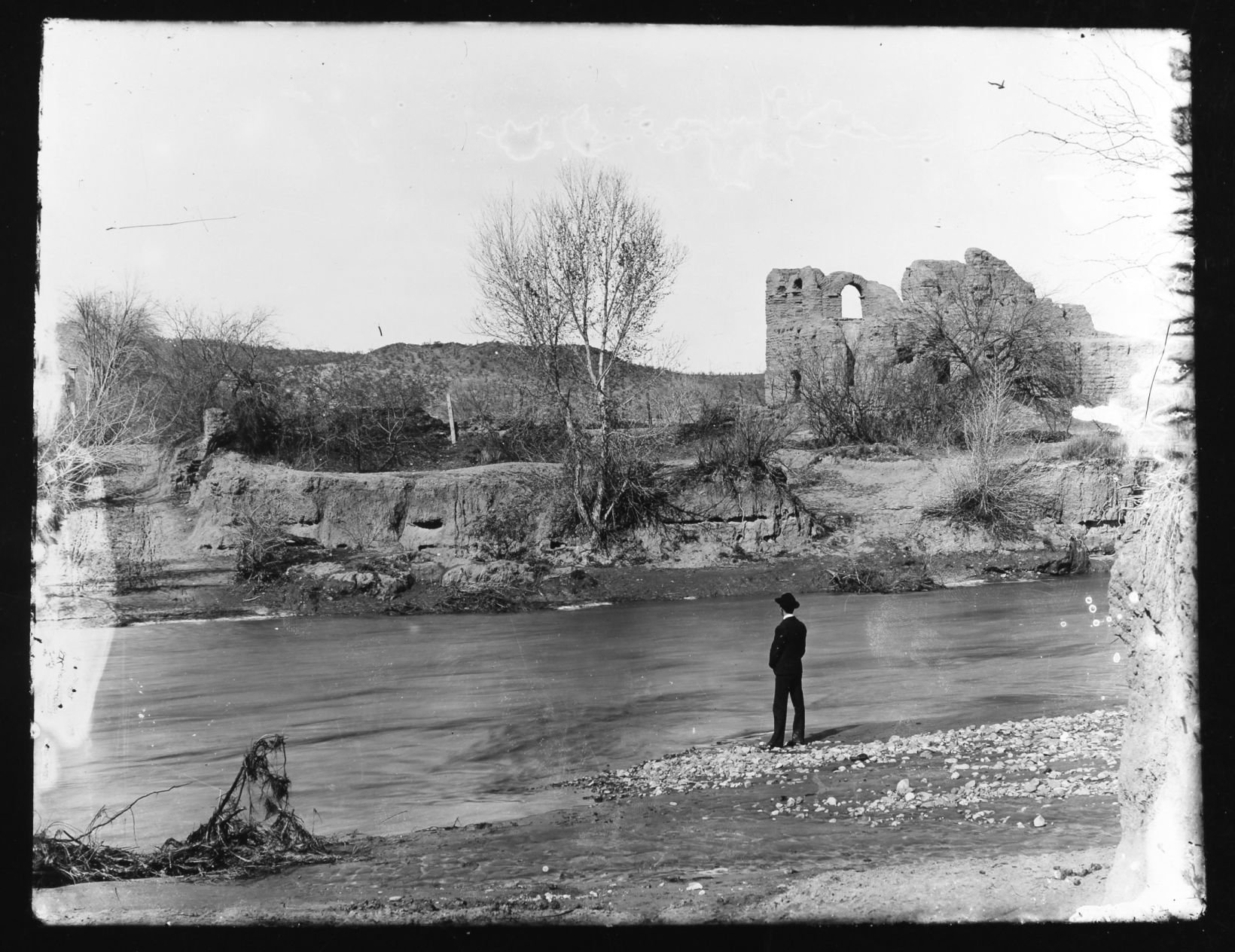
Ruins of El Convento along the Santa Cruz River, circa 1910. The adobe structure was part of a Franciscan mission complex built here at the end of the 18th century.
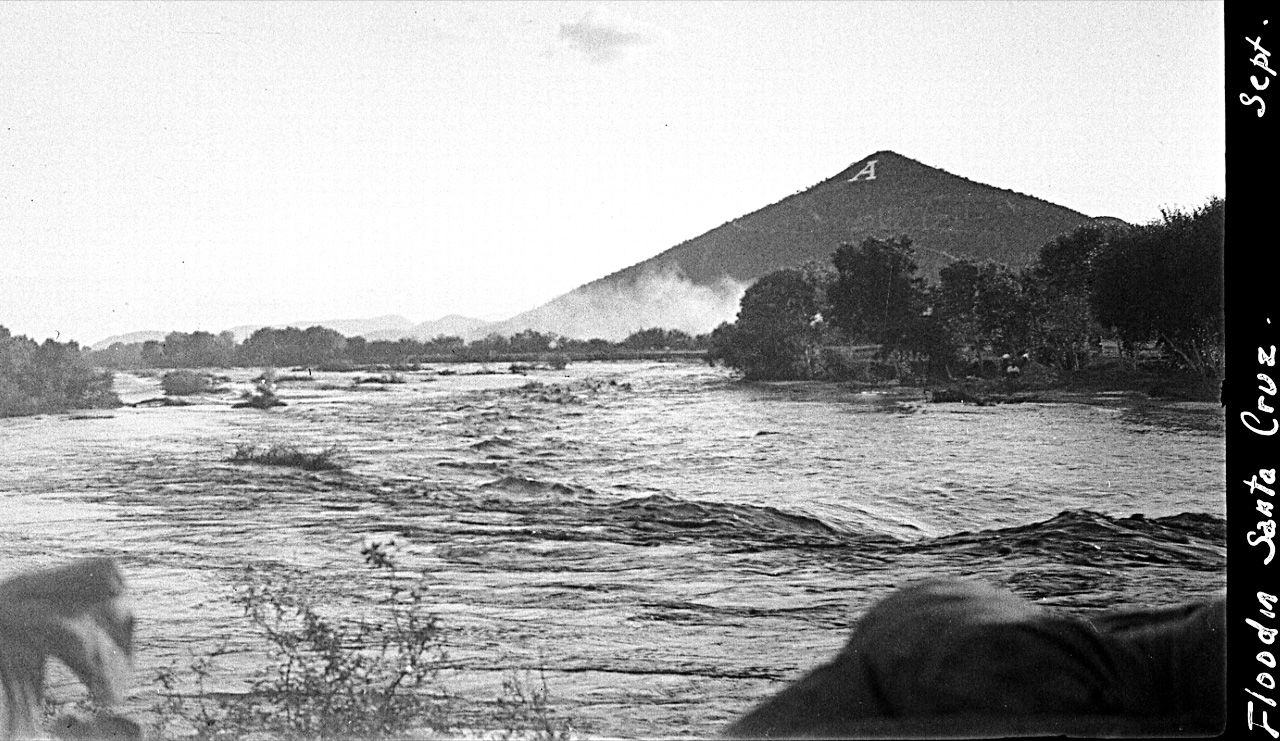
Flooding of the Santa Cruz River, Tucson, in September, 1926, from “Letters from Tucson, 1925-1927” by Ethel Stiffler.
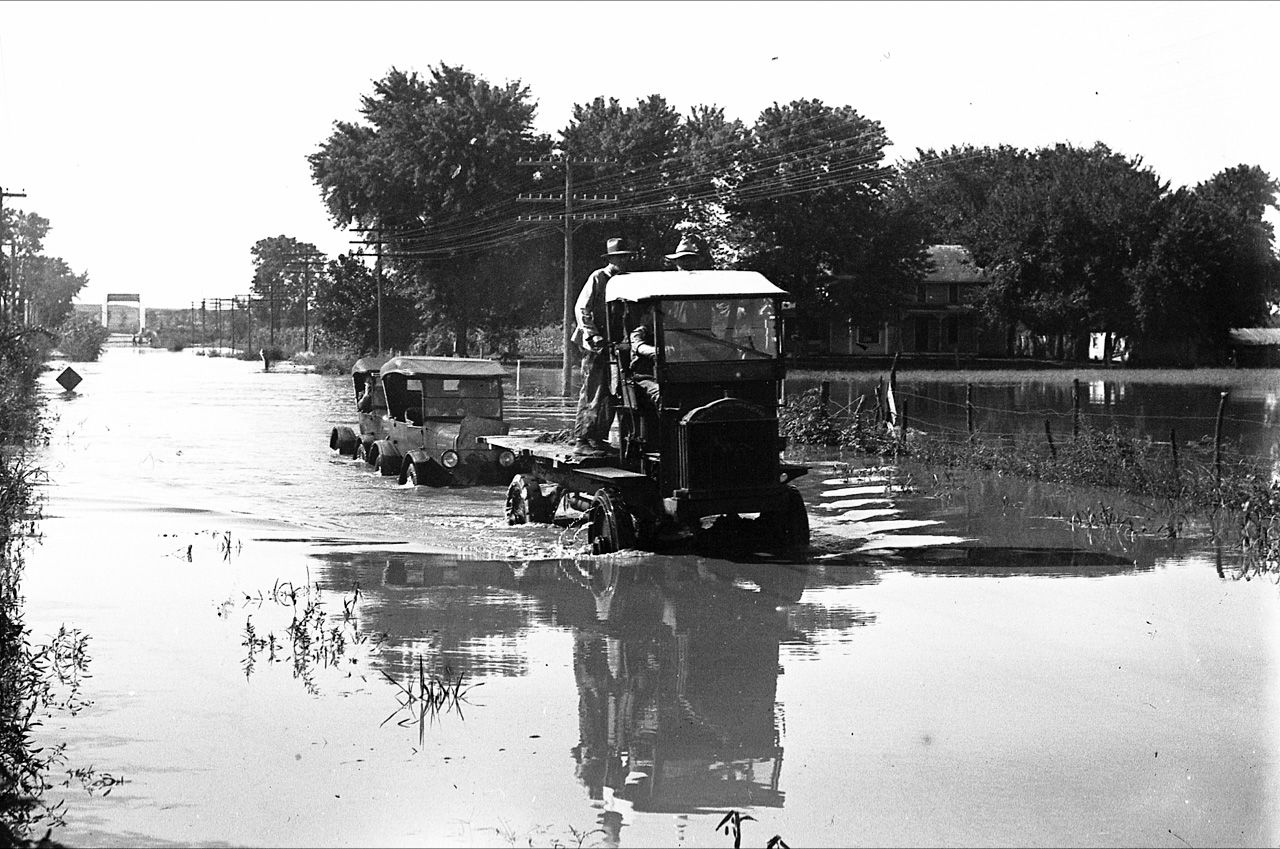
Flooding of the Santa Cruz River, Tucson, in September, 1926, from “Letters from Tucson, 1925-1927” by Ethel Stiffler.

Aerial view of the Santa Cruz River as it winds its way through Pima County north of Cortaro Road in 1953. The county was considering a bridge at several locations, but had to contend with the ever-changing course of the river.

The Tucson Citizen wrote in 1970, "The Santa Cruz River is a garbage dump" and "even marijuana grows in it." City leaders were pushing to upgrade and beautify the channel. The U.S. Army Corps of Engineers was studying the possibility.
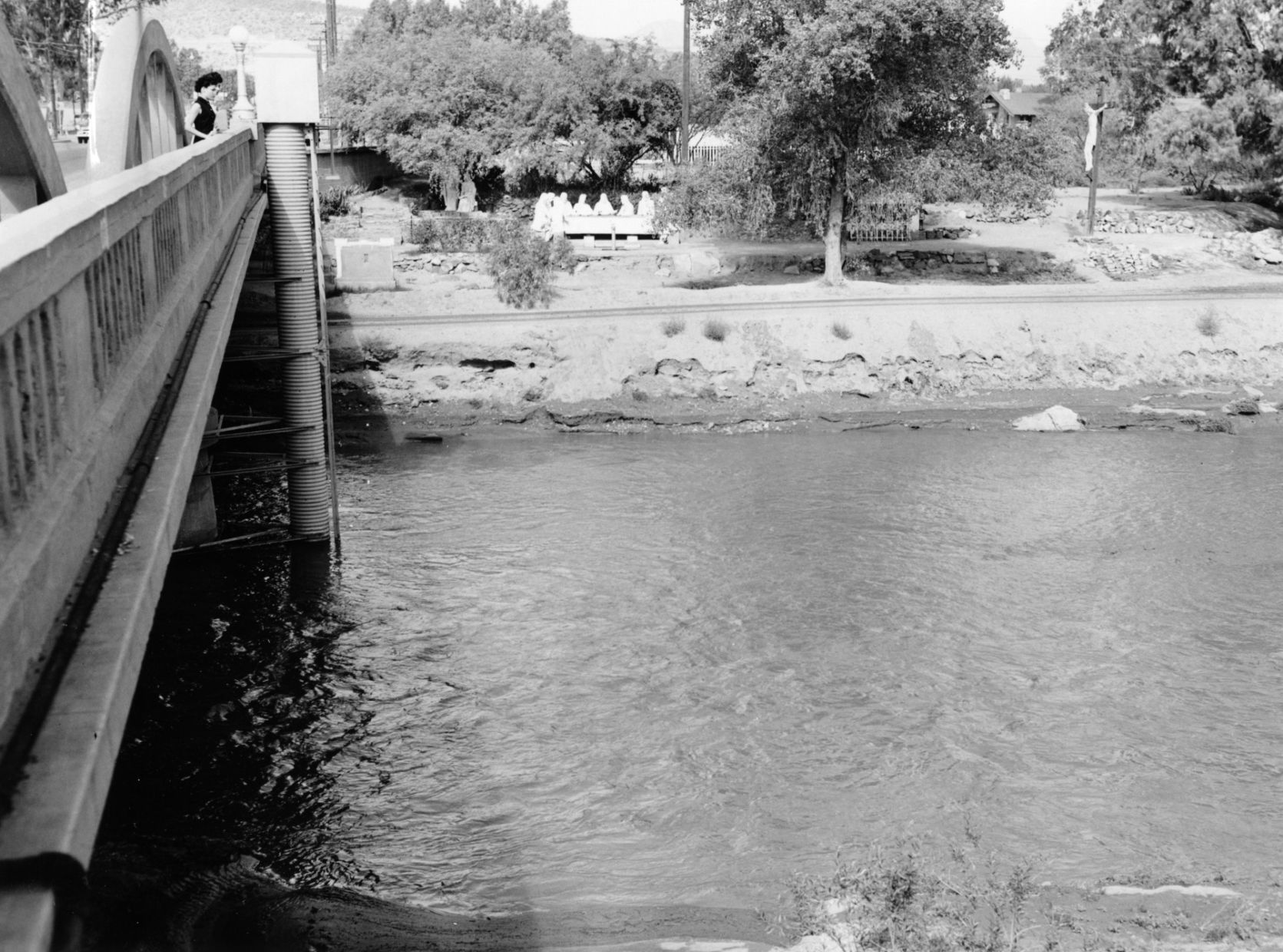
The Santa Cruz River flowing under the Congress Street bridge in August, 1952. The Garden of Gesthemane is in the background.
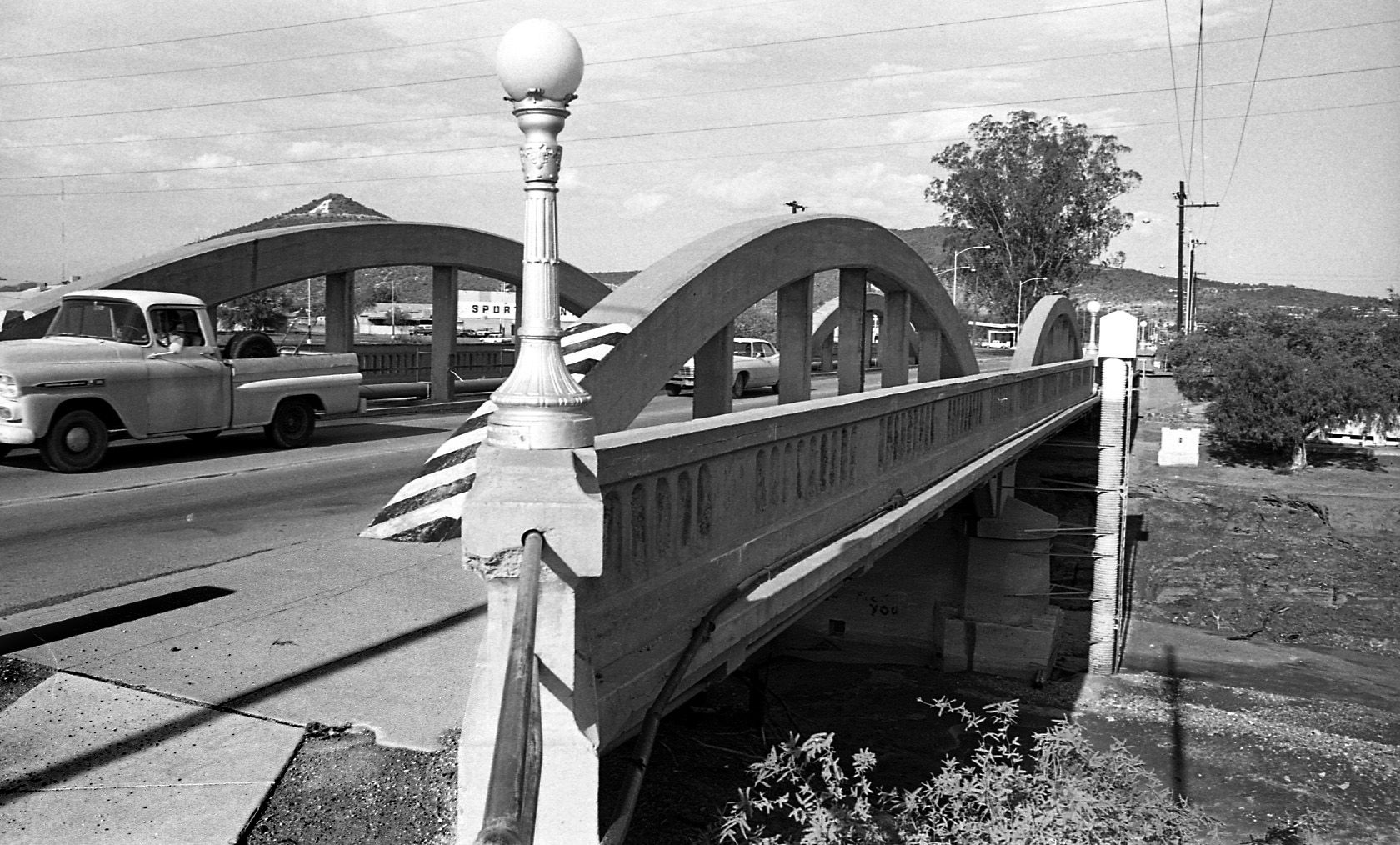
By July 24, 1970 the old bridge on West Congress over the Santa Cruz River had to go and be replaced by a new bridge.

By July 24, 1970 the figures from Felix Lucero's Last Supper had been on the west side of the Santa Cruz River for more than 20 years. City authorities had decided to leave it in place while a new bridge on West Congress Street was to be replaced.
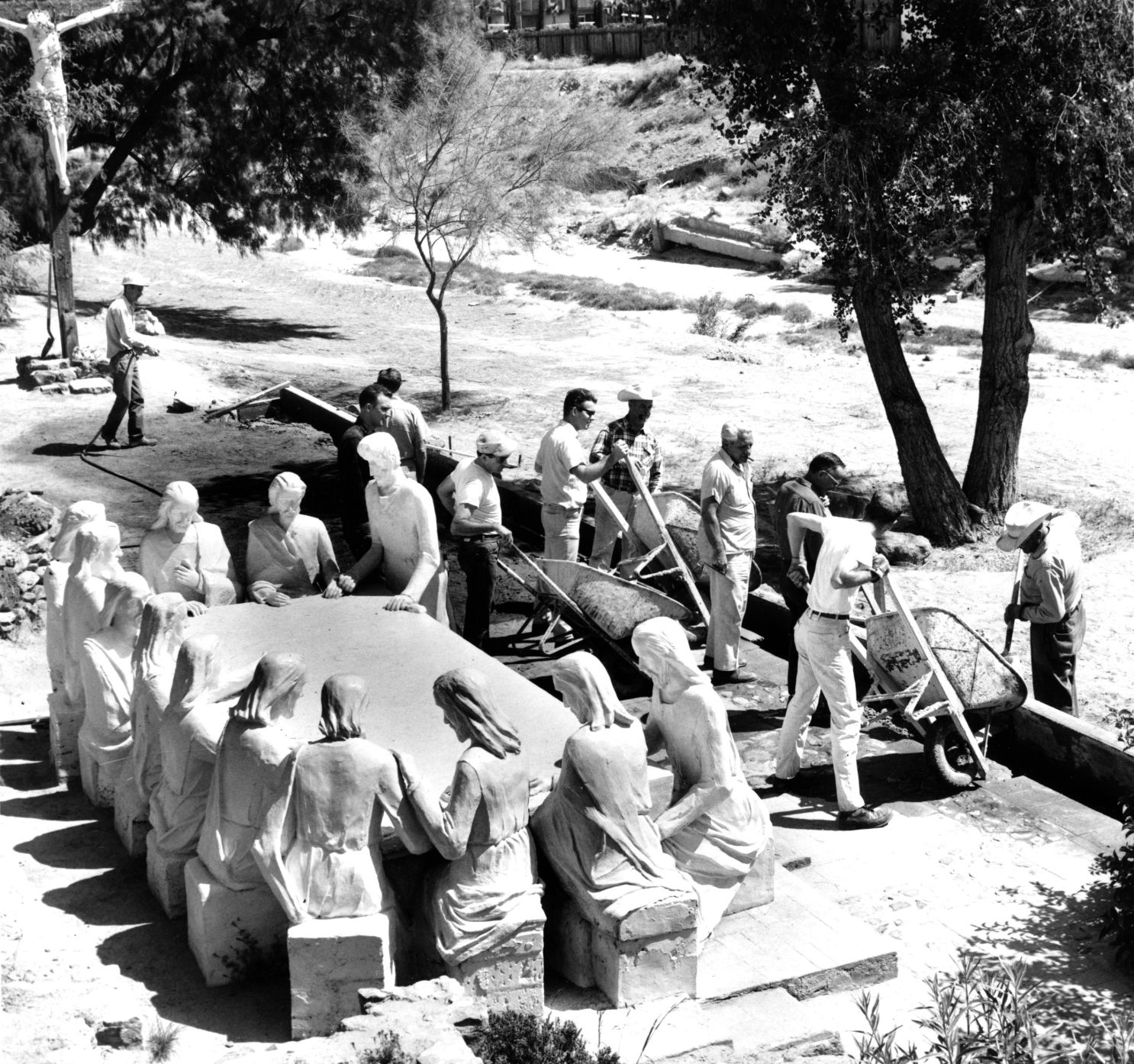
Volunteers from the Tucson Jaycees and Junior Chamber of Commerce finish restoration of the statues and grounds of the Garden of Gethsemane along the Santa Cruz River in May, 1964. The statues were ravaged by vandals and weather. The city parks and recreation department worked with the volunteers. Artist Felix Lucero began sculpture project in 1938 and finished it nine years later.

Drought in June, 1974, turned the Santa Cruz riverbed into crunchy chunks of dried mud.

The Santa Cruz River flowing under Silverlake Road in August, 1970.

Children play in the Santa Cruz River near Speedway Blvd in August, 1970.
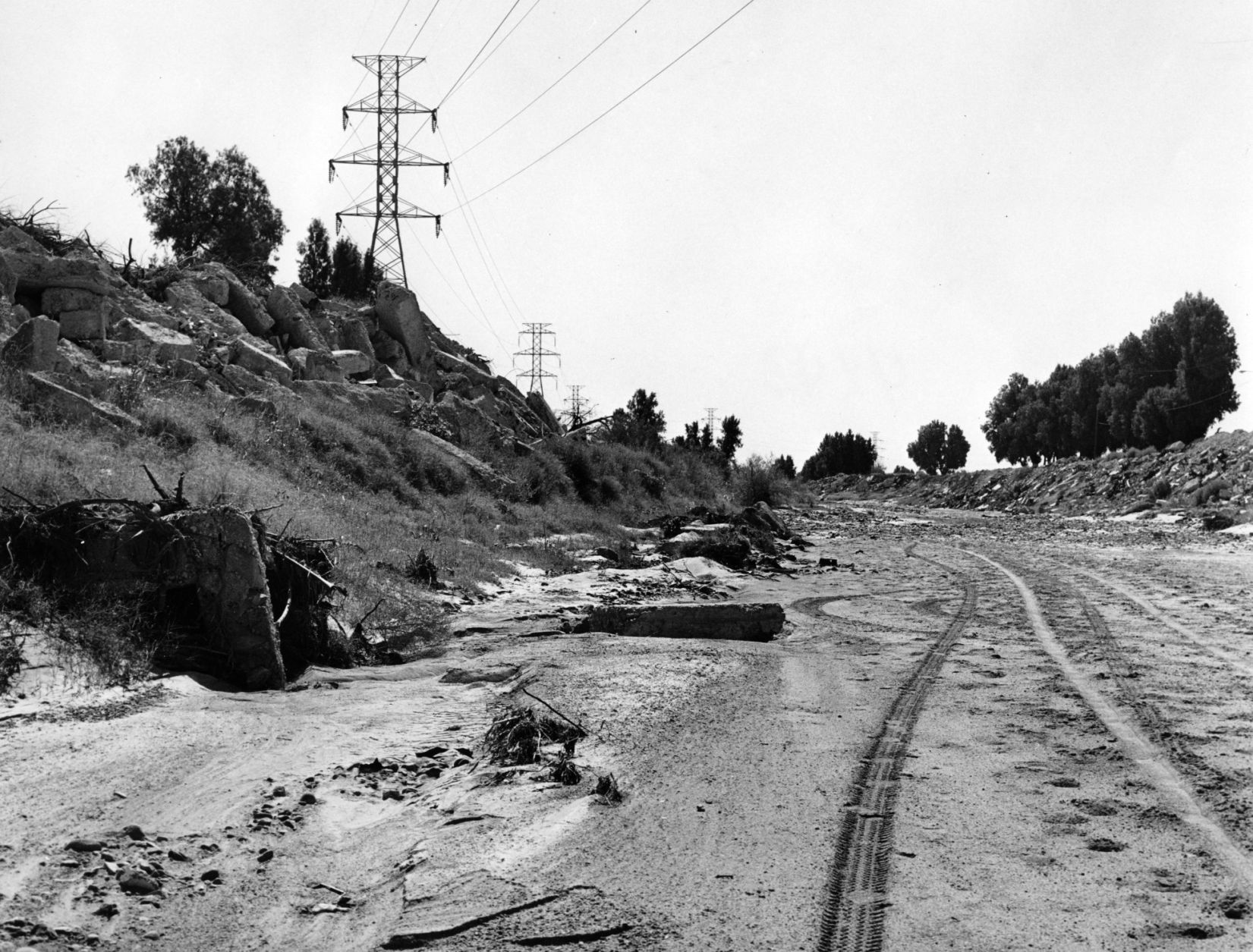
The Santa Cruz riverbed at Congress Street in November, 1967.

After years of waiting, crews began clearing debris and channeling the Santa Cruz River in November, 1977, and constructing what would become a 14-mile river park. The Speedway Blvd. bridge is in the background.

After years of waiting, crews began clearing debris and channeling the Santa Cruz River in November, 1977, and constructing what would become a 14-mile river park.

The Santa Cruz River looks peaceful flowing underneath Speedway Road after days of flooding in October, 1977.

Adalberto Ballesteros rides along the Santa Cruz River west of downtown Tucson in 1980.

The Santa Cruz River looking north from Valencia Road in July, 1974.

Junked cars and trash spill into the Santa Cruz River, looking south, just south of Grant Road in July, 1974.

Road graders scrape the Santa Cruz River channel between Speedway and Grant roads during bank stabilization construction in May, 1991.
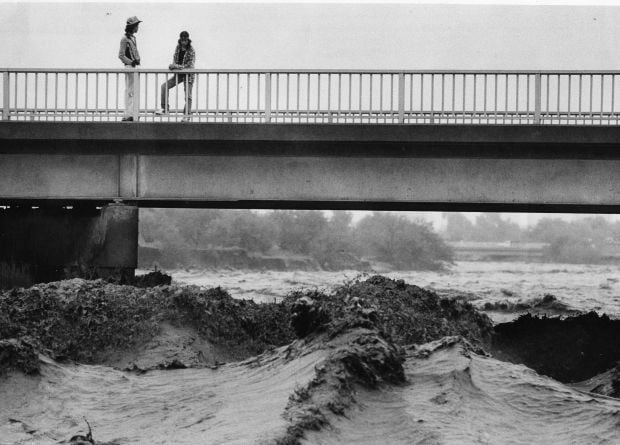
Water surges in the Santa Cruz River at the St. Mary’s Road bridge on Oct. 2, 1983.

Flooding in Marana after the Santa Cruz River overflowed its banks in Oct. 1983.

A bridge on the Santa Cruz River northwest of Tucson washed out during flooding in October 1983.

Residents watch the surging Santa Cruz River rush past West St. Mary's Road on January 19, 1993.

Tucson firefighters are standing by and waiting for two kids floating in the Santa Cruz River on some type of object during flooding in July, 1996.

As the Tucson Modern Streetcar rumbles across the Luis G. Gutierrez Bridge, water flows bank to bank along the Santa Cruz River after a morning monsoon storm on July 15, 2014.

Johnny Dearmore skips a rock in the Santa Cruz River as reclaimed water is released into the channel at 29th Street as part of the Santa Cruz River Heritage Project on June 24, 2019. The release of effluent is the city’s first effort to restore a fraction of the river’s flow since groundwater pumping dried it up in the 1940s.

The Santa Cruz River flows Friday morning July 23, 2021 after an overnight monsoon storm passed over in Tucson, Ariz.

Betsy Grube, center, with Arizona Game and Fish Department, releases longfin dace fish into the Santa Cruz River at Starr Pass Boulevard on March 23, 2022, as Mark Hart, right, takes a video and Michael Bogan, a professor in aquatic ecology at the University of Arizona, picks up more fish to release. The 600 fish were captured from Cienega Creek in Vail.


 U of A acceptance rate rises to 90% as applications plunge