A DJ clicked play on a Lionel Richie song, and the percussive early bars of “All Night Long” began wafting through the air as people gathered in line to pick up that evening’s meal. It was a sunlit weekday afternoon along Jefferson Avenue on Buffalo’s East Side, where several days earlier, 10 people were shot to death and three wounded at a Tops Markets store.
The suspect, a white supremacist, claimed in a hate-filled screed to be targeting Black people.
He intended to kill, and he succeeded. He also failed, in his own broken humanity, to break theirs.
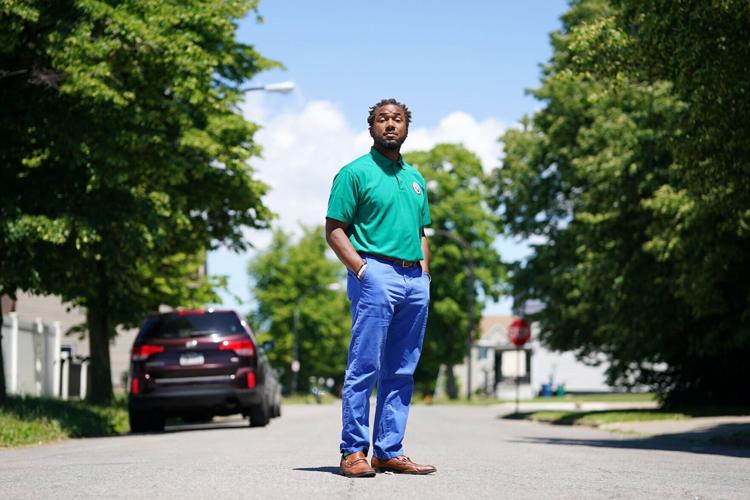
“You can never, ever replace those 10 individuals,” said Tim Hogues, the personnel commissioner for Erie County and a resident of this neighborhood.
“But life is about adjusting to difficult situations and tragedy,” Hogues added, “and so I believe the East Side of Buffalo is a strong-knit community. That’s why it hurts so much.”
People are also reading…
A growing roster of communities across the nation – from Pittsburgh to Charleston, S.C., to Orlando to El Paso and many more – knows that hurt. They, too, have lost loved ones murdered by madmen brandishing weapons. The people closest to those tragedies already know the lesson that people on Buffalo’s East Side are just now learning.
Hearts break, but spirits rebound. Over time, communities shattered by the trauma of a mass shooting don’t necessarily heal, but slowly, they move forward, forever changed.
'Why?'
On June 17, 2015, a 21-year-old white supremacist entered the Mother Emanuel AME Church in Charleston, S.C., and killed nine people in a prayer group. Seven years later, the community is still coming to terms with a tragedy that is so deep, so public, so cruel.
“Just be patient with each other,” said Rev. Eric S.C. Manning, pastor of Mother Emanuel, “and encourage each other that with each day, your strength will be renewed and have the hope and the confidence that you will become stronger.”
The process of forging ahead is non-linear, complicated by a revolving swirl of emotions: Hurt. Anger. Resolve. Confusion. Heartbreak. Sorrow. Determination.
“Initially there’s a fear, there’s a shock to it, especially when it happens in your community,” said Isidro Torres, executive director of the National Alliance on Mental Illness El Paso.
On Aug. 3, 2019, a white supremacist targeting Hispanic people entered an El Paso Walmart, killing 23 and injuring 23 more.
In the last few weeks, Torres has focused on the tragedy in Buffalo – one similar in setting and hate-filled intent to what happened in El Paso – and the May 24 elementary school shooting that happened 500 miles from him in Uvalde, Texas, and left 19 children and two teachers dead, and another 17 people injured.
“There is a range of emotions: a lot of confusion, a lot of sadness,” Torres said, noting that from Buffalo, the angry question of “Why?” resonated in El Paso.
“Why? Why has this country been so divisive that this is still happening to our communities – to our Black community, to our Hispanic community?” he said. “But I think it’s important that everybody understand and validate those feelings.”
Especially for people who are closely tied to a mass shooting – survivors and witnesses and first responders; those who lost loved ones; people who are part of the group that was targeted – hearing news of another shooting can evoke trauma and make older memories feel raw.
“It’s not that you’ve just lost a loved one,” said Michele Rosenthal, whose brothers Cecil and David were among 11 people killed by a white supremacist at Pittsburgh’s Tree of Life synagogue on Oct. 27, 2018. “It is so public. Everyone wants to share in it, and think they know what you’re going through, and they have sometimes good intentions – I would like to think most of the time – but no one can relate.”
Taking care and embracing patience are crucial components toward healing, which in itself is likely to feel elusive.
"There’s a difference between 'healing' and 'healed,'" said Maggie Feinstein, a mental health counselor who is director of Pittsburgh’s 10.27 Healing Partnership. “‘After another shooting where you have to see more people murdered by white supremacists, no one is going to feel healed in those moments.”
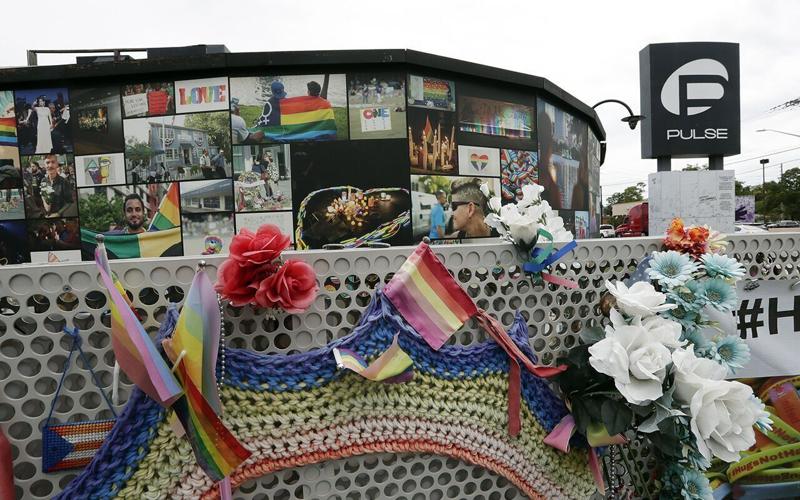
Anguish is slow to recede. Years after Orlando and its gay community faced an unprecedented trauma on June 12, 2016, when a gunman murdered 49 people and wounded 53 others at Pulse, a gay nightclub, the Orlando United Assistance Center is still serving more than 100 family members and survivors.
“Trauma comes in many forms,” said George A. Wallace, executive director of the LGBT+ Center Orlando, which formed the center in the wake of the shooting. “My biggest piece of advice is to find a support system so you can care for yourself and your mental health needs. Do not be afraid to ask for help. Grieving is different for everyone.”
'Stop! No! ENOUGH!'
In Buffalo, the work of processing a hate-driven mass murder is in its earliest stages.
“I think for some people, 100% healing will never occur,” said Bishop Darius Pridgen, senior pastor of True Bethel Baptist Church on the East Side and president of the Buffalo Common Council. “Coping, and moving on, may. But 100% healing? No.”
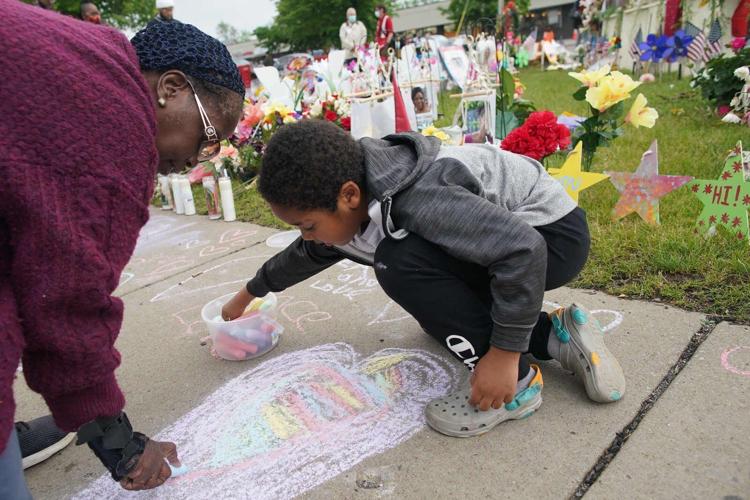
On that late May afternoon along Jefferson Avenue, children were coloring the sidewalks in bright chalk. Gathered among hundreds of bouquets and makeshift memorials for 10 lives suddenly lost on May 14, people were praying, filming videos, trading stories. A man on a scooter told a companion about his plan for an after-school sports program to help kids combat the grip of poverty.
A chain-link fence surrounded the Tops, which is the sole grocery store in the neighborhood, now shuttered indefinitely.
And there, on the fence outside the closed supermarket, was a sign that the lightness in the air didn't mask the shadow of pain. It was a sign that this tragedy will leave an indelible scar.
The sign read: “Stop! No! ENOUGH!”
“People are hurting,” said Tye Pope, vice president of specialty substance use disorders services and housing at BestSelf Behavioral Health. It’s vital, she said, to “allow them to feel that hurt, and then help usher them into that recovery when they say they’re ready for it.”
Pope is one of the leaders of the agency’s Black Mental Health team, which has about 20 counselors and support staff – all people of color – working in the Jefferson neighborhood.
“The first step is always to acknowledge exactly what it is, and call it out – to be intentional about the narrative and the story that we’re looking to help people recover from,” she said. “This was not just a mass shooting. It was a racially motivated mass shooting. It was racism at its best.”
'I'm going to be there for people'
Post-traumatic stress isn’t limited to the witnesses of mass shootings or to those who lost a loved one. People who live nearby and heard the sirens could be affected, said Dr. Angela Moreland, a psychologist and associate professor at the Medical University of South Carolina, which runs the Charleston-based National Mass Violence Victimization Resource Center. The stress could be inflicted on anyone who shops at Tops, even outside the neighborhood. It could impact any Black person, anywhere – or anyone from any group that feels marginalized and potentially in danger.
The center has surveyed more than 6,000 people in communities where earlier incidences of mass violence occurred, and its findings provide a chilling lesson for people from Buffalo. People who have experienced “any type of prior trauma” – including sexual assault or physical assault – “were really greatly impacted,” Moreland said, and showed “significantly higher” levels of PTSD than the general population.
Any such people – and plenty of others – may feel shaken or scared or sad in the wake of an event like the Buffalo shooting. What's important, Moreland said, is for people to realize when their behavior is changing in ways that signal that they need help.
“One of the main things that we tell people afterwards is take care of yourself,” Moreland said, noting that adequate sleep, healthy eating and hydrating are essential. “This sounds like common sense, but when someone’s going through a trauma, those are the first things to go,” she said. “You don't sleep. You don't eat well. You maybe replace these things with unhealthy coping: drinking a lot more, using drugs, doing things that may work as far as short-term coping but that aren’t healthy.”
Experiencing those behaviors – or feeling too sad or upset to go about a daily routine – is a signal to seek professional help.
In Buffalo, those conversations are starting to happen.
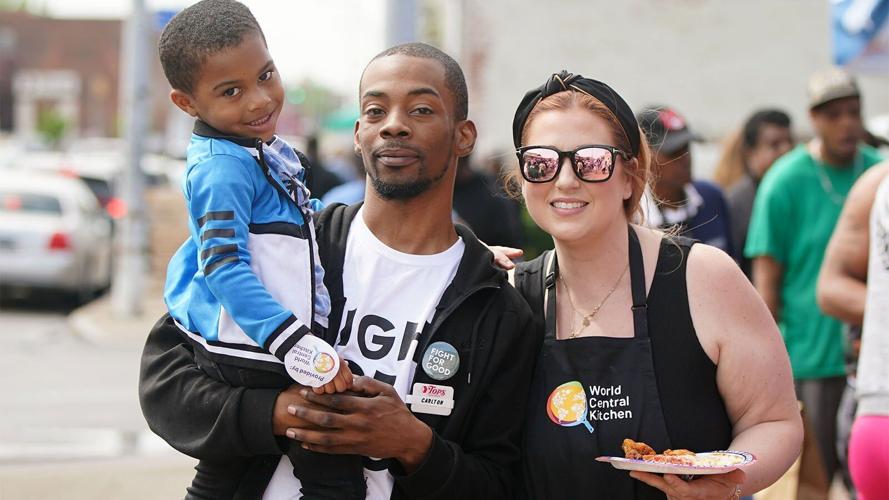
Carlton Steverson, 28, was working in the Tops deli when the shooting started. He grabbed co-workers and customers and herded them into a cooler, then rushed them out of the store through an emergency exit as the shooting grew closer.
For several days afterward, Steverson's shock overwhelmed his ability to absorb the thanks he received from people whose lives he helped save. Steverson described the feeling as “a pain in my heart. It feels like I’m having an asthma attack, but I’m not. It’s just there.”
But each day the pain has eased a little more. Steverson largely credits Tops’ support for the employees who worked at the store. Steverson had worked there a month and didn’t know many of his co-workers until after the mass shooting. Since then, he has been attending support meetings held by Tops management at the Frank E. Merriweather Jr. Library down the block from the store, daily at first and now three to four days a week.
Tops has continued to pay the store’s 80-plus workers, supply them with gift cards and home goods, welcomed their ideas for how to reopen the store and allowed them to share their stories in a safe space that’s open to workers from noon to 5 p.m. several days a week. The street corner outside the library is also serving as a World Central Kitchen site where Steverson has made several connections including a volunteer, Lauren Celenza, who has become a close friend.
“The way I was raised, I never had too many people, so I was always quiet and just kept to myself,” Steverson said. “But everyone here makes me feel comfortable to talk to them about it and they want to hear how I feel. It makes me feel like I’m in a big old family.”
His Tops family is planning trips to Six Flags Darien Lake and a comedy show to help them continue to bond and heal. Steverson has a referral for a therapist he hasn’t seen yet, but says the support group has served as therapy.
“A good thing that has come out of it is, I feel a part of something,” he said, adding, “This has changed me and made me look at stuff a lot different. Like, I love everyone, and when the time comes to go back to work, I’m going be there for people…
“I plan to help people and maybe that will help me too.”
'It's OK to not be OK'
Minutes after the shooting happened, Tim Hogues was on-site in the Tops parking lot. Nearly two weeks later, on that afternoon in late May, the county personnel commissioner was standing four blocks away, outside the Johnnie B. Wiley Amateur Athletic Sports Pavilion, where FeedMore WNY was running a drive-through food distribution.
Hogues motioned to people walking into a set of doors nearby. Through the county and community partners, mental health professionals, religious leaders and other people who are skilled listeners were making themselves available for conversations with anyone who needed to talk.
“The African American community, typically we don't – by and large – seek professional counsel,” Hogues said, echoing a point made by BestSelf’s Pope, who noted in a separate interview that there has been “a huge ask around Black counselors.”
Hogues was encouraged that people were choosing to walk in, talk, be vulnerable, and pursue healing – even if “healed” is a state of being that may not be achieved.
“It’s OK to not be OK,” he said, “and to have a conversation with someone.”
In this Series
Complete coverage: 10 killed, 3 wounded in mass shooting at Buffalo supermarket
-
Updated
Hochul pledges pursuit of justice after shooting, calls on sites to crack down on white supremacist content
-
Updated
Sean Kirst: In Buffalo, hearing the song of a grieving child who 'could not weep anymore'
-
Updated
Recently retired police officer, mother of former fire commissioner both killed in Tops shooting
- 307 updates