
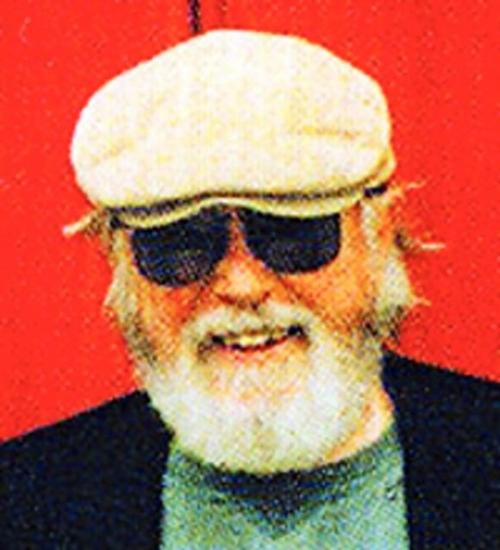
Jazz musician Bud Shank traveled the world performing at international festivals and intimate clubs.
He produced 50 diverse albums, and as a studio musician, he can be heard on the scores of Hollywood films.
But it wasn't the accolades that came with his successful six-decade career that kept Shank playing the alto saxophone into his 80s as he suffered from chronic obstructive pulmonary disease.
He played, said Linda Shank, his wife of almost 15 years, because it was fun.
Doctors warned Shank against taking a three-day studio job in San Diego with his quartet. They told him he couldn't handle the stress, given his worsening pulmonary condition. Yet Shank took the job despite — or perhaps because of — the medical advice. It was his last recording.
He died on April 2, an hour after returning to his Tucson home, likely from a pulmonary embolism. Shank, who was 82, had lived in Tucson for seven years.
People are also reading…
He was slated to play next week at a Tucson Jazz Society event. Instead, the April 19 concert will be a tribute.
"All Bud ever wanted to be was an alto bebop player," his wife said.
Shank was born in Dayton, Ohio. His father was an Army man turned gentleman farmer, and his mother was a homemaker. Shank was 10 when he got his first instrument, a clarinet. He had heard Artie Shaw and Benny Goodman on the radio and was hooked. His parents bought him the instrument for $12, and he took lessons every Saturday.
In recent years, Shank kept his clarinet on the gun rack in his pickup truck.
"That's Bud's sense of humor," his wife said. "People used to ask, 'Why do you have that clarinet in there?' Bud would say, 'Because it's lethal.' "
The clarinet was followed by a sax when Shank was 12, and a flute when he was 19.
He studied music and business for three years at the University of North Carolina, but dropped out to take a six-week gig with bandleader Charlie Barnet. Shank was playing tenor sax when the alto player quit.
"Bud asked if he could play first-chair alto sax. Charlie said, 'Sure kid,' and Bud ran down the street and bought an alto," Linda Shank said.
In search of work when his gig with Barnet ended, Shank hitched a ride to California, and in 1950 he got a job as a flautist with Stan Kenton's Innovations in Modern Music Orchestra.
Eventually, Shank left the Kenton orchestra to play with small jazz groups, including a long tenure with Howard Rumsey's Lighthouse All Stars and with top musicians such as trumpeter Chet Baker and baritone saxophonist Gerry Mulligan.
It was in the early 1950s that Shank began blending Brazilian folk music with jazz to produce two albums with guitarist Laurindo Almeida. Their recordings were forerunners of another cultural import, the Brazilian jazz-samba hybrid called bossa nova. The musical blend exploded with the 1962 release of Stan Getz's album "Jazz Samba."
In 1956, Shank formed his own quartet. He played primarily sax, tenor and alto, but continued trying to integrate flute into the jazz sound.
"Since there were no flute players who were doing what I was trying to do, I started listening more to pianists and vibe players," Shank wrote on his Web site, BudShankAlto.com
Though he lived in California and the Pacific Northwest, Shank bristled at the "West Coast jazz" label. He thought it diminished the contributions of West Coast jazz musicians.
Drummer Pete Swan, who is organizing Shank's Tucson tribute concert, met the sax man more than 20 years ago.
"The rap on the West Coast sound was that it wasn't really passionate; it wasn't fiery. But Bud always played with so much intensity and so much passion you could feel it. It was always something that was going to register on the emotional scale. It was coming straight from the heart," Swan said.
Interest in jazz waned in the 1960s as British rock bands invaded. That's when Shank began taking more studio work — often playing flute on movie scores — to pay the bills between concerts.
"He was the top call guy for studios and movies," said Ken Poston, a former jazz festival organizer who met Shank in the mid-1980s. "When you're doing a film call or a TV show or something, they don't rehearse," Poston said. "There's no time for that. The red light comes on, and you play it. To be that kind of musician, where you can sit down and play perfectly, basically sight-reading it, that's a rare thing."
Poston founded the Los Angeles Jazz Institute in the late '90s. Shank had donated a large portion of his memorabilia to the institute. Now his wife plans to donate the rest of the photos, original scores, concert programs and newspaper clippings to the Bud Shank Collection.
For much of the 1970s and '80s, Shank focused his energy on becoming a classical flutist, playing with a "chamber jazz" group called the LA Four.
Eventually, Shank realized that "even after all those years of studying, practicing, performing and trying to make the flute have a place in history as a valid jazz instrument … it couldn't be done," he wrote on his Web site.
When he parted from the LA Four in the late-1980s, Shank wanted to get back to his bebop beginnings, so he concentrated exclusively on the alto sax.
"He was a tremendously creative and vital musician. He developed over the years from a pretty good to a remarkable alto saxophone player," said music writer Doug Ramsey of Washington state, who covered Shank extensively on his blog, "Rifftides."
Once Shank focused solely on alto sax, "his playing became richer and fuller and more aggressive and lusty," Ramsey said.
As Shank aged, his music "became much deeper, harmonically in terms of note choices that he made and the chords. It kept getting fuller and richer as he got older, and that's not always the case," said Ramsey, who last saw Shank play in January at Los Angeles' Jazz Bakery.
It was a remarkable feat, considering Shank's condition had him tethered to a portable oxygen tank around the clock, except when he played his alto sax.
"He was only really fully alive when he was onstage," Linda Shank said. "When he wasn't onstage, he was almost a shy man. Put him in a party, and you'd find him in the corner. But put a saxophone in his mouth and he had something to say."
the series
This feature chronicles the lives of recently deceased Tucsonans. Some were well-known across the community. Others had an impact on a smaller sphere of friends, family members and acquaintances. Many of these people led interesting — and sometimes extraordinary — lives with little or no fanfare. Now you'll hear their stories.
On StarNet: Did you know Bud Shank? Add your remembrance to this article online at azstarnet.com/lifestories Hear one of Bud Shank's songs online at azstarnet.com/metro, and find a photo gallery at azstarnet.com/slideshows

 101 homes to be built on NW Tucson corner