What can a handpainted wooden brooch shaped like a cardinal tell us about the history of Arizona and America as a whole?
Quite a bit, when you consider who made it.
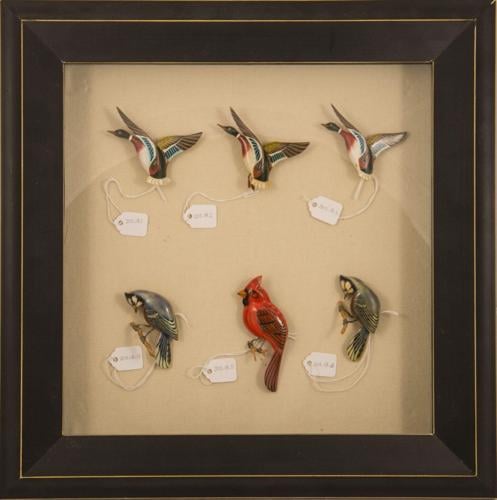
The intricate bird was carved and painted by Robert and Michiye Matsuishi during World War II, as they were imprisoned along with thousands of other Japanese Americans at the Poston War Relocation Center near Parker, Arizona.
A small collection of the Matsuishis’ brooches is part of a new Arizona Historical Society exhibit that seeks to tell a uniquely Southwestern version of American history, using 26 objects from the past 250 years.
“All of these things are just things. A lot of them are very practical and utilitarian, but they have meaning beyond their physical description,” said Jaynie Adams, history engagement manager for the historical society. “That’s kind of the value of museum collections. That is the value of historical interpretation.”
People are also reading…
The exhibit is called “Arizona Histories, American Stories,” and it’s the physical embodiment of an essay Adams wrote earlier this year for the society’s quarterly Journal of Arizona History, which dedicated its spring edition to America’s 250th birthday.
“The idea for the special issue came around, and then it seemed like a no-brainer to kind of turn that into an exhibit for folks to visit in person,” said Adams, who also serves as an associate editor for the journal.
She said she hopes the exhibit prompts museum visitors to ask questions, investigate further on their own and consider what other historical objects from Arizona might be used to chart the evolution of the nation.
As she puts it in her essay: “There isn’t one single image or artifact that can tell all those stories, just like there isn’t one single way to be American.”
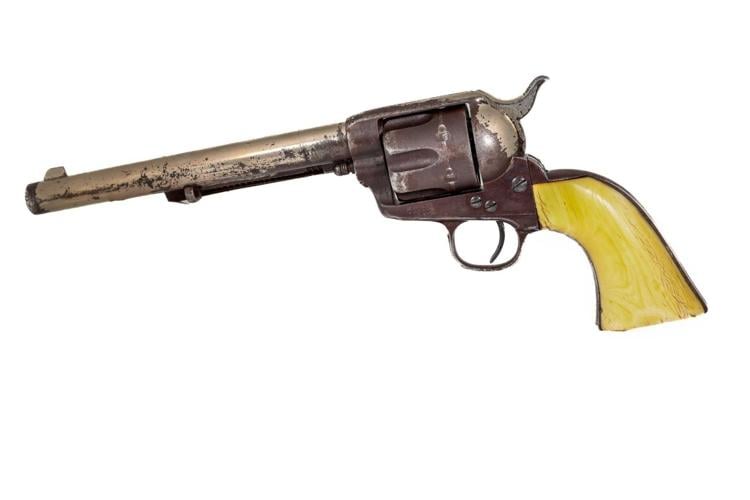
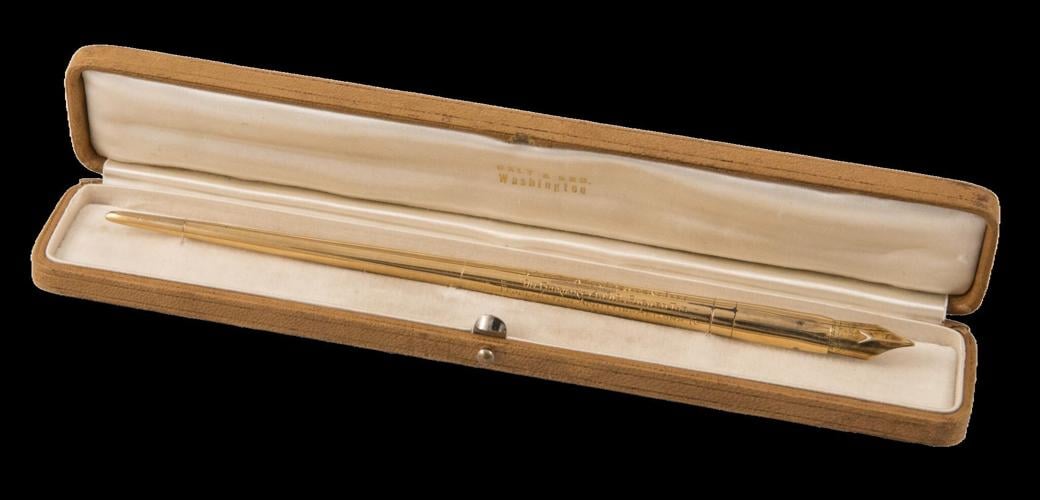
Some of the artifacts Adams chose have obvious historical value: Geronimo’s rifle, Wyatt Earp’s revolver, the commemorative pen President Taft used to sign Arizona into statehood in 1912.
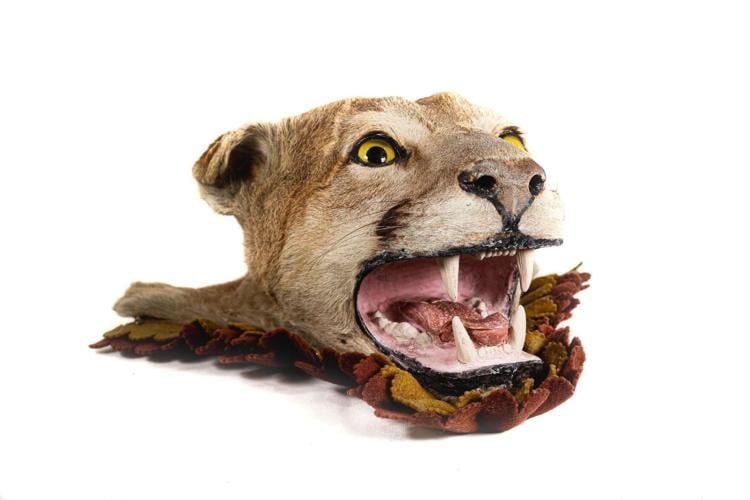
Other objects are more obscure or just plain strange, like “Josephine,” the mounted mountain lion head that some Rough Riders from Arizona hauled around as their mascot during the Spanish-American War.
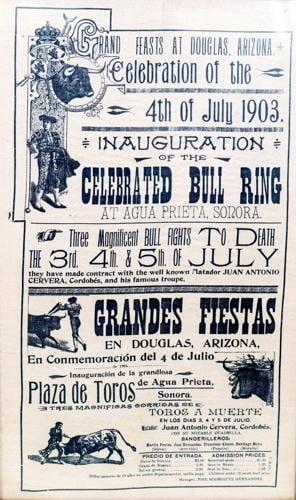
Adams’ favorite piece is a poster advertising a Fourth of July feast in Douglas, Arizona, and an inaugural bullfight in Agua Prieta, Sonora, over the same weekend in 1903.
“I think that says a lot about the intertwined histories and intertwined destinies of the U.S. and Mexico and the sister cities on the border,” she said. “It also says a lot about how different communities celebrate different holidays and how holidays have a regional flare based on who is celebrating them.”
Not to mention the bullfighting, Adams said.
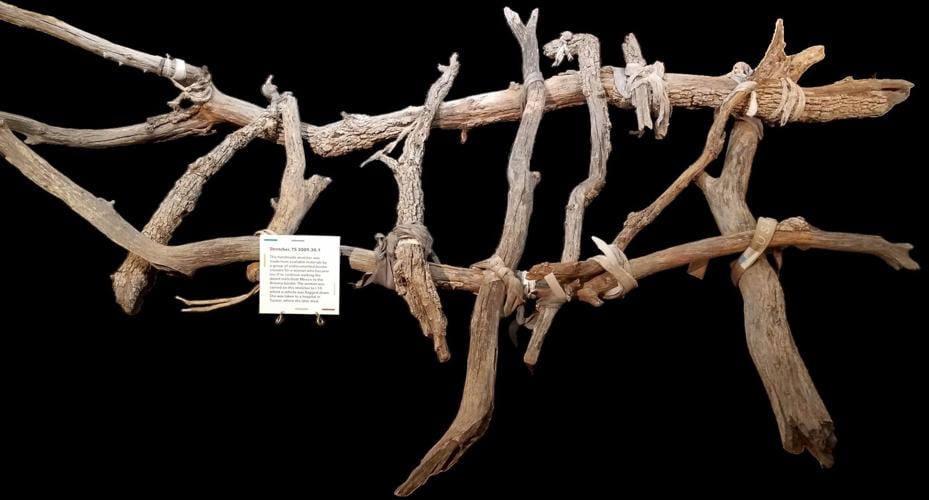
Not everything from her essay will be included in the exhibit. A few of the objects are on loan to other museums, while others are too fragile for public display, including arguably the exhibit’s most heartbreaking artifact: an improvised stretcher made from sticks and strips of cloth and used to carry a woman through the desert after she fell ill and later died while trying to cross the border.
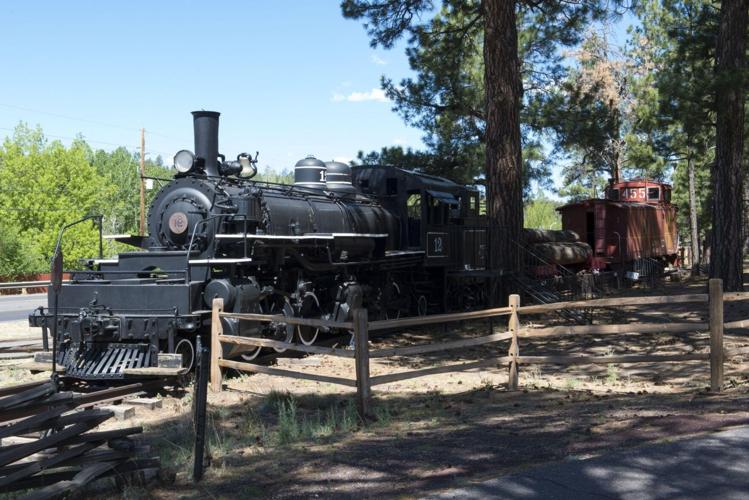
To represent the era-defining expansion of the railroad, Adams chose the actual locomotive and caboose that are parked outside the historical society’s Pioneer Museum in Flagstaff. For obvious reasons, those objects could not be hauled down to Tucson to be put on display, so she picked out a perfect replacement, currently on loan to the historical society from Stanford University: the ceremonial silver spike that was driven into the ground in downtown Tucson in 1880 to mark the arrival of the railroad from California.
Adams said she researched the essay and assembled the exhibit with the help of about a half dozen other historians and museum staff members.
Highlighting individual objects turned out to be an easy way to touch on a number of historical themes and tell the overall story of Arizona’s role in the building of the nation, she said. “Artifacts feel a little more objective, pardon the pun.”
“Arizona Histories, American Stories” opens on July 4 at the Arizona History Museum on Second Street, just west of the University of Arizona campus.
Journal of Arizona History editor David Turpie said the museum will be open from 10 a.m. to 3 p.m. that day, with a special admission price of $2.50 in honor of America’s semiquincentennial.
The new exhibit is expected to be on display in the museum’s front hallway through the end of the year at least, Turpie said.
Here’s a look at the 26 objects picked by the historical society to tell the story of Arizona and America:
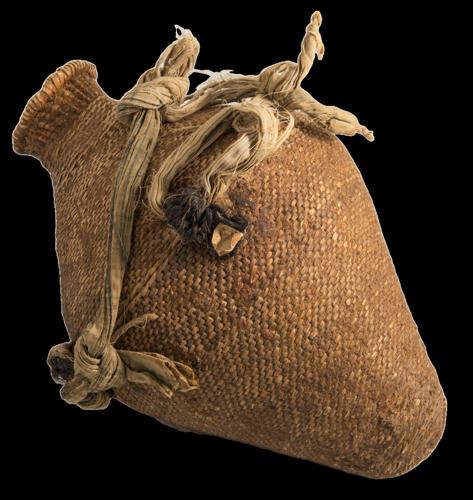
- To help them survive in harsh desert environments, Indigenous inhabitants designed baskets coated with pitch on the inside to carry and store water. The exact origin of this basket is unknown, but it may have been made by Yavapai people for use near the Colorado River.
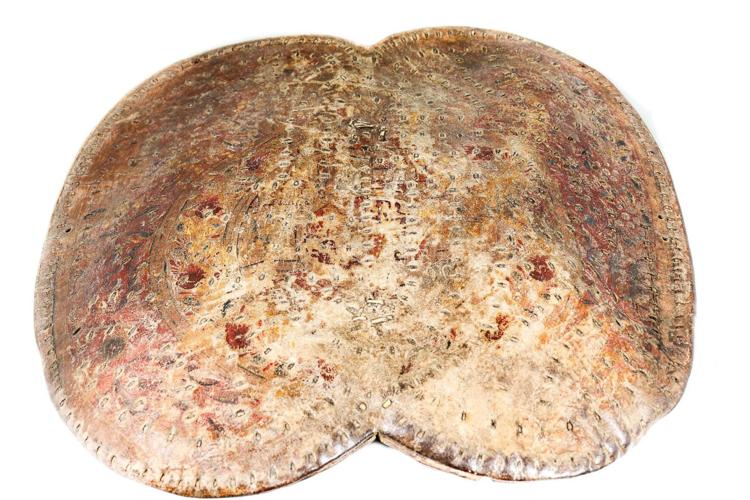
- Some Spanish soldiers in North America carried decorated leather shields, known as adargas, until the early 1800s — a North African invention adopted by colonizers and used in violent conflicts with Indigenous people halfway around the world.
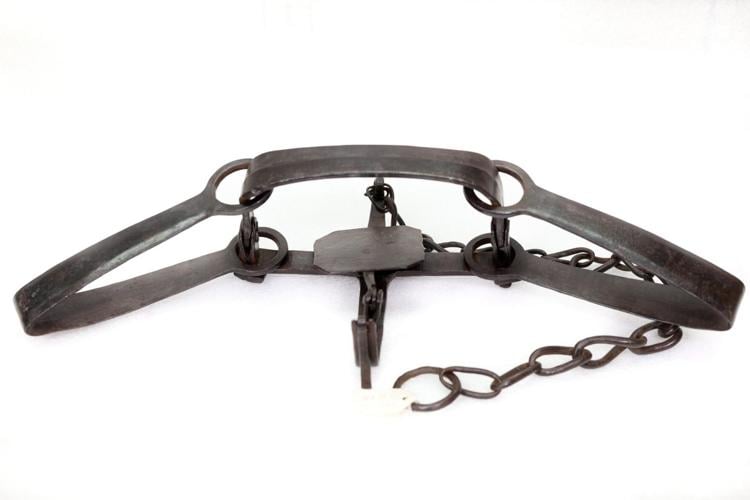
- A beaver trap symbolizing the fur trade in Arizona.
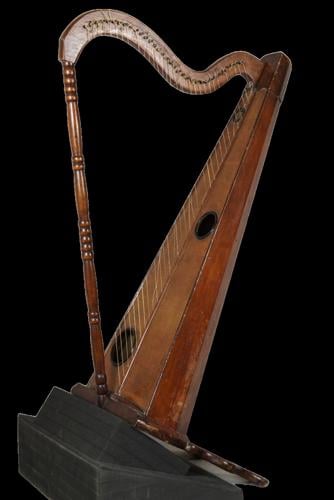
- A lap harp that belonged to Atanacia Santa Cruz Hughes, who was just 13 years old when she was married to pioneering Tucson businessman Samuel Hughes in 1863.
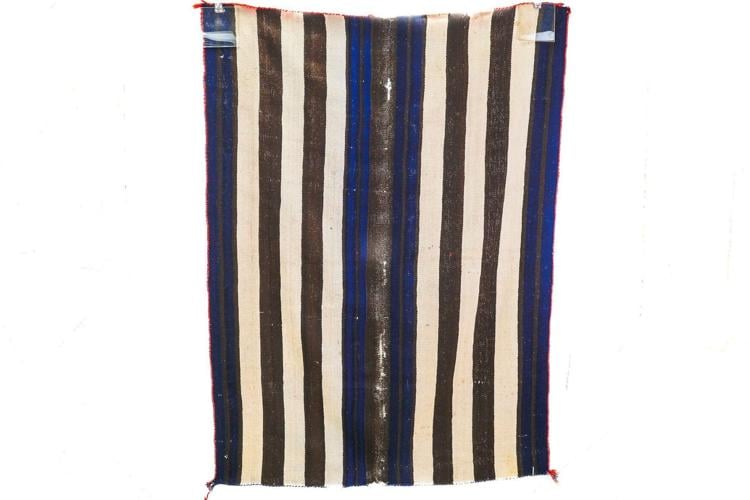
- A Navajo-made Chief’s-style blanket from the first half of the 19th century provides a rare surviving example of the sorts of items that once moved through the extensive Indigenous trade networks spanning North America.
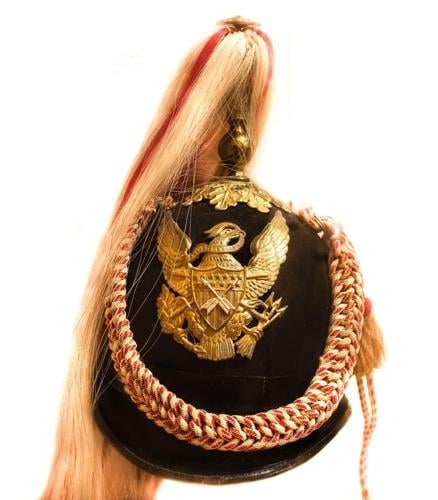
- A helmet from the dress uniform of an Indian Scout in the late 1800s.
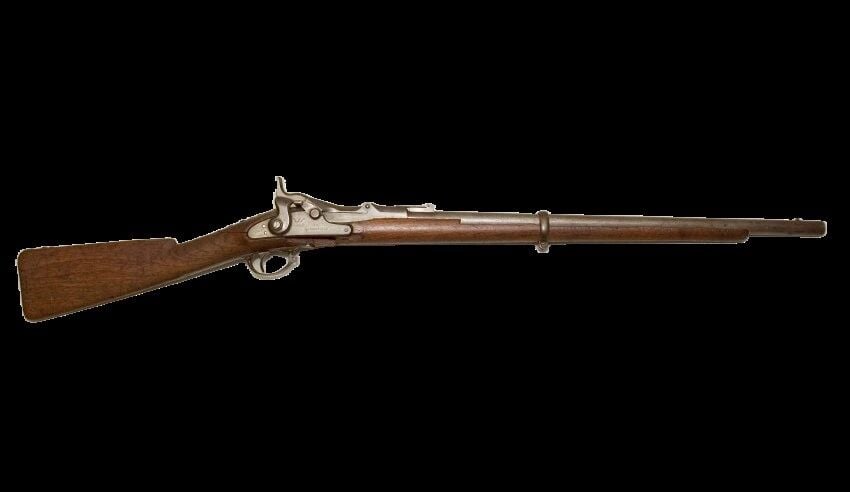
- The Springfield rifle Geronimo was carrying when he was captured by the U.S. Army in 1877, 9 years before his final surrender and forced removal from his ancestral homeland.
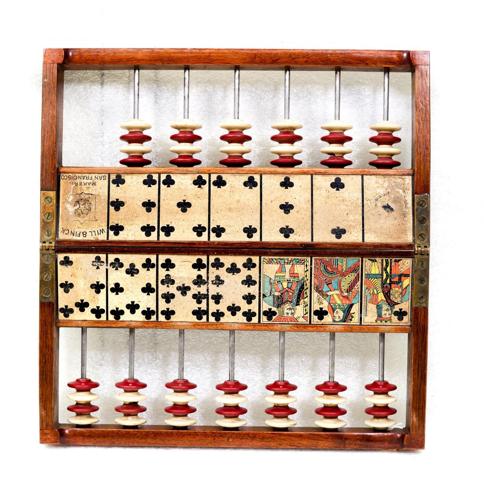
- A "casekeep" for faro, a fast-moving card game popular in Arizona mining towns during the heyday of gambling in the Old West.
- Wyatt Earp’s single-action Colt revolver.
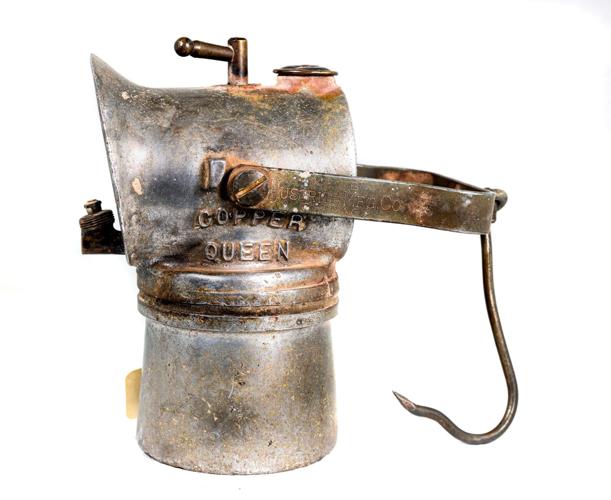
- A carbide mining lamp used in the early 1900s to light underground worksites without producing deadly carbon monoxide.
- The mounted head of a mountain lion nicknamed Josephine and carried as a mascot during the Spanish-American War by Arizona's contingent in the famous Rough Riders.
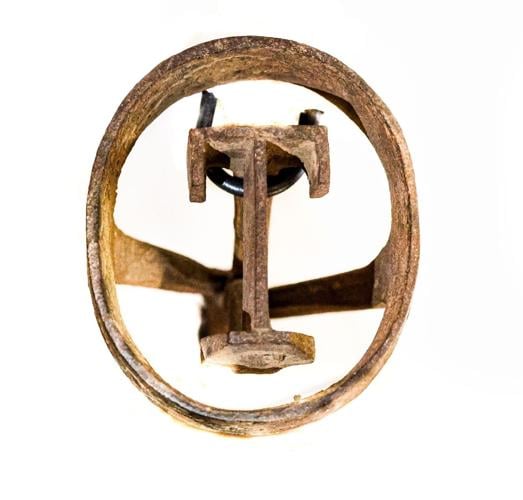
- A branding iron belonging to Teofilo Otero, who, with his brother Sabino, were the “kings of cattle” in Southern Arizona in the mid-to-late 1800s.
- A silk broadside advertising the 1903 Fourth of July feast in Douglas, Arizona, and an inaugural bullfight in Agua Prieta, Sonora, illustrating the close connections between border communities in the U.S. and Mexico.
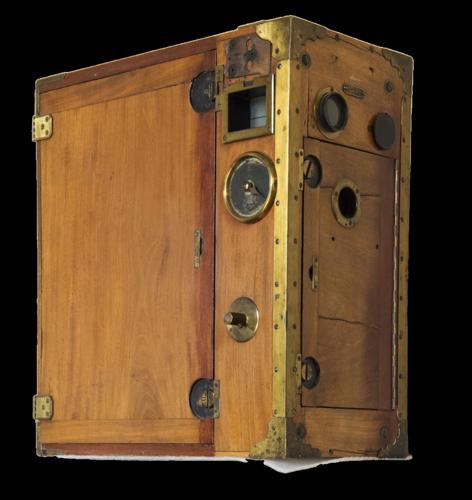
- A motion-picture camera used by Ellsworth and Emory Kolb to record the undammed Colorado River through the Grand Canyon in 1911 and produce what amounted to one of the earliest tourism commercials.
- The commemorative pen used by President William Howard Taft to sign Arizona into statehood on February 14, 1912.
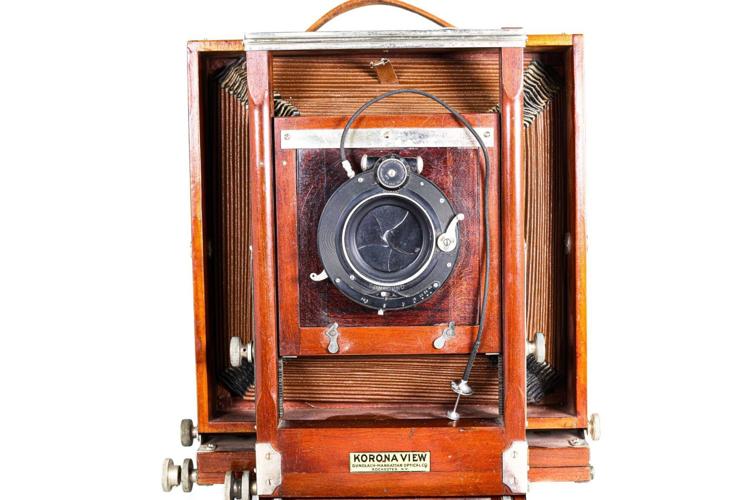
- A camera used by a photographer in the early 1900s to document dam construction and other U.S. Reclamation Service projects in Arizona and elsewhere across the West.
- A locomotive and caboose on display at the Arizona Historical Society’s Pioneer Museum in Flagstaff, where the arrival of the railroad in the late 1800s transformed the area, just as it did elsewhere in Arizona and across the United States.
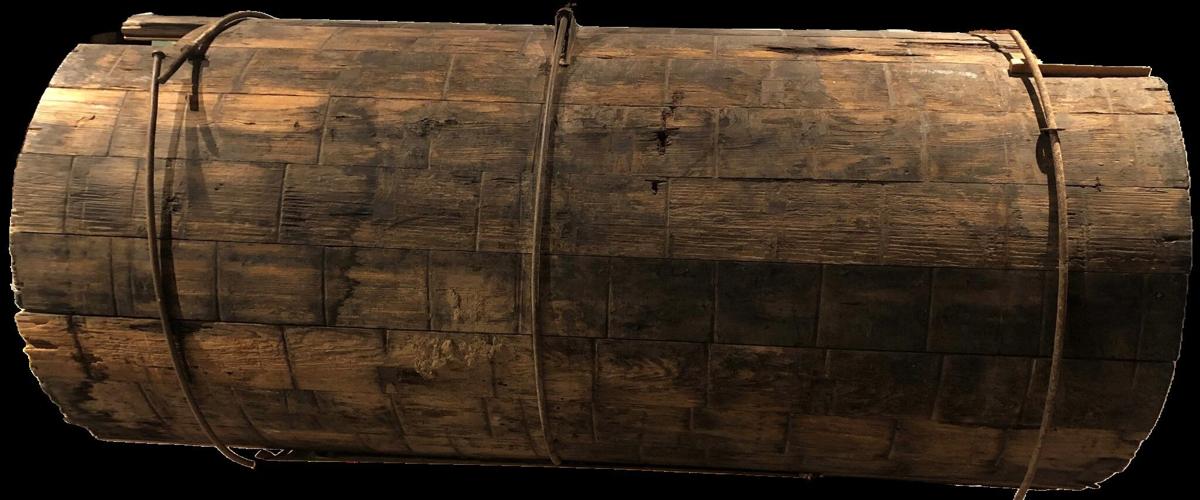
- A length of redwood pipe that was used to deliver water to Phoenix from the Verde River after World War I.
- A collection of wooden brooches carved and painted by Robert and Michiye Matsuishi during their World War II internment at the Poston War Relocation Center near Parker, Arizona.
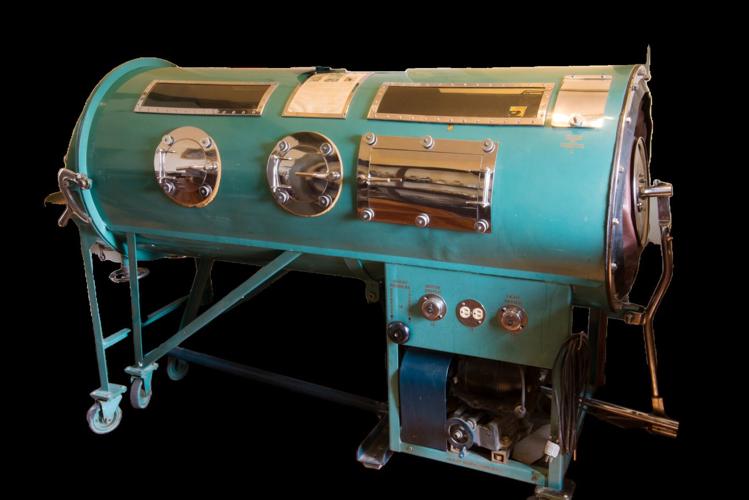
- An iron lung used to treat polio patients, at least until the disease was all but eradicated starting in the early 1960s by a mass voluntary vaccination campaign first piloted in Arizona.
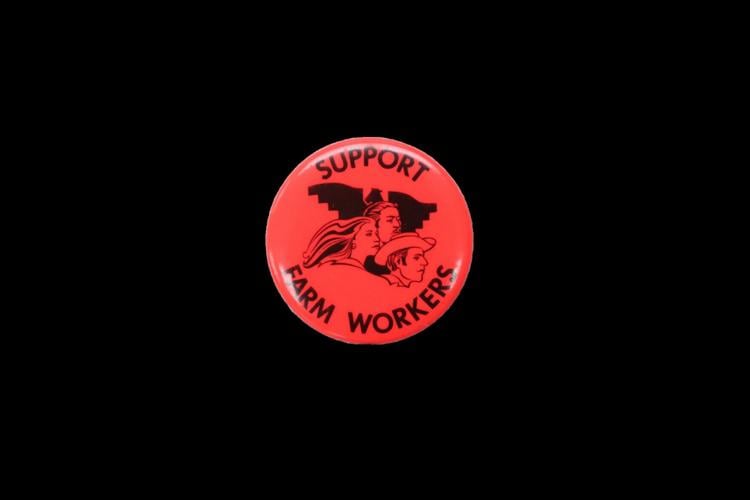
- A pin from the United Farm Workers, the union co-founded by Yuma native Cesar Chavez in 1966.
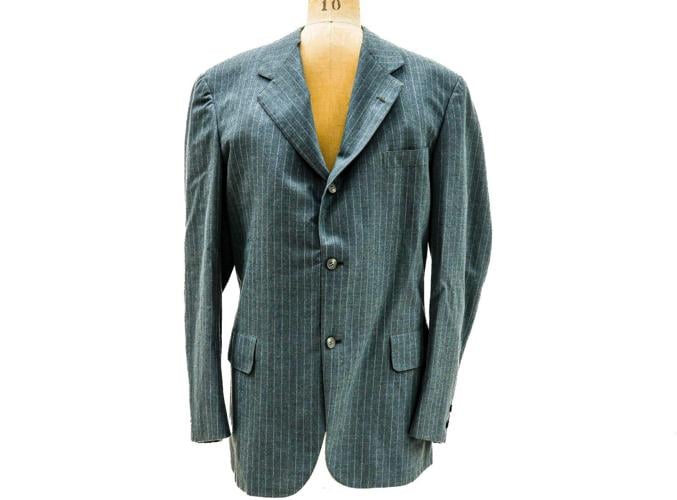
- The suit jacket worn by Arizona political giant Barry Goldwater when he met with President Richard Nixon on Aug. 7, 1974, the day before Nixon resigned from office.
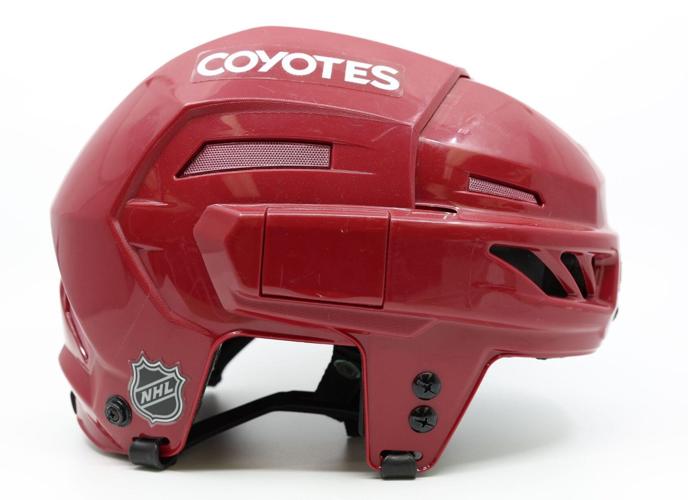
- A helmet from the now-defunct Arizona Coyotes hockey team signifies the rise — and occasional fall — of professional sports in Arizona.
- An improvised stretcher used by migrants to carry a woman who fell ill and later died during her journey through the borderlands.
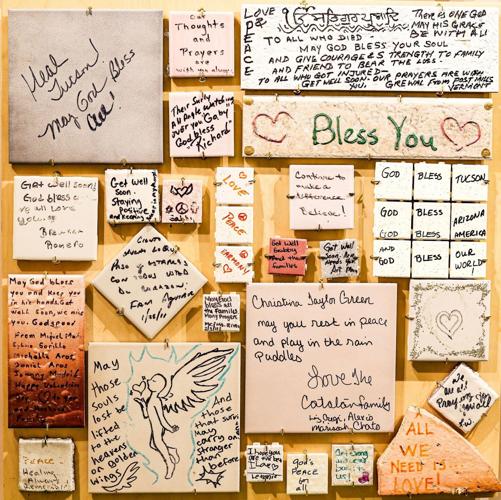
- Tiles with handwritten notes that were left at impromptu memorial sites around Tucson after the Jan. 8, 2011, mass shooting that wounded 13 including Congresswoman Gabrielle Giffords and left six people dead.
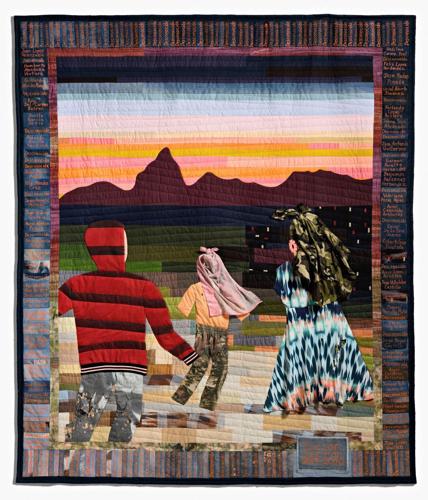
- A piece from the Migrant Quilt Project depicting three fictionalized children running toward a sunrise and incorporating actual clothing that was left behind in the desert by migrants.