Israel Cruz and Doug Henry, born within the snowy hammer drop of two cantankerous Great Lakes, are separated by lives spent about 160 miles apart on the state Thruway. What connects them is a goal and a potential resolution:
Cruz, inspired toward civic action by the Self-Advocacy Association of New York State (SANYS), dreams of a comprehensive program for removing snow from sidewalks in Buffalo, while Henry – a plowing guy in greater Syracuse – sees that mission as formidable.
But he knows it can be done.

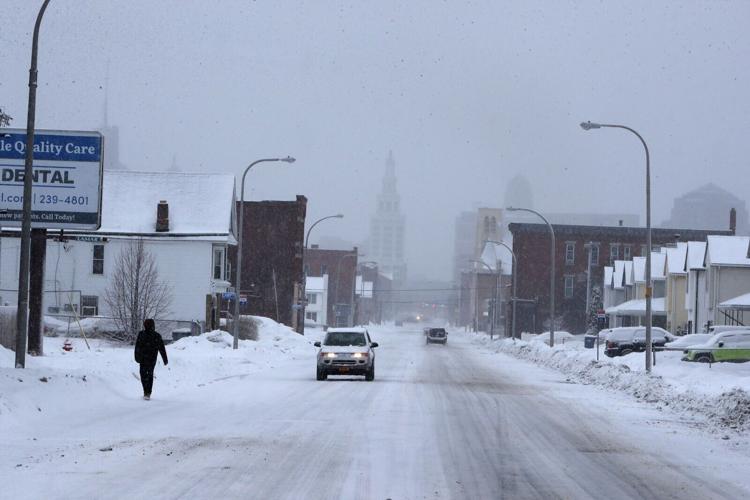
A pedestrian walks in the street along Genesee Street in Buffalo.
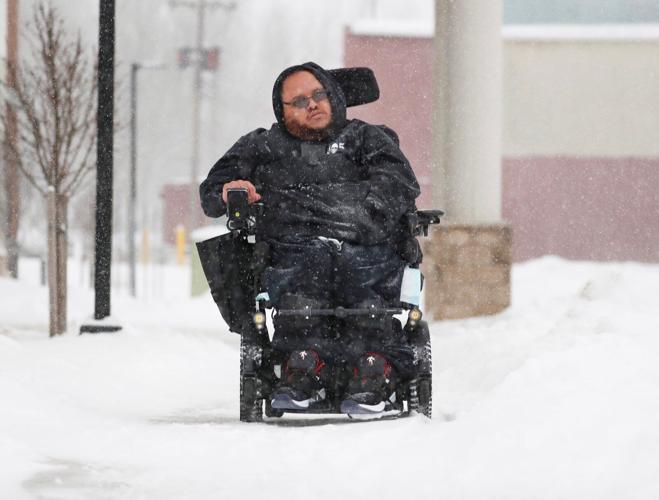
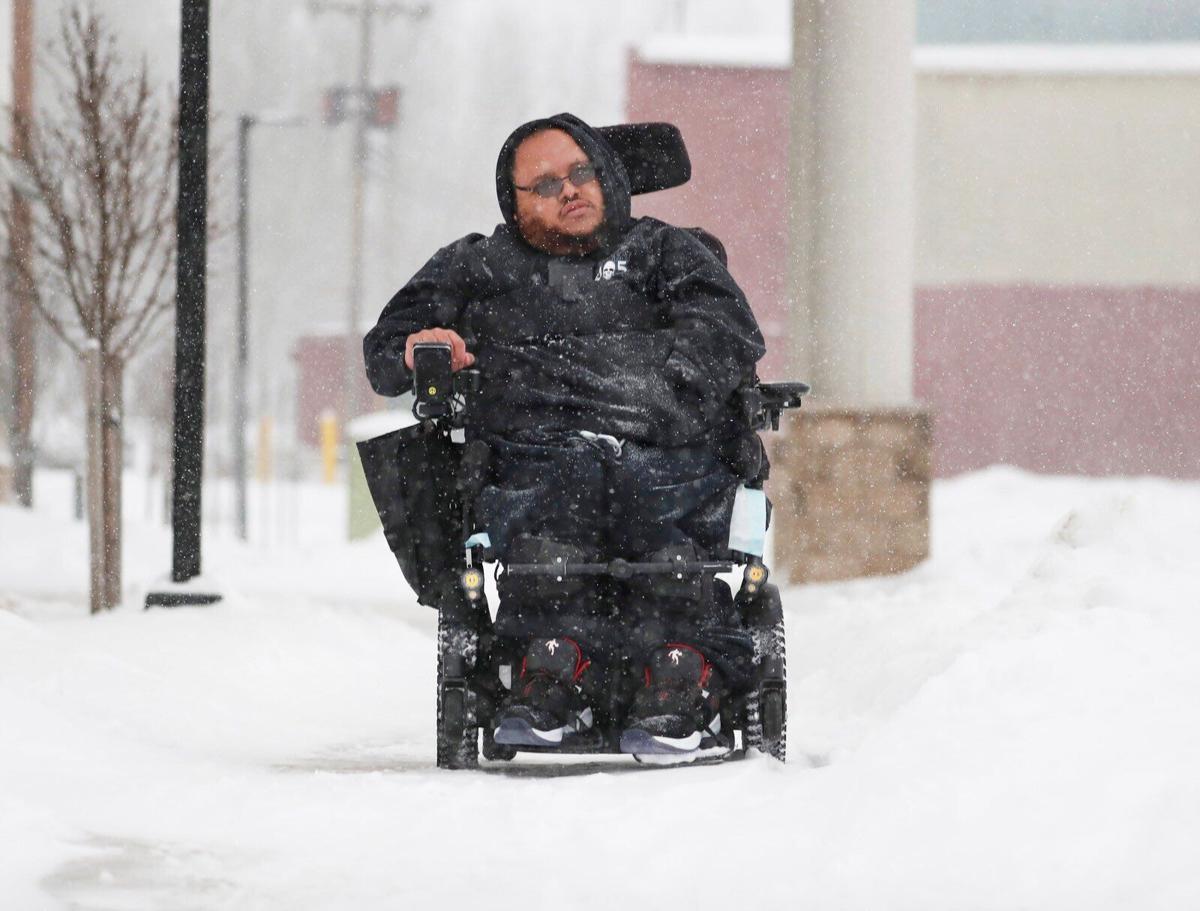
“This is important,” said Cruz, 30, who often navigates his motorized wheelchair on streets near his West Side home. “For someone who travels around the city and doesn’t use a car, this is a safety issue.”
Throughout his life, at too many times to count, snow-packed sidewalks have forced Cruz to take his chances with heavy traffic, while trying to stay as close as possible to plowed snow by the curb. The risk is familiar to almost anyone in Buffalo without a car, which Justin Booth – executive director of GoBike Buffalo and chairperson of the Common Council’s bicycle and pedestrian advisory board – said represents three of every 10 households in the city, or about one-third of Buffalo’s almost 280,000 residents.
People are also reading…

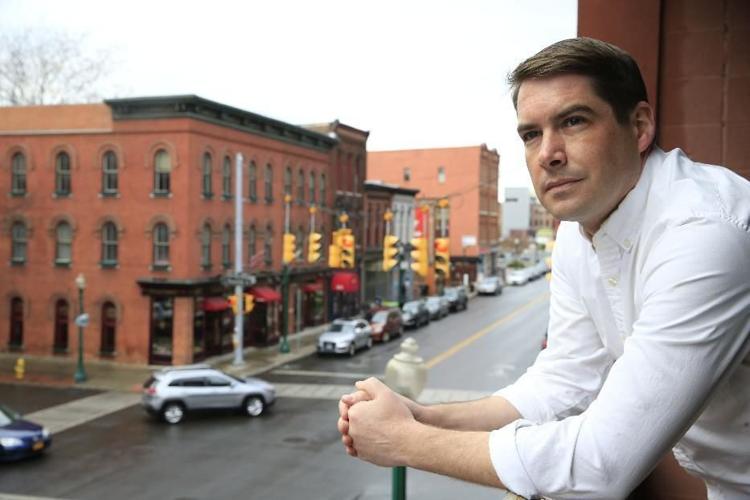
Mayor Ben Walsh of Syracuse: Clearing sidewalks is a civic priority, a matter of residential fairness.
This winter has emphasized how hard it gets. For the second time in three years, Buffalo – closing in on 75 inches of total snow – is well in front for the ranking of snowiest U.S. city with more than 100,000 residents, according to a list maintained by Pat DeCoursey on his “Golden SnowGlobe" site.
To Cruz, Booth and many civic allies, that cries out for this community to serve as an international model for snow removal strategies, especially for sidewalks used routinely by the elderly, parents with young children, residents in wheelchairs and others particularly vulnerable to traffic. Booth said it spotlights a central question of logic and equity:
"What type of city do we want to be?"
Last week, amid a larger outcry over the pace of clearing snow from many streets, GoBike and a collective of such civic groups as the Buffalo Transit Riders United, the Buffalo Mutual Aid Network, the Center for Self-Advocacy and the Fair Fines + Fees Coalition joined together in a parallel call for action on sidewalks and bus stops, summarized by Holly Nowak of the Coalition for Economic Justice:

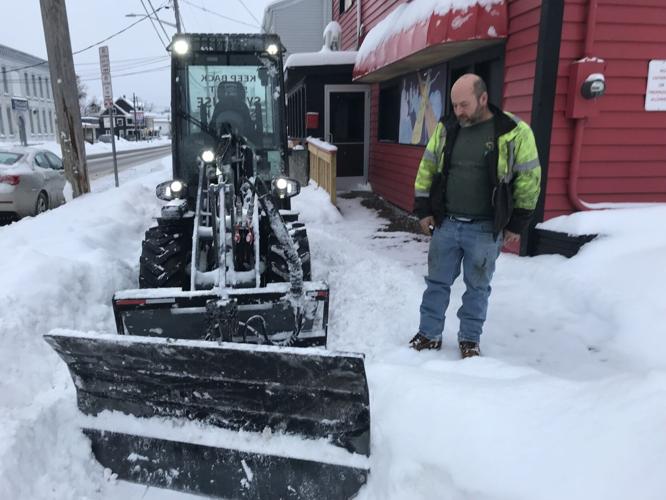
Doug Henry: His company took on plowing Syracuse sidewalks.
"The fact that a city of our size – with such a reputation for snow – can't find a way to make it safe for everyone in winter is both ridiculous and negligent," Nowak said.
A few days ago, Booth and the advisory board passed a resolution with this suggestion: For an answer, look to Syracuse, snowiest large city on average in the nation, which after years of what closely mirrored the historically molasses-like response to the debate in Buffalo is now in the third year of an expanding plan to clear many sidewalks.
The potential obstacles and holdups – from civic expense to blaming property owners to deciding on potential routes for clearing – were “the things that forever kept us from doing anything,” said Syracuse Mayor Ben Walsh, who made figuring out some kind of strategy a priority in his first campaign, in 2017.

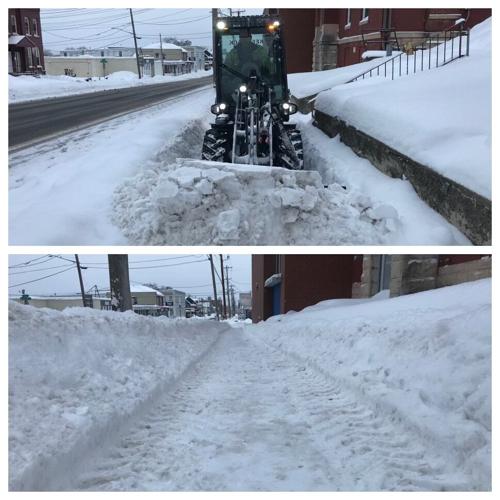
The before and after: Doug Henry plows a North Salina Street sidewalk, in Syracuse.
In 2019, Walsh's administration decided to hire a contractor to do a limited number of routes. The job ended up with JSK Snow Services, based in nearby Warners. The company was initially asked to clear about 20 miles of sidewalks, routes that Walsh said were tied to analysis that showed them as particularly busy for pedestrians – and often as major pathways to schools.
After a one-year halt for the pandemic, the program resumed this winter at a civic cost of up to $650,000 to cover 100 miles of Syracuse's sidewalks. In defending the expense, Walsh made this point: In a city with a budget of about $265 million, it is a relatively modest fee for serving residents without access to a car, residents who make up “a significant portion of our population,” Walsh said.
The project followed years of effort by such officials as former Syracuse Councilor Bob Dougherty – a guy who still routinely forms volunteer crews to open snow-packed curb cuts for children at busy intersections.
Dougherty remembers all the refrains used as barriers, particularly the idea that if residents took care of their own walks, you would not need to plow – a response that makes no sense in a community with so many vacant homes and empty lots, not to mention tight bridges where everyday residents could hardly be expected to clear out sidewalk snow.
To Cruz, the next step is obvious: "If Syracuse can do it, why not Buffalo?"
As Charlie Specht reported recently for The Buffalo News, a pilot program in Buffalo to clear 30,000 feet of sidewalk snow is no longer in effect. Michael DeGeorge, spokesman for Mayor Byron Brown, said the city targets sidewalks “through the mayor’s impact team, DPW and volunteers through the Good Neighbor Network,” and that Brown “will be recommending additions to the city’s snow removal plan, with input from the council and public … as part of the upcoming city budget process" that DeGeorge wrote in a message will be "cutting-edge."
Fueled by the ongoing fury of civic reaction to snow removal on the streets, Councilor Joseph Golombek – part of a council alliance to develop a comprehensive sidewalk plan – said he anticipates some kind of municipal effort will be approved this year, which Golombek envisions as using contractors within different city neighborhoods to open heavily traveled routes.
Of that idea, Doug Henry – whose business clears Syracuse sidewalks – offers good luck. He said Syracuse officials contacted his company, which had been handling sidewalk clearance on the Lockheed Martin industrial campus, after the city had trouble getting bids for the original sidewalk contract.

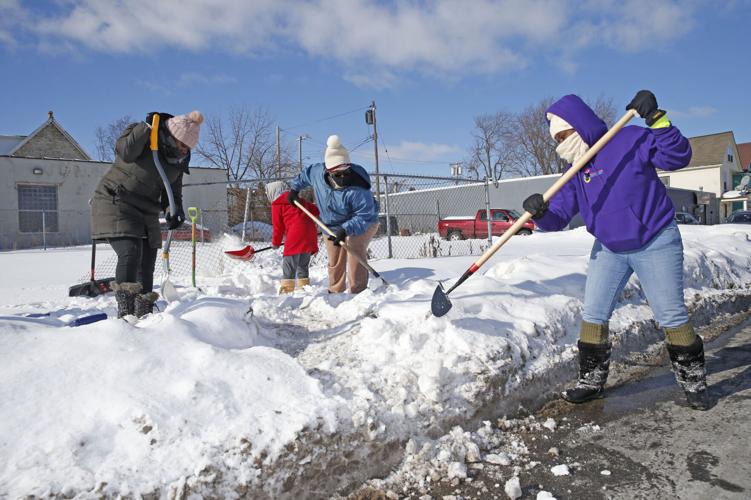
Members of the Buffalo Association of Black Social Workers chop out an entrance at a bus stop on Kensington Avenue as part of a volunteer service day a week ago.
The job was difficult and demanded constant learning, Henry said. The first year “tore apart” his old machines, damage usually caused by broken or uneven sidewalks. His crew now uses a fleet of about six “wheel loaders,” a kind of plow his company customized to take on snowy challenges in the city.
The contract kicks into operation whenever three inches or more of snow falls in Syracuse. Henry grew up in Orwell at the foot of the Tug Hill Plateau, famous for towering snow courtesy of Lake Ontario, which is why “we don’t get overwhelmed very easily,” Henry said. He said his company bought a building in downtown Syracuse so his crews can be working by 3:30 or 4 a.m., with a goal of having the sidewalks ready that same morning for anyone traveling by foot, chair, bike or stroller.
Walsh, sympathetic to the situation in Buffalo, said Syracuse learned from such cities as Rochester before adopting its own plan. That is expertise he is willing to share, a thought echoed by Henry, who contemplates serving as a consultant to other cities needing a sidewalk plan.
One thing Henry has noticed: His workers receive the most complaints about running over grass or other concerns in affluent areas, while people in neighborhoods accustomed to struggle are unfailingly happy to see the sidewalk plows, for one simple reason.
“They walk,” Henry said.

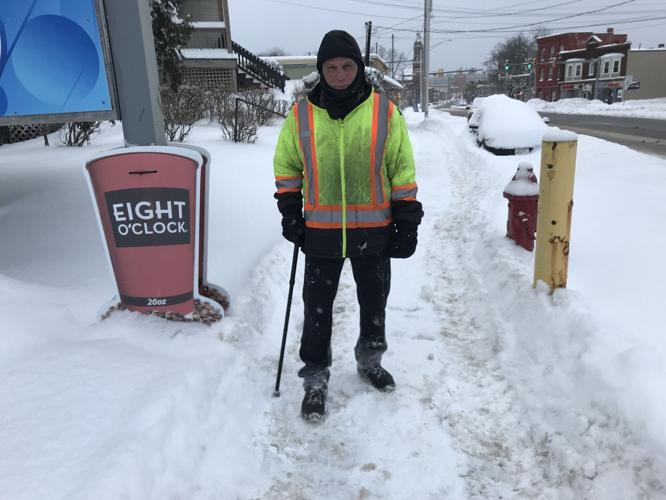
Ted Pannozo, who either walks or rides his bike on snowy Syracuse days.
Saturday, in the aftermath of a big upstate storm, Henry’s plow kicked up an explosion of snow along a sidewalk on North Salina Street, a main artery in Syracuse. His work opened a path for Ted Pannozo, 59, a guy who had already walked miles with a cane because the chain was broken on his bicycle, which he typically uses even in the snow.
Pannozo said he is glad to hear civic officials talking about the winter needs of pedestrians and bicyclists in the same breath as motorists. Asked how much it matters if the sidewalks are clear, Pannozo laughed, incredulous, and lifted up his arms.
“This is for us,” he said, a thought that ought to stretch, unimpeded, all the way to Israel Cruz.