He went from Army horses to tanks to helicopters. Still, he never forsook the horses.
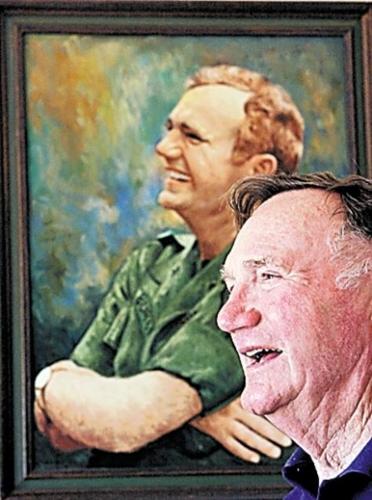
A member of both the 1948 and 1956 U.S. Olympic equestrian teams, retired two-star Army Gen. Jonathan "Jack" Burton still officiates at equestrian events around the country.
"This year I'm at 27," says Burton, who moved to Tucson in 2007. Among the venues: last month's prestigious Rolex Kentucky Three-Day Event, where he served as a steward, looking for infractions.
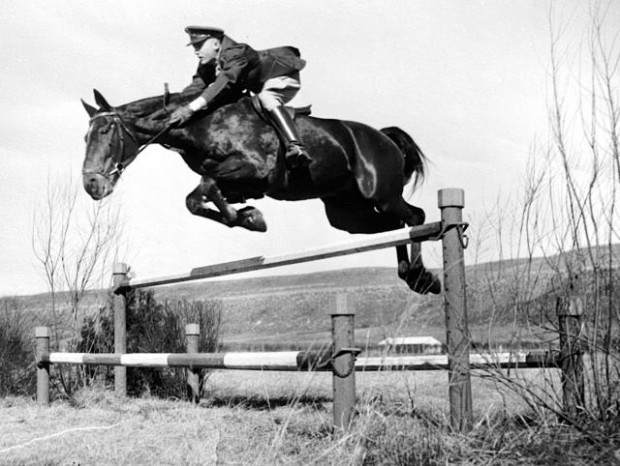
While Burton never medaled in either Olympics — his horse went lame before the '48 event and he tumbled off his horse in the '56 Olympics — he's still won a slew of medals, including the National Horse Show's international individual medal in 1947.
"That was in Madison Square Garden," says Burton, who, at 89, calls it his greatest equestrian achievement.
People are also reading…
He also served in three wars — World War II, in which he earned a Purple Heart; Korea; and Vietnam, where he served two tours of duty. "I had to learn to fly a helicopter for that," says Burton.
Born near Chicago, Burton joined the ROTC at Michigan State, graduating in June of '42. Just days later, he was on his way for more training at Fort Riley, Kan. From there, he was shipped to Fort Bliss in El Paso, joining the 1st Cavalry Division.
"I played polo while I was there, and we also policed the border on horseback, looking for spies."
Later in 1942, his outfit learned that its members would be sent to New Guinea. "So then we trained without the horses," says Burton, who saw action in New Guinea, the Admiralty Islands and the Philippines.
While training in Australia, he spied "an attractive blonde having dinner with an Air Force captain three tables over from me."
Burton "moseyed over" to say hello. Later on, he saw her at an officers' club dance. "I danced with her and got her telephone number," he says. "We saw each other after that."
They married in Brisbane in 1943. "After the war, she took a brides' boat and landed in San Francisco," says Burton, who lost his wife, Joan, in early 2007.
Odd as it may seem, considering the Army was rolling on tanks by then, Burton returned to Fort Riley after the war and taught horsemanship classes to officers for a time.
The Army, whose cavalry traditionally represented the United States in the Olympic equestrian events, was also preparing for the 1948 London Olympics — the first since 1936. Burton was picked for the team.
He traveled to Germany "with a boatload of horses," then wound up with even more horses, captured during the war. "We ended up in Munich at a former SS stables," says Burton, who competed around Europe.
"I was riding a captured horse at a horse show in Germany that the French were running. This Frenchman ran out and said, 'You have my horse.' He wanted it right then. I told him, 'Uncle Sam has your horse.' He was a good horse, too."
Alas, another horse Burton used for the Olympics went lame and he did not compete, though the team did win the three-day event, and also took two silvers, one as a team, one in individual.
Korea — and training in tanks — kept Burton out of the 1952 Olympics, by then represented by a U.S. civilian team after the Army bowed out.
Even so, the Army gave him six months to train with the 1956 team.
"The 1956 Games were in Australia, but the equestrian part was in Sweden because Australia had a six-month quarantine on horses," says Burton.
But during the event, he took a hard fall after his horse stumbled following a jump. "The horse landed on his head, and so did I," says Burton, who wound up in the hospital with a concussion. That year, the U.S. team took no medals.
Asked if he's taken lots of falls over the years, he smiles and answers, "That's part of the fun."
During the early '60s, he also played polo in Pakistan and India. "Mrs. (Jacqueline) Kennedy wanted a team to compete, so we got a few old Army people together," says Burton. "I think we came in second."
After Vietnam, Burton was shipped to Germany, where he commanded the 3rd Armored Division for three years in Frankfort.
He retired in 1975 — but only from the military.
From the '60s through the '90s, he helped in an official capacity in several prestigious equestrian events, including the 1984 Los Angeles Olympics, the 1988 Seoul, Korea, Olympics, and the 1996 Atlanta Olympics.
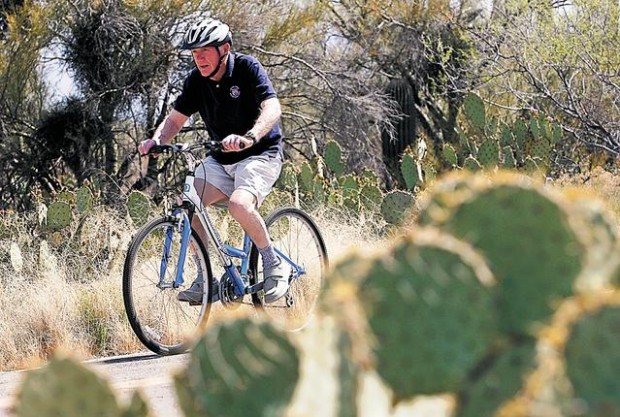
Not until 2005 did he finally quit riding — on a horse, that is. "I ride my bicycle every day," says Burton, who took last year's Arizona State Time Trials for his age group, age 85 and older.
By the way, Burton also competes in running events. "But only in the 5K," he says.
DID YOU KNOW
Tucson native Kim Severson won an individual silver medal and a bronze team medal at the 2004 Athens Olympics with her horse, Winsome Adante.

 Jim Click’s Tucson dealerships sell for $93 million