An Arizona archaeological site partially destroyed by border wall contractors in April may have been thousands of years older than Stonehenge or the Egyptian pyramids, according to a new study by two experts in rock-art dating.
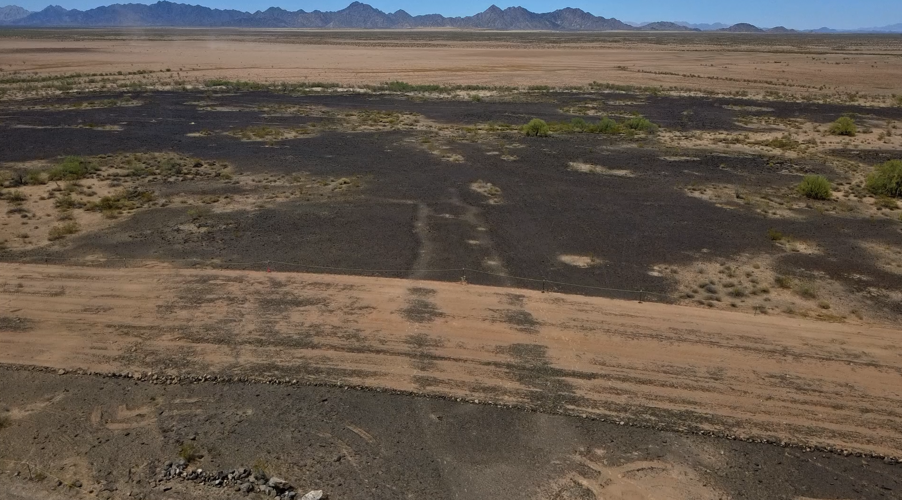
The 270-foot-long, fish-shaped design known as Los Playas Intaglio was cut in two by heavy equipment clearing the desert to make way for a second border barrier through Cabeza Prieta National Wildlife Refuge.
Archaeologist David Whitley and Arizona State University geologist Ronald Dorn now believe the geoglyph was scraped into the desert pavement by ancient Indigenous people at least 6,500 years ago. That would make it roughly 1,500 years older than the earliest construction at Stonehenge, 2,000 years older than Egypt’s first pyramid and 4,000 years older than the Nazca Lines of Peru.
People are also reading…
Whitley and Dorn referred to it as the “oldest known intaglio in the Americas” in the September issue of the magazine of the Society for American Archaeology.
In the same article, the two career rock-art researchers detailed their methods and their findings, which involved testing a handful of small cobbles collected from the site in 1979 using an emerging technique called varnish microlamination.
Previous estimates placed Los Playas Intaglio’s age at about 1,000 years old.
“This discovery makes an already devastating loss even more profound. It’s a cultural and historical atrocity,” said Russ McSpadden, Southwest conservation advocate for the Tucson-based environmental group Center for Biological Diversity. “The Trump administration’s destruction of this 6,500-year-old site is a wound to the deep history of Indigenous communities and impoverishes all of humanity. No administration has the moral authority to bulldoze an irreplaceable piece of the human story.”

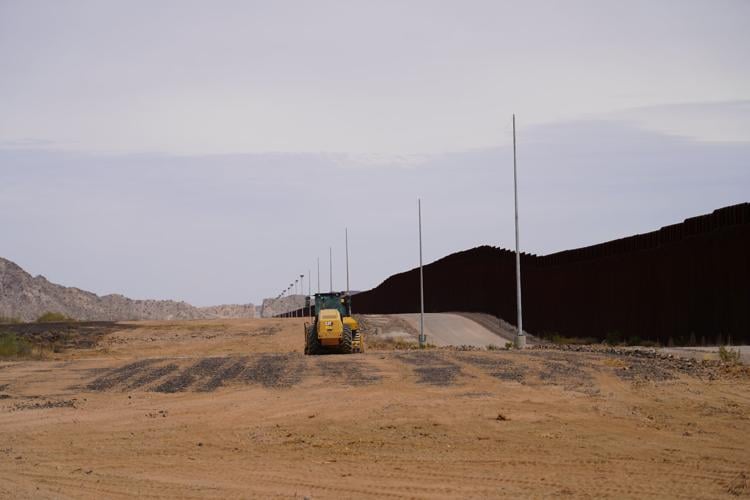
A piece of equipment sits in an area at Cabeza Prieta National Wildlife Refuge being cleared for construction of a second border wall in early May. Contractors on the project damaged a known archaeological site researchers now believe could date back at least 6,500 years.
The giant fish was created by scraping aside darkened rocks and pebbles in the desert pavement to expose the lighter sediment below. Its head comes to rest about 30 feet from the international boundary, and its body points south across the dormant volcanoes of Mexico’s El Pinacate to the Gulf of California.
Those who have seen it in person say the lines that form the intaglio look obviously human-made, but the overall design only really becomes clear when seen from high above.
It’s an important cultural and religious site for Indigenous tribes including the Tohono O’odham Nation, which sued the federal government in June seeking to block construction of primary and secondary walls across the reservation’s 62-mile stretch of the border.
In its lawsuit against the U.S. Department of Homeland Security, Customs and Border Protection and the Border Patrol, the tribe described Los Playas Intaglio and other sites like it as “perpetual prayers.”
“The construction of the border wall and associated infrastructure will severely disrupt the Nation’s cross-border community and family ties,” the lawsuit states. “It will destroy sacred peaks upon which the O’odham have prayed for generations. It will destroy petroglyphs that constitute ‘perpetual prayers.’ It will destroy access to specific Saguaro cacti that O’odham communities and their ancestors have used for generations to create the Saguaro wine essential for certain religious ceremonies. And it will block the ancient trails used for the Baboquivari and Salt Runs that are central to O’odham culture.”
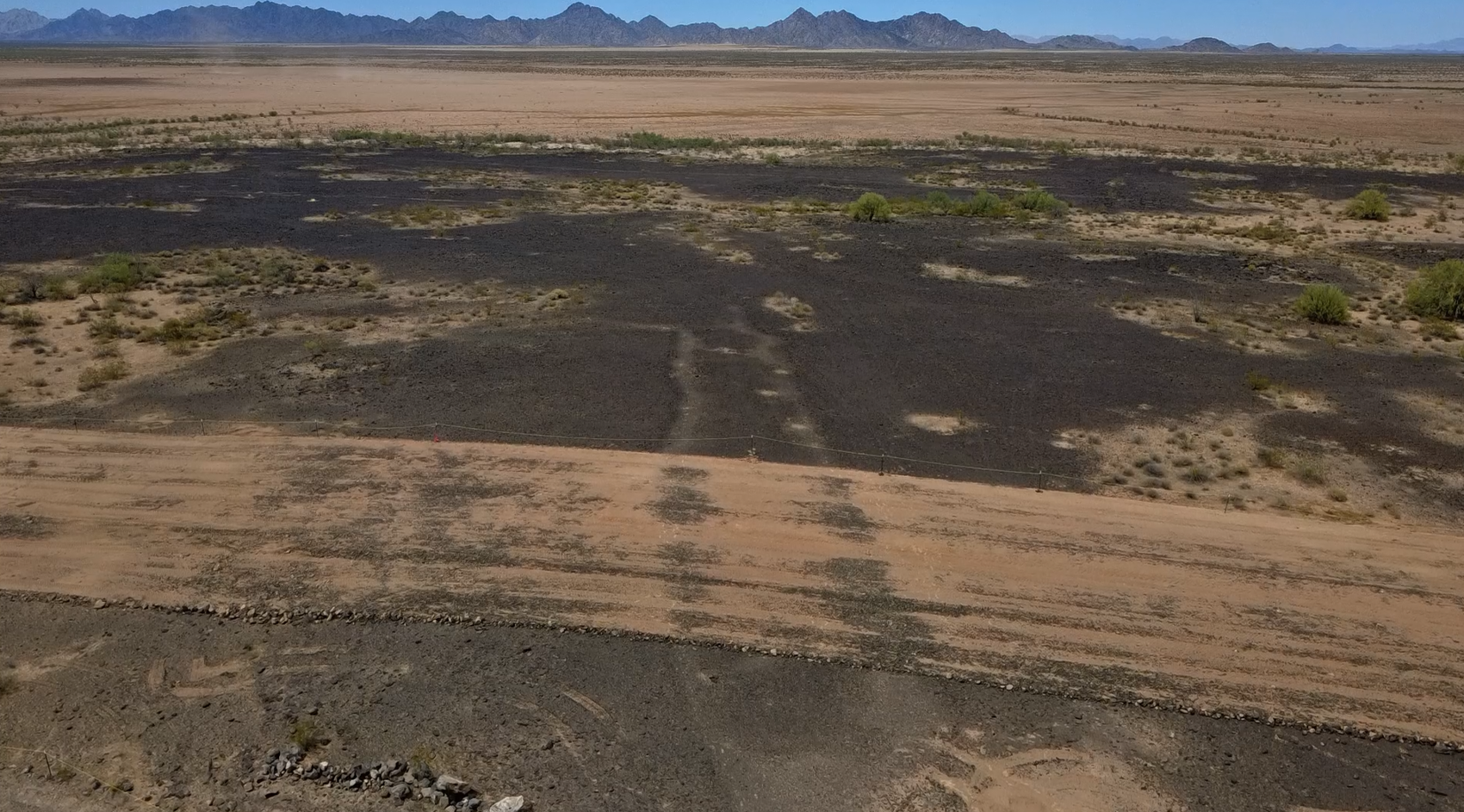
A drone image taken May 4 from the Mexican side of the border shows damage to an ancient archaeological site at Cabeza Prieta National Wildlife Refuge, where border wall contractors recently bulldozed through the fish-shaped geoglyph at the center of the image.
On April 23, workers for the Alabama-based border wall contractor BCCG a Joint Venture drove heavy equipment through the intaglio while preparing land for construction of a second, 30-foot-tall border barrier along 23 miles of the remote national wildlife refuge just west of Organ Pipe Cactus National Monument.
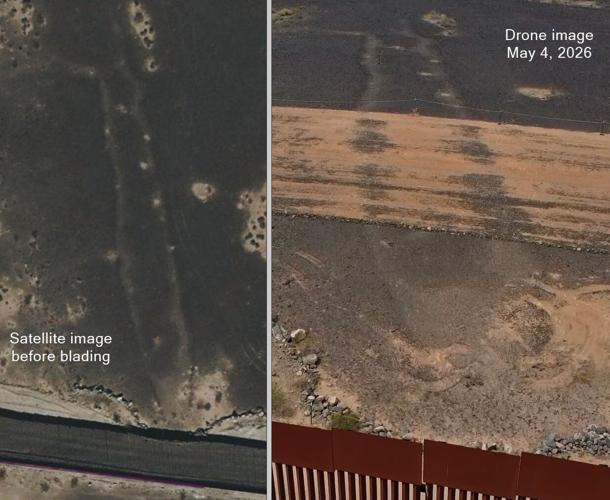
Drone images later collected by the Center for Biological Diversity showed a 50-foot-wide swath cut through the middle of the geoglyph.
The construction work in the area is part of a $607 million contract awarded by Customs and Border Protection a year ago. It was one of the first projects in Arizona to be funded with some of the $46.6 billion set aside by Congress for border wall construction as part of the so-called One Big Beautiful Bill.
CBP is now seeking public input on its secondary barrier plans along 225 miles of the border in Arizona, even though some of the work is well underway.

Before and after photos show the damage to an ancient fish-shaped intaglio in Cabeza Prieta National Wildlife Refuge. The image on the left is from a satellite, the one on the right from the site of border wall construction.
In a notice published on Sept. 11, the agency said it previously collected comments from the public late last year as part of the “planning process for the barrier system” but is now offering “an additional opportunity for the public to provide further information that should be considered during the execution of the secondary barrier system.”
The notice links to details about the planned construction and a satellite map of the project areas, though the imagery included shows Los Playas Intaglio before it was damaged.
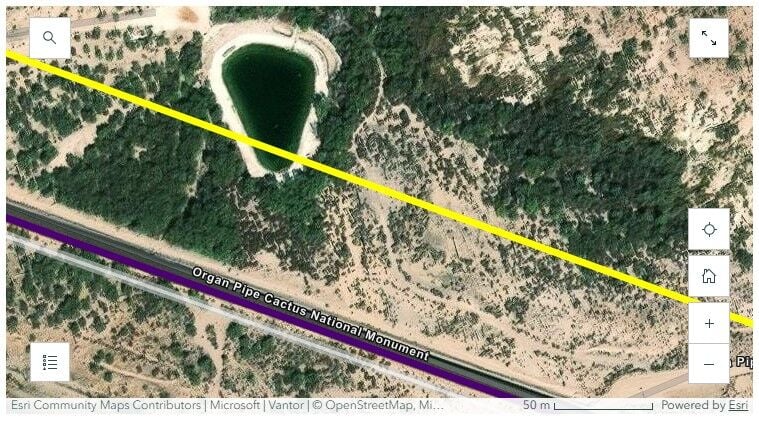
As part of a Sept. 11 public notice seeking input on its border wall plans, U.S. Customs and Border Protection included this satellite map showing the proposed path of the secondary barrier cutting directly through the pond at Quitobaquito Springs in Organ Pipe Cactus National Monument.
The same satellite map from CBP shows the proposed path of the secondary barrier cutting directly through the pond at Quitobaquito Springs, a desert oasis in Organ Pipe Cactus National Monument that is sacred to the O’odham people and home to endangered species of turtles, fish and snails found almost nowhere else on Earth.
CBP said input can be emailed to TucsonComments@cbp.dhs.gov with the subject line “Tucson Sector Secondary Barrier System Construction.” The deadline for comments is Oct. 12.