

Ballooning credit card balances. Borrowing money to pay off previous loans. Bouncing a child support check.
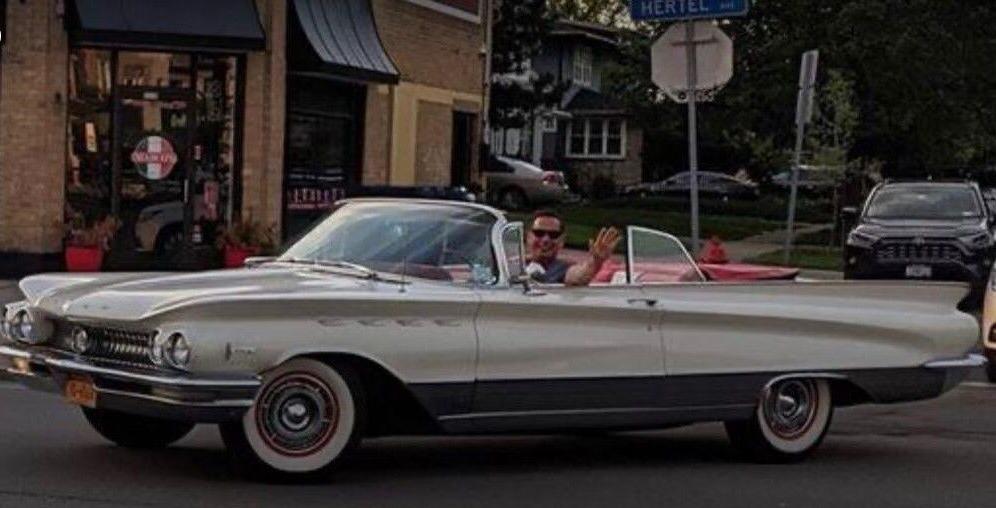
Federal prosecutors say Joseph Bongiovanni was under financial pressure as a special agent for the Drug Enforcement Administration, piling up debt while splurging on a Cabo San Lucas destination wedding, buying a classic Buick Electra convertible and spending thousands of dollars with a new wife on clothing, furniture and jewelry.
Five weeks into Bongiovanni’s bribery and corruption trial, prosecutors say unexplained cash deposits enabled him to break even financially over a period of years they contend he received a quarter of a million dollars or more in cash bribes from a drug-trafficking organization as well payments from a Cheektowaga strip club owner.
People are also reading…
“His credit cards were maxed out,” Assistant U.S. Attorney Joseph Tripi said at the trial. “Over time, he was taking out loans. The bribe money threw him a much-needed life raft.”
One of Bongiovanni’s defense attorneys has scoffed at the allegation he deposited bribe money into a bank account.
“How does the government tie the entire case together with a motive?” attorney Parker MacKay asked jurors. “By claiming financial distress on Mr. Bongiovanni’s part, that he needed money to stay afloat. And that after years of being a trained DEA agent, years of law enforcement experience, he put the money back in his own bank account.”
Said MacKay, “Bongiovanni took no bribes here.”
Stephanie Bifano, a forensic accountant for the FBI, testified she examined thousands of pages of Bongiovanni’s bank records, credit card statements, tax returns and other documents to analyze his financial standing between 2012 and 2018. Bongiovanni, who retired from the DEA in 2019, had an average monthly credit card balance of $60,693 in 2018.
He and his wife also claimed $120,353 in charitable deductions on their joint tax returns over a three-year period, 2016 to 2018, with donated clothes, coats and shoes accounting for $58,225 of the deductions.
When Bifano was asked for the broad, general view of his finances, she said, “I found Mr. and Mrs. Bongiovanni were breaking even and their debt was growing.”
Bifano said she counted approximately $77,000 in unexplained cash deposits in his accounts.
That’s money “with no identifiable source in Bongiovanni’s accounts over the block of time he was being bribed,” Tripi said. “That amount climbs even higher if you look at both his account in conjunction with his wife’s account. That amount climbs to about $100,000 or so of unexplained cash deposits. The bribes got him out of the red and into the black.
“He did it out of greed, due to financial pressures he faced, and obligations he faced due to his divorce, and due to choices he made about the way he wanted to live his life,” Tripi said.
Bongiovanni faces a 15-count grand jury indictment that he accepted at least $250,000 in bribes to provide the Ron Serio drug-trafficking organization with information about investigations and cooperating sources, and also received cash to shield Peter Gerace Jr., the owner of Pharaoh’s Gentlemen’s Club in Cheektowaga, who himself is expected to face trial later this year on charges that include bribery, drug trafficking and sex trafficking.
Bongiovanni’s defense lawyers acknowledge Bongiovanni felt financial pressure – comparing him to a lot of other Americans who take out home equity loans to pay off debt, run up charge cards and barely break even while paying their bills.
“We’re going to concede that Mr. Bongiovanni is stressed – not necessarily distressed, but stressed – by finances,” MacKay said. “It’s right out in the open. You’re going to see his finances in black and white. This is a man leveraged in many ways with expenses – one who had to take out a loan to buy a modest engagement ring; one who bought his prized car, his classic car that he restored, almost entirely with a bank loan; someone who was often taking out loans to pay off earlier loans, and just rolling the debt into newer debt.”
But Bongiovanni’s attorneys dismiss the FBI accountant’s analysis as incomplete, and they intend to call their own financial expert to testify this week.
“And our accountant expert ... will tell you how the government’s financial witness drew conclusions to fit the government’s narrative, conclusions that are incorrect and do not fit the picture of a person who was supposedly receiving a quarter million dollars of cash,” MacKay told jurors at the start of the trial.
Robert Singer, who represents Bongiovanni with MacKay, pointed out during his cross-examination of the forensic accountant that her analysis was based solely on written records, which she acknowledged.
Singer asked Bifano if her analysis reflected the monthly $750 rent that Bongiovanni’s parents paid their son in cash starting in 2014 to live in his rental property in North Buffalo.
“I know they’re living there but I have no evidence of them paying rent,” she replied.
Without the rental income from the parents documented in bank records or tax returns, she would not know about their payments, she said.
“The only thing I can see is the records,” she said. “I’m confined to the records.”
Over five years, the parents’ rent payments totaled $54,000 – more than half of the what the government called unexplained cash deposits, Singer said.
Prosecutors have called to the witness stand several of Bongiovanni’s past tenants, and they testified they paid their rent by check or money order.
But for one of the tenants, only one rent check from him was produced for 2013, six checks in 2012 and not a single check for 2014, Singer said.
Singer also said Bongiovanni was reimbursed by the DEA for expenses during his work travels, which may not have been reflected in the records.
When federal agents in 2019 searched Bongiovanni’s Town of Tonawanda house, breaking down his door in an early morning raid, “they didn’t find stacks of hidden cash,” MacKay said. “They didn’t find fancy unexplained jewelry. They didn’t find opulent furniture, a redone kitchen, an unknown vehicle, deeds to properties locked away somewhere in a safe, getaway money stashed with passports, none of that.”
The defense team’s expert will describe Bongiovanni as someone who made normal credit card purchases, accumulating balances throughout the years, often to be paid off only with more loans, MacKay said.
Patrick Lakamp can be reached at plakamp@buffnews.com


