


As Arizona schools chief Tom Horne prepares to leave the post following two terms, two Democratic hopefuls are vying for the chance to take his seat.
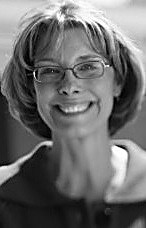
Penny Kotterman
Hometown: Aurora, Ill.
Family: Widowed. Two sons, ages 25 and 29.
Having spent more than half of her life in education, Kotterman, 53, has learned a thing or two, but one key piece of advice came from her father: If she's not happy about something, don't complain. Take action.
It's that advice that spurred her to make a run for Arizona superintendent of public instruction - an office she says is in desperate need of a lifelong educator.
Kotterman taught in the classroom for 18 years and was president of the Arizona Education Association for six years. She has also worked in the development and implementation of education policy in Arizona.
People are also reading…
"I look at my experience as very, very broad in terms of both understanding teaching and learning, and education policy issues," Kotterman said.
• Kotterman on AIMS and high-stakes assessment: "I'm an unapologetic critic of high-stakes testing. I've never supported high-stakes testing. I do not believe that students learn better because their feet are held to a fire or that teachers teach better because there's a test at the end of the year.
For me it's about how to make testing useful to teachers and information transparent to parents, so I don't need to know whether my school is excelling as long as I know that over the last several years the kids have all been progressing and that they're all average to above average where they fall in comparison to other children their age and their grade level."
• Kotterman on ethnic studies and their place in the classroom: "I believe it is an inappropriate use of the superintendent's influence and authority to go after individual school districts for their locally defined curriculum, and I mean that for every subject matter. In terms of ethnic studies itself, I believe that social studies and history are enriched generally by talking about the diversity of cultures that created this nation, and we have to be certain that we allow for that kind of exploration or we run the risk of delegitimizing our very history."
• Kotterman on working with English-language learners: "I am not a fan of a one-size-fits-all approach to English-language learners just because it worked in one high school in Glendale. There are other well-researched models for English-language learners, so as a state what we need to do is look at that entire set of options."
• Kotterman on the greatest challenge in public education: "If we're serious about improving the overall quality of our schools, then we've also got to be serious about investing the kind of financial capital that are necessary to make that happen. That's going to be a long-term effort. It's not something the superintendent can do by themselves, but I do believe it's something the superintendent really needs to be a leader in statewide."
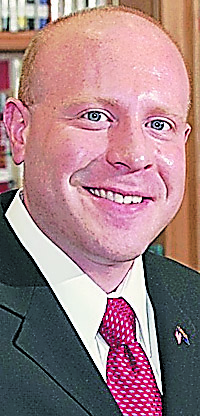
Jason Williams
Hometown: Fall River, Mass.
Family: Single. No children.
After an unsuccessful run for Arizona superintendent of public instruction four years ago, Jason Williams, 33, is back at it.
While Williams would have preferred a different outcome, his loss to Tom Horne did not deter him from making his vision for public education reality.
"From my own lifelong work in public education, I know without a doubt that no child has to fail," Williams said. "It's about if we fail them. The status quo of education is, we continue to fail to provide excellent public schools for our children, but it doesn't have to be this way."
Williams started his teaching career in Oakland through Teach for America. He went on to serve as executive director for that organization from 2000 to 2005 and is now a consultant for the Roosevelt School District in Phoenix. He is also a faculty member for Arizona State University's Beat the Odds Institute Parent Liaison Academy.
• Williams on AIMS and high-stakes assessment: "I've never hidden the fact that I'm not a fan of the one-test, one-day culture. A lot of folks have acknowledged that AIMS is not what they hoped it would be because it's been so manipulated. On a national level in other states, the necessity to focus on student growth has become a prominent piece of the conversation. I'd like to see Arizona be a leader in having an assessment system that truly works for children."
• Williams on ethnic studies and their place in the classroom: "I didn't support the bill and I'm not a fan of the law. Instead of censoring material, we should focus on allowing children to develop cultural appreciation and awareness. By exposing students to different perspectives, they gain the ability to be critical thinkers and to make healthy choices when they grow up."
• Williams on working with English-language learners: "Research has shown there is no one model that's going to work better than any other. When you look at what we claim is immersion now, it's not genuine when the only English speaker in the classroom is the teacher. I believe strongly in local control and the ability of educators to be critical thinkers to determine what it will take to reach and teach their communities."
• Williams on the greatest challenge in public education: "The No. 1 challenge we have now is to change the mind-set that seems to be pervasive of education being seen as an expense rather than an investment. That's got to be one of the key things the next superintendent of public instruction focuses on.
Another is talent. Everyone is always looking for the silver-bullet program when in fact, at the end of the day, what makes a difference is great people - great teachers in the classroom."
Contact reporter Alexis Huicochea at 573-4175 or ahuicochea@azstarnet.com


