Ruston Agte unlocked the gate and led the students to a side of the tiger cage most visitors don't see.
"Make no mistake, we're dealing with wild animals," said Agte, an education coordinator at the Reid Park Zoo. "All locks must be locked at all times."
The Cienega High School students pointed toward the Malayan tiger's basketball-sized head hovering a step from their feet as a low purr — verging on a growl — greeted them from the other side. The high schoolers bunched together behind the cage as they listened to Agte explain how the zoo cares for the tigers.
Zoo field trips have helped educate students through close animal encounters for years, but zoo officials say the opening of the $4 million Conservation Learning Center has improved the experience. The learning center was dedicated in February, and programs began in earnest in early summer.
People are also reading…
Because the zoo hasn't had a large indoor spot for summer programs before, the center helped boost registration for programs 50 percent during the summer, said education curator Vivian VanPeenen. Officials expect a year-over-year increase of about 20 percent, she said.
While most education programs use the outside zoo area, the learning center serves as a resource for education programs, VanPeenen said. The behind-the-scenes tour is just one program the zoo offers to teach students about animal behavior, conservation and care.
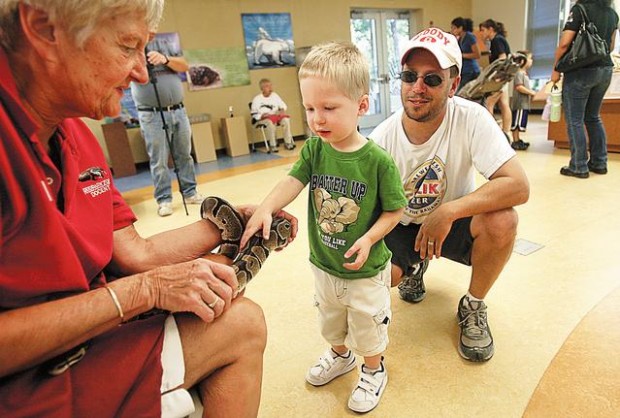
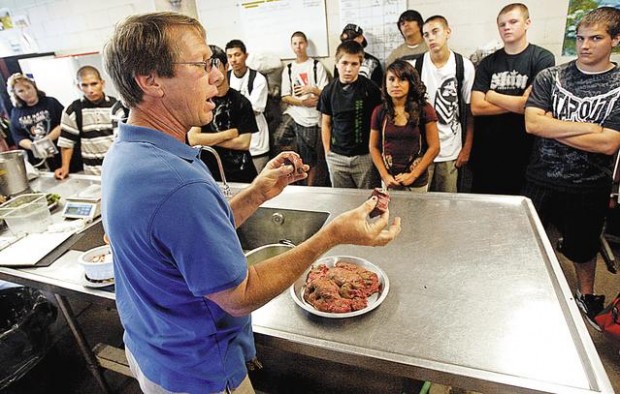
After their trip behind the tiger cage, the Cienega students visited the zoo kitchen to learn about animal diets, fed the giraffes and visited the learning center. There, they could talk to docents about the animals on their laps and learn about conservation.
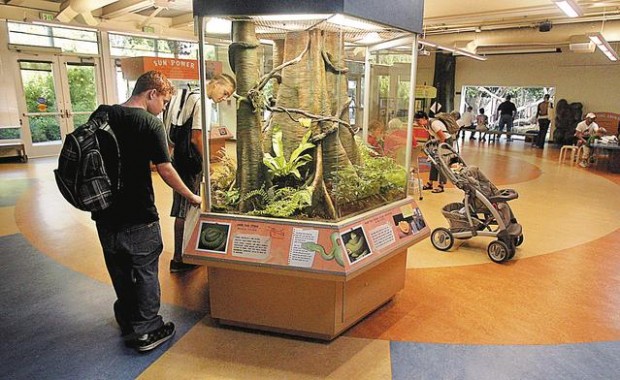
The center houses ferrets, snakes, gerbils and lizards that come out of their cages at different times so visitors can come hand-to-skin with them. Kids also can create art on a built-in coloring counter in front of an aquarium. The center has classrooms and exhibits explaining conservation through animal adaptations, and also houses offices and storage space.
"We used to do all the programs in a little, tiny termite-infested area," Agte said. Now the zoo can offer arts and crafts, videos and slideshows through the center's classrooms.
Also, the building itself is an example of conservation, Agte said. The solar-powered building was made with recycled products, low-chemical paint and adhesives, and wood from sustainably managed forests.
"The Conservation Learning Center is really interesting," said Mark Aubrey, a Cienega teacher. The students really enjoyed it, he said, especially the four different animals they could touch.
Aubrey has been busing his classes to the zoo the last couple of years to bring his students one-on-one with the animals and teach them about endangered species, he said.
"I already had kids asking about volunteering," he said.
James Cota, a senior at Cienega, said that last time he went on a zoo field trip he didn't get to go behind the scenes and "just walked around." This time, he said he liked going to the kitchen to learn about the food the animals ate.
This was the first zoo field trip for Cienega senior Joe Garcia, who said he liked the information about the tiger and how the keepers trained it.
Even though it didn't make him want to work with animals in the future, he still found it interesting, he said.
"We're trying to get the message out to more people about what we do here," Agte said. "You can't ask people to care about something they don't know anything about."
DID YOU KNOW
Reid Park Zoo is a city-owned facility that's operated, maintained and administered through the Tucson Parks and Recreation Department.
It was established informally in 1965 by Gene Reid, the then-director of Parks and Recreation, and officially came under city jurisdiction in 1967.
Source: Reid Park Zoo Web site