The massive data center that SpaceX proposes to build near the Willcox Playa is a concern for shorebirds that winter in the area, more than for the playa’s renowned, wintering sandhill crane flocks, an expert says.
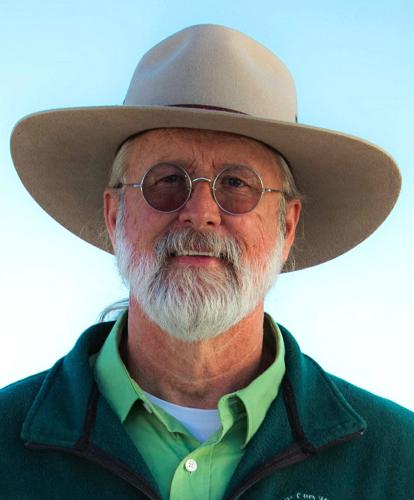
Homer Hansen is a Willcox native, environmental scientist and longtime birdwatching guide who has long observed and studied the cranes and other birds there.
He has been chairman of the Wings Over Willcox Birding and Nature Festival for well over 20 years. He is considered a go-to source on the sandhill cranes that winter in and around the playa in numbers running into the tens of thousands, drawing visitors from around the world and driving winter tourism in the area.
People are also reading…

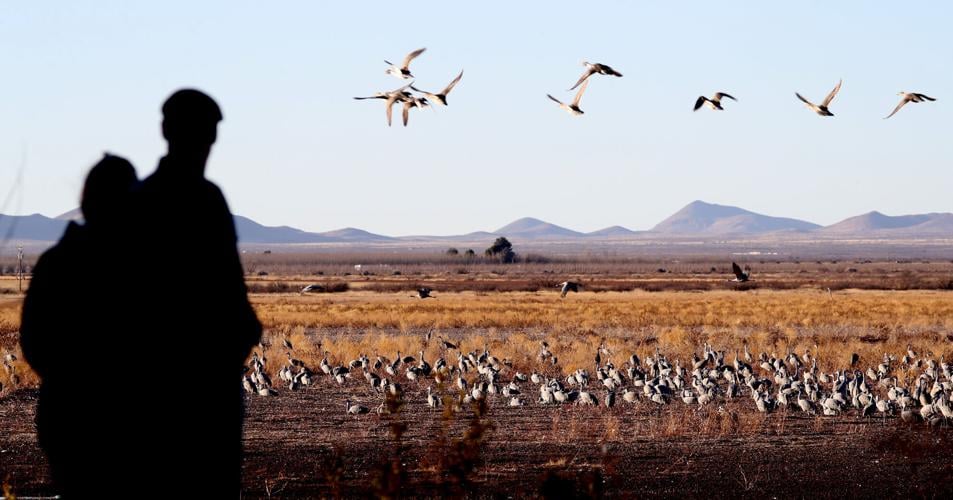
Birders look out at the the tens of thousands of sandhill cranes spending an afternoon on the shores of Whitewater Draw Wildlife Area in McNeal, Arizona, in a January 2021 photo.
Hansen has qualms as he confronts the strong possibility that construction will start as early as next year on one of the U.S.’ largest data centers, on land bordering the Willcox Playa, about 80 miles east of Tucson.
The center is being proposed for 747 acres by SpaceX, the Elon Musk-run aerospace company. It would occupy more land than any data center in Arizona. SpaceX has said it plans to invest $50 billion into the Willcox-area facility, Reuters reported Thursday.
A proposal will go to the Cochise County Planning and Zoning Commission on Dec. 9, as the center needs a special use permit from the county to start construction.
Hansen is less concerned about the center’s impact on the cranes than he is on what its lights could mean for the dozens of shorebird species and other migratory birds that arrive annually at the playa, the state-run Whitewater Draw recreation area and Cochise Lake.

Hansen
In this Q&A with the Star, Hansen explains why, and discusses his concerns about what he sees as SpaceX's lack of transparency about the plans.
Q. First off, how rich of a birding area is the Willcox Playa and its environs?
A. Cochise Lake, at the playa’s north end and just east of the city of Willcox, is one of the top birding hotspots in Arizona, records from Cornell University’s Laboratory of Ornithology show. Over the past 50 years, Cochise Lake and the adjoining Twin Lakes Golf Course have had reports of 331 bird species, the second largest number in the state, eBird records show. It’s also had 20,635 reports of bird sightings in that period, the 14th largest number statewide, eBird records show.
Q. How would a data center affect the cranes?
A. I’m not so worried about the cranes, because they are diurnal, operating in the daytime. Cranes do most of their migration during the daytime. They wouldn’t be impacted by the lights from the data center.
Q. What about shorebirds and other birds that use the playa?
A. So many birds, we’re talking the vast majority of birds out there, they migrate at night. These sorts of lights (from a data center) have all kinds of impacts.
In one of their reports, the U.S. Fish and Wildlife Service points out different things that can happen to birds flying at night. There are collision impacts, and the extraneous lights at the center can also deter birds from staying on the course they’re taking.
Lighting can attract large numbers of birds from as far away as 5 kilometers (3.1 miles). Birds drawn that way often circle an illuminated area, wasting energy they need for critical bird migration, and increasing their risk of colliding with buildings and other structures.
These impacts are particularly prevalent on lights with low-cloud ceilings or foggy weather, when birds tend to migrate at lower altitudes, where light reflecting on clouds may greatly disorient and attract birds to illuminated areas. Mass mortality events involving hundreds of birds have been documented on such nights, the service says.
Q. In its application to Cochise County, SpaceX says it’s designing the center with birds and other wildlife in mind. The center will have low-metal buildings, with what it calls “bird-safe glazing.” Lighting will be fully shielded and downward directed, to minimize impacts on birds flying overhead, the company says. Any new overhead lines will be designed with diverters to avoid drawing birds, it says.
A. I think those are fantastic goals. But that is just (from) the letter describing the application. Where is the application that it is disclosing the specifications for the center? It would be ideal to have community sessions to show the engineering and design plans that incorporate community input as to how this would be constructed.
Q. So the devil is in the details?
A. That’s where this is at. Anybody can write anything in a company cover letter. A cover letter is not the same as the actual permit. If there’s nothing in the permit saying you have to do it, what good is the cover letter?
Q. Why does that matter?
A. The No. 1 issue here is lack of transparency and communication when it comes to the process. Ninety-nine percent of the community only just heard about this two weeks ago. On Dec. 9, it's coming up before the Cochise County Planning and Zoning Commission, and a special use permit for the project could be approved and finalized.
That’s not real communication. Communication means a two-way street, seeking input, not just coming out and saying, ‘Here’s what we want to do.’
Contact Tony Davis at 520-349-0350 or tdavis@tucson.com. Follow Davis on Twitter@tonydavis987.

Tony Davis
Reporter