

Let's finish up our time travel journey through the history of the Catalina Foothills and the Tanque Verde Valley. Last time we covered development of the Catalina Foothills.
Time-machine clock: AD 1935 Northeast Tucson
While you watched the start of development in the Catalina Foothills, there was similar activity beginning in Northeast Tucson.
Concurrent with government-funded efforts in Sabino Canyon and on Catalina Highway to Mount Lemmon, you note in the mid-1930s that East Speedway extends to North Wilmot Road, which intersects with East Tanque Verde Road to provide access to the Tanque Verde Valley. Tucson city limits gradually move eastward. East Grant Road will extend to East Tanque Verde Road by 1960.
In 1948 you will see Tucson Country Club built, with an accompanying golf course, just south of Tanque Verde Creek, northwest of the intersection of today's East Tanque Verde Road and North Sabino Canyon Road.
People are also reading…
By the mid-1950s you will see construction start on Tucson Country Club Estates, situated around the golf course, and nearby Indian Ridge Estates.
Commercial development on East Tanque Verde Road keeps pace with residential development. A little to the west of the intersection of East Tanque Verde Road and East Grant Road, you will note the building of the Trail Dust Town movie set in 1963. Further west you will see the start of "Restaurant Row" with the opening of Cork'n Cleaver (now Jonathan's Cork) in 1969. This is just the beginning; by 2009 East Tanque Verde Road will be wall-to-wall businesses from North Wilmot Road to North Sabino Canyon Road.
Dorado Country Club and golf course will be built in 1970, situated north of East Speedway, south of the intersection of today's East Tanque Verde and North Kolb roads. Housing construction around the golf course will start immediately thereafter.
By 2009 commercial development will fill in among subdivisions, townhomes and apartments on East Speedway from North Wilmot to North Kolb.
Access to the Valley
In parallel with this "progress," you see roads being extended to the east and a network of north-south roads connecting them that will enable development of the Tanque Verde Valley.
In the mid-1930s you note that East Tanque Verde Road extends as a dirt road from the East Catalina Highway turnoff to near the start of the Coronado National Forest where it becomes East Redington Road.
By the 1950s and 1960s East Tanque Verde and East Speedway will be completed to the boundary of the Coronado National Forest.
By the mid 1960s East Wrightstown Road, North Pantano and North Camino Seco will be constructed between East Tanque Verde Road and East Speedway. In the late 1960s North Houghton and North Harrison roads will be opened south of East Tanque Verde.
North of East Tanque Verde, you will notice that North Bear Canyon Road is completed in the 1940s. East Snyder Road will be constructed in the mid 1960s, along with North Melpomene Way and North Soldier Trail, with extensions of North Houghton and North Harrison roads coming along in the mid 1970s.
Because of these new roads, residential development in the Tanque Verde Valley explodes in the 1960s and 1970s. Land is plentiful. Some people want room to keep horses. Sprawling, ranch-style homes are in vogue. There is room to build your own house that is not part of a large subdivision. There is also room for golf courses and parks.
Central Valley
Development starts to the north of East Tanque Verde Road and west of East Catalina Highway, with North Bear Canyon, North Harrison and East Snyder roads opening the area for homes.
Canyon Heights, Tres Lomas and other subdivisions will start construction in the 1970s. By 1972 you will see Sabino High School built to support the rapidly increasing population. Just north of Sabino High School, nestled against the Santa Catalina Mountains, the Raven Golf Club will be built in 1996.
The Sabino Springs gated community will be constructed around the golf course starting in the late 1990s. In 2002 Raven Golf Club will be sold and emerge as today's world-class Arizona National Golf Club.
McDonald District Park will open in the early 1980s and will offer off-leash dog areas by 2004. The Kirk-Bear Canyon Library will open in 1991.
Commercial development will also be booming; by 2009 shopping centers and other businesses will populate the intersections of East Tanque Verde Road at North Bear Canyon Road and East Catalina Highway.
At the same time, you watch housing development proceed south of East Tanque Verde Road and east of North Kolb, with East Speedway, East Wrightstown, North Pantano and North Camino Seco providing access to the area.
In the 1970s you will see subdivision starts that include Hidden Hills Estates, Cochise Estates, Silver Shadows Estates and Woodland Hills.
The 1980s will see subdivisions such as Rosewood Estates and Wrightstown Square, plus Pantano Townhouses. The growing population will enjoy Morris K. Udall Park starting in 1982.
The gated community Lakes at Castle Rock will be started in the late 1980s.
By 2009 businesses, townhomes and apartments will almost completely line East Speedway from North Kolb to North Harrison.
Also by 2009, East Tanque Verde Road from North Kolb to North Pantano will be almost completely commercialized, and the intersection of East Wrightstown Road and North Pantano will have business developments on all four corners.
Way out east
The far eastern reaches of the Tanque Verde Valley are also being developed. In 1946 Jane Wentworth will sell her homestead that abuts Saguaro National Monument East and in 1948 residential development of the "notch" will start on 3.3-acre lots.
In 1961 you'll see the Forty Niner Golf & Country Club built just northeast of the notch three miles east of North Houghton Road on East Tanque Verde.
Housing construction will start there immediately after the club is built.
In the 1970s and 1980s you will see luxury housing starts on large view lots in places such as La Cebadilla Estates and Redington Ranch, "way out east" on East Tanque Verde Road.
In 1998 the Lew Sorensen Community Center, remodeled from Tanque Verde Elementary School, will open on East Tanque Verde Road, about a mile east of North Houghton. Meanwhile, Tanque Verde Ranch will continue to draw visitors.
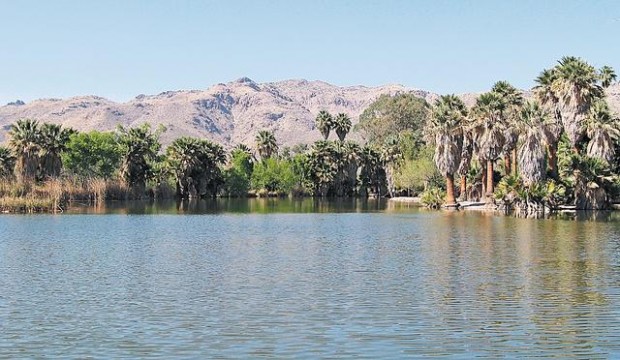
Some of the later development occurs to the east of East Catalina Highway. Housing developments in this area of the Tanque Verde Valley will include Miligrosa Hills luxury homes that will start construction in the 1990s. In 1984 local businessman Roy Drachman will donate $200,000 toward the purchase of Agua Caliente Ranch; the Roy P. Drachman-Agua Caliente Regional Park will open in 1985.
You will see Tanque Verde High School completed in 2005.
By the year 2000 the census will count almost 16,000 residents in ZIP code 85715 and more than 18,000 people in 85749. Nine years later, in 2009, there will still be plenty of land left for development in the eastern part of the Valley.
End of your journey
You're almost back to the present time on your return trip from 12 million years ago, which you started when this series began. You feel your time machine gear down.
Oops, you overshoot a little. It's the year 2050! You look over the Catalina Foothills and Tanque Verde Valley. Gosh! Would you ever have thought?
Sources: Arizona Historical Society; Pima County Natural Resources, Parks and Recreation Department; Long Realty Co.; RE/Max Majestic and the 2000 U.S. Census. Special thanks to Susie Hall.
About this series
This is the last in a five-part series on the history of the Catalina Foothills and the Tanque Verde Valley. Author Bob Ring has spent years collecting facts about the area. This series pulls together those tidbits along with information yielded from three months of intensive research.
Part 1: Formation and early history
Part 2: Exploration and initial settlement
Part 3: Access to natural recreation areas
Part 4: Development of the Catalina Foothills
Today, Part 5: Development of the Tanque Verde Valley
Read the entire series at www.azstarnet.com/ special/foothillshistory


