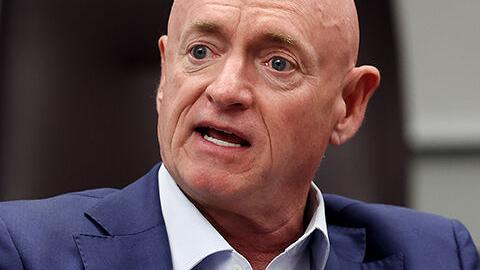
Democracy is personal for Ron Barber.
An immigrant who cast his first vote as a naturalized citizen in the 1990s, Barber survived a political shooting that stunned the nation. He knows how it feels to win — and narrowly lose — one the country’s most hotly contested congressional seats.
Now, as the consequential midterm election looms, Barber is devoting his time to protecting democracy and calling out political violence.
“(I'm a) lucky guy, in so many ways," Barber said. "That's why I gotta give back."
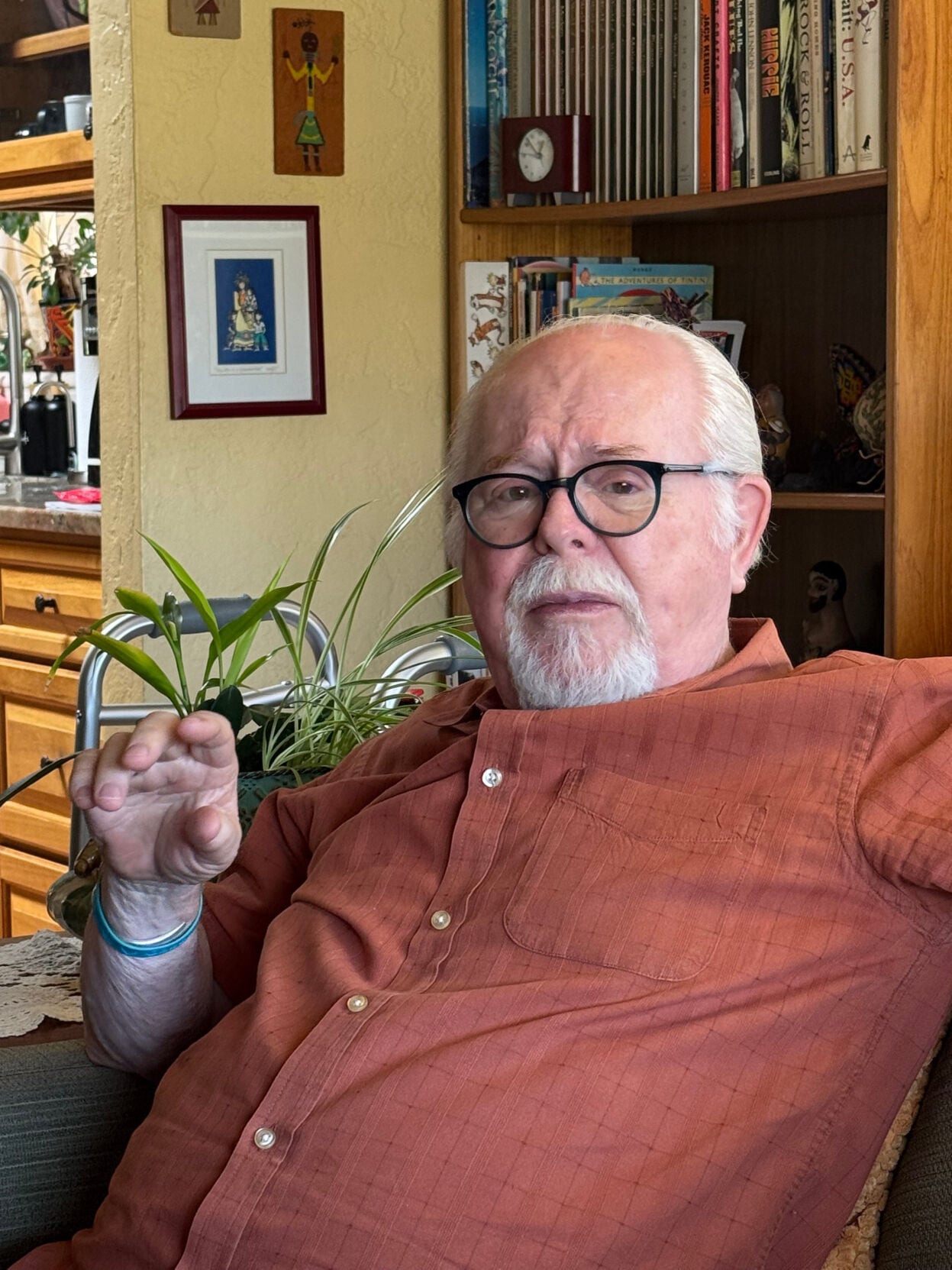
Former Rep. Ron Barber, D-Arizona, at his Tucson home May 13, 2026.
Barber leads the Arizona Democracy Resilience Network with Don Henninger, the former Phoenix Business Journal editor-in-chief and who also previously served as Arizona Republic managing editor.
The group aims to protect election workers, condemn acts of political violence and encourage candidates to behave with civility, honesty and transparency. It’s part of the Carter Center, the nonprofit organization founded in 1982 by late-President Jimmy Carter.
People are also reading…
Barber spoke to The Republic at his Tucson home while recovering from surgery. Fifteen years on, Barber still suffers from nerve pain in his back that was caused by the leg injury he suffered in the 2011 shooting, which also injured Gabby Giffords and killed six.
The Tucson Democrat is trying to turn down the political temperature.
“He's not one to walk away when the needs are there,” Henninger said. “This is not the time to be apathetic. This is not the time to stay silent. This is the time to do whatever we can, one step at a time, one act at a time, to restore faith in our institutions, and Ron is deeply committed to that.”
High profile incidents shake the nation
Political violence is still rare in the United States, but a string of high-profile attacks has shaken the nation over the past two years.
President Donald Trump survived two assassination attempts while on the 2024 campaign trail. The Phoenix conservative activist Charlie Kirk was shot and killed in September. Minnesota House Speaker Melissa Hortman and her husband, Mark Hortman, were slain last June.
Most recently, a gunman stormed the White House Correspondents’ dinner in Washington, D.C. Prosecutors say he did it with the alleged intent to kill the president.
“We've had high-profile incidents, which are horrible, and it happens more than it should, but it's rare,” said Samara Klar, a professor at the University of Arizona School of Government and Public Policy.
There are other pressures on Barber’s mind, too. Election officials have had higher turnover amid Trump’s 2020 election denialism, according to a study from the political reform group Issue One.
And more broadly, local officials nationwide have faced numerous threats in the past year, according to research from Princeton University’s Bridging Divides Initiative.
Despite the national mood, Barber said he’s still optimistic about the work he does.
“This is really a great country, not only beautiful and diverse, but this country that lives by some very solid moral values. I'm working hard, in my own way, to restore that,” Barber said.
As he spoke, his two dogs took turns by his side. A silver walker peeked out from behind Barber’s shoulder. It was a reminder of what he’s been through.
How Ron Barber came into Arizona politics
Barber grew up in an Irish working class neighborhood in London. He moved to the United States when his mother married an American airman. Barber said his new home amazed him. He was floored by how many different radio stations he heard as the family drove from Maryland to Arizona.
In Tucson, Barber met and married his high school sweetheart, Nancy. He went to public school, she went to Catholic school.
They moved into a house on a double lot in their Tucson neighborhood. As the years went on, they had children, added onto the house and cultivated a garden outside.
On the wall outside the house, a colorful desert mural carries a quote from the poet Rumi: “Beauty Surrounds Us.”
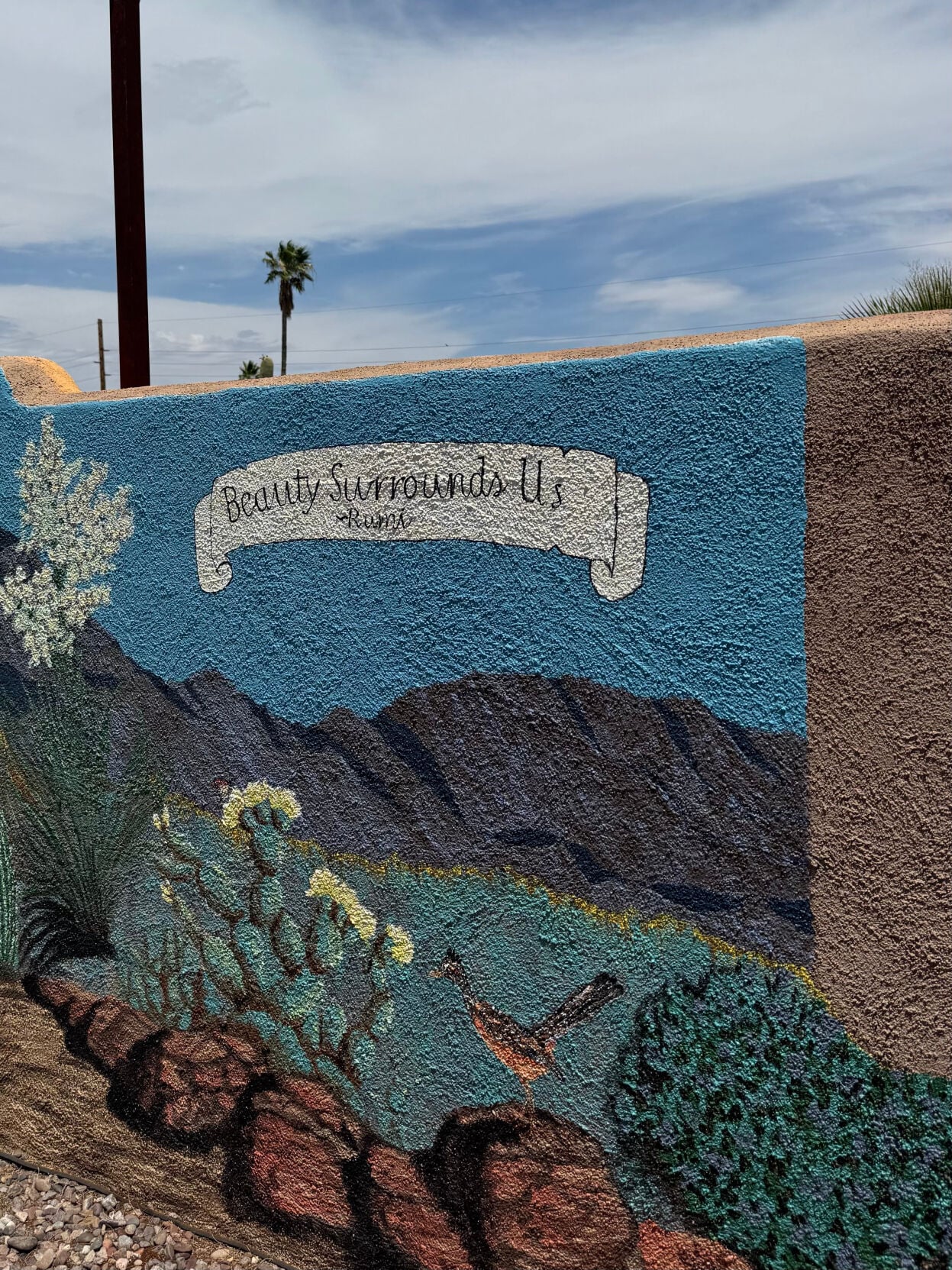
A mural outside the Tucson home of former Rep. Ron Barber, D-Arizona.
Barber became a naturalized citizen in the 1990s. His first vote felt like a huge privilege, he said. He recalled tearing up in the booth
“I often compare myself to a person who made the conversion to a religion, they become very rabid about, you know, their new religion. I'm rabid about this democracy because I didn't have it in England,” Barber said.
He officially entered the political arena in 2005, when he started working for Giffords, a swing district Democrat from Tucson.
Tragedy struck six years later in January 2011.
A gunman opened fire on a “Congress on Your Corner” event that Giffords hosted in a grocery store parking lot. Six people were killed and 13 were wounded by the gunfire.
Barber was shot in the face and in the leg.
“I almost died on the ground. I was fading,” Barber said. He said he thought about his family and tried to keep his eyes open until he made it to the trauma center that saved his life.
From his hospital bed in the intensive care unit, Barber and family decided to launch a nonprofit, the Fund for Civility, Respect and Understanding, which he said operated for about a decade.
Giffords, who had been shot in the head in the assassination attempt, stepped down from Congress to focus on her recovery. Barber ran in the special election to fill her seat.
After Barber was sworn in, his first move was to host a “Congress on Your Corner” event, similar to the one that had been attacked, despite worries from his family. It was a 100-degree day in the middle of June, and Barber was late because he missed a flight. When he arrived, 350 people were waiting.
“That, to me, was a sign that people really cared. And I think that feeling prevails,” Barber said.
He won a full term that fall.
In Washington, Barber sat on the House Armed Services and Homeland Security committees. There were moments where he was reminded of the shooting, like when a House colleague mistook a bullet wound scar on his cheek for a dimple.

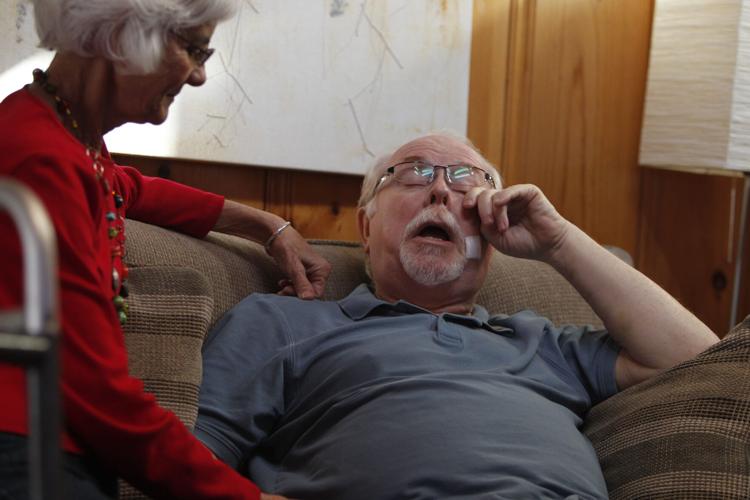
Ron Barber, in pain from gunshot wounds, is consoled by his wife, Nancy, at his home in Tucson two weeks after the shooting in which he and U.S. Rep. Gabrielle Giffords were injured.
Two years later, Barber narrowly lost reelection to former Rep. Martha McSally, R-Arizona. They were separated by just 161 votes in that 2014 contest.
It’s part of why he’s such an effective messenger when it comes to election integrity, said Henninger, his partner at the Arizona Democratic Resilience Network.
“He accepted defeat and he moved on, and that's the way our system's supposed to work,” Henninger said. “He's lived through that experience, and I think that makes him even more qualified to be a spokesman for people that speak up for our democracy now.”
Common ground to be found
Barber was getting ready to retire from his job as Arizona director for Sen. Mark Kelly, D-Arizona, when he got a call from the Carter Center.
Beleaguered by Trump’s baseless denial of the 2020 election results, election workers in battleground states like Arizona and Georgia were facing threats. Barber was invited to work on a democracy initiative.
He brought Henninger on to help.
They are an unlikely pair in today’s America – Barber is a Tucson Democrat and Henninger is a Phoenix Republican. Together, they try to push back on partisanship.
“We can disagree on a lot of different things, but it doesn't really matter because we're still united at our core,” Henninger said. “Part of what we hope to do is maybe model that.”
They are preparing for what could be a particularly contentious midterm election season.
At risk of losing GOP control of the U.S. House and Senate, Trump was laying the groundwork to doubt the election results. Swingy Maricopa County, home to Arizona’s largest share of voters, was embroiled in a dramatic legal battle over election administration.
Nationwide, polls show that Americans of different partisan stripes are concerned about the political climate, said Erica Frantz, a political science professor at Michigan State University.
"People feel like the country is polarized, they don’t trust our political institutions, and they see political violence as a serious problem. Their partisanship influences who they think is to blame for these developments, but the general sentiment among citizens is that the country is not doing well," Frantz said.
Still, Barber said there’s still common ground to be found.

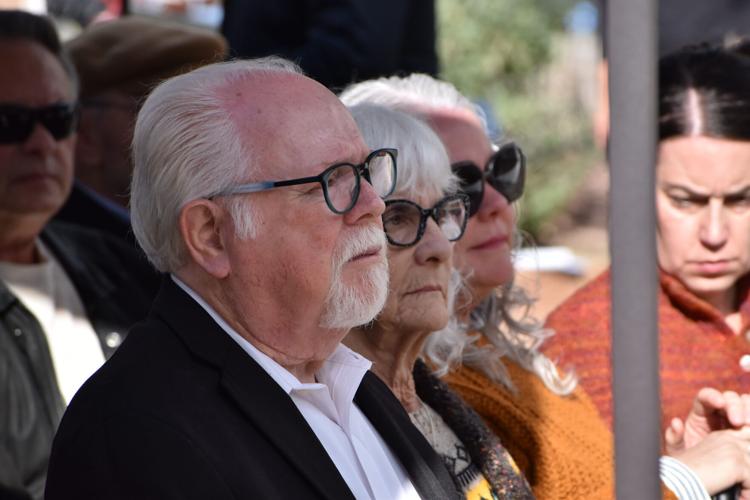
Former U.S. Rep. Ron Barber, a survivor of the 2011 mass shooting in Tucson, spoke at the 15th anniversary of the shooting on Jan. 8, 2026, commemorating those who died and those who survived.
The Arizona Democracy Resilience Network sends out messaging to its 350-person network in Arizona, holds meetings and gives awards to those it deems “civic champions.”
“I'm an optimist, even in the worst of times,” Barber said. “I believe that this country will come back, but I'm very concerned about the attacks on our democratic principles.”