

Even though the Hohokam site known as Honey Bee Village in Oro Valley already has provided rich data, archaeologists say more surprises may be in store.
"There is so much we still do not know about the Hohokam," said Henry Wallace, a senior research archaeologist at Desert Archaeology Inc. whose work on the site goes back to the mid-1980s.
"Most of the really interesting stuff will come out of the analysis," Wallace said.
The site is expected to yield vast information because of the large scope of the archaeological work done in the area around the village core.
"Usually, we just get to study a slice of these sites," Wallace said.
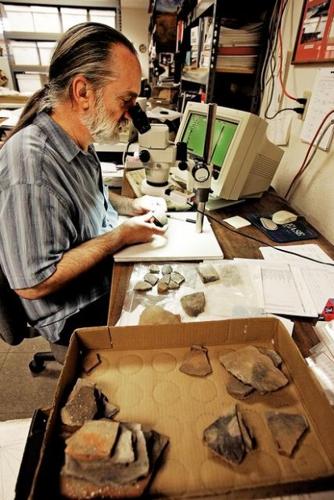
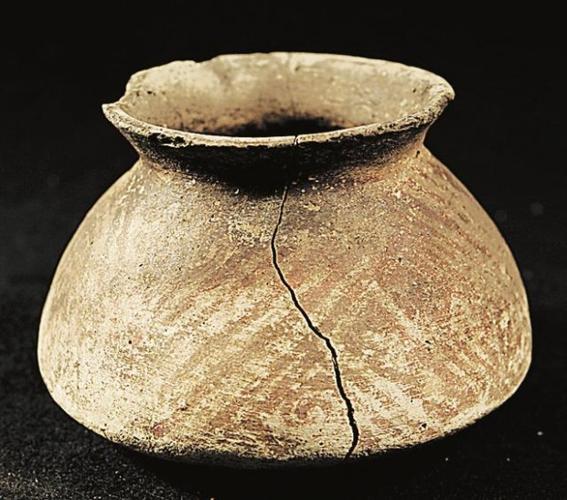
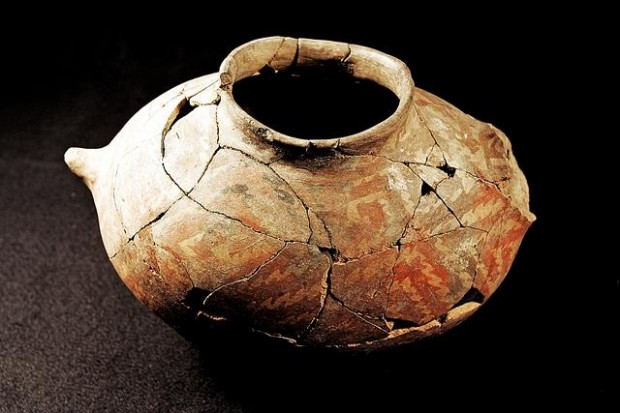
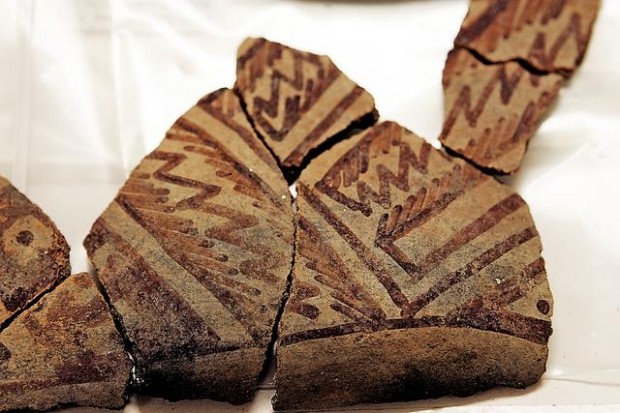
In the company's lab in Midtown Tucson, ceramicist Jim Heidke works with a high-powered microscope to analyze and categorize the Hohokam pottery, which is mostly in pieces.
People are also reading…
"There are a number of distinct aspects of style that let you point when in time a pot was made," he said.
Archaeologists have established that roughly 100 to 200 people lived at Honey Bee in the Tucson basin between A.D. 500 and A.D. 1200.
"It is somewhat of a mystery what happened at the site" after A.D. 1150, Wallace said, explaining that while once there had been a lot of activity in the area surrounding the core, that activity apparently dropped off.
Also, there is some indication that during that time, the core may have been used for rituals.
Many of the pit houses were distinctive, built with posts and beams made from pine trees cut high in the Santa Catalina Mountains, Wallace said.
It was rare to see such materials used in the construction of dwellings in that period, he said. Before A.D. 1150, other Hohokam villages are known to have used primarily mesquite.
Wallace called the Honey Bee villagers' house style a sign that "the inhabitants of this region shared a social and cultural identity that was unique in the Hohokam world."
Tree-ring samples being studied may offer useful data, Wallace said.
"This site may allow the chronology for this local area to extend back hundreds more years," he said. "And it would give an environmental record for this local area."
The company is under contract with Pima County to continue the archaeological work it began in 2006. The county has spent $1 million on the fieldwork, said Loy Neff, program manager in the county's Cultural Resources and Historic Preservation Office.
The county last month approved another $340,000 for Desert Archaeology to study the recovered artifacts. Once the work is complete, the pottery, shards and other recoveries will be turned over to the Arizona State Museum at the University of Arizona.
The company is expected to submit a report to the county in about two years, Neff said.
"The final report will present the results of all the fieldwork, analysis and research," he said. "It will frame all of this in a regional context."
A brief summary
Honey Bee Village, a Hohokam site in Oro Valley dating to about A.D. 500
Archaeological timeline:
1978: Hohokam site recorded.
1986: Area surveyed and surface artifacts collected prior to Rancho Vistoso development.
1988-89: Archaeological work identifies a plaza and confirms a ball court in the village.
2006-07: Archaeologists perform large-scale excavations.
Results:
Some findings outside the 13-acre Honey Bee Village Preserve, which was left mostly undisturbed:
73,566 artifacts
356 pit houses (plus an estimated 400 in the preserve)
13 hornos — large communal pit ovens used for roasting agave hearts
1,380 mostly smaller pits
206 human burials and crematoria
2 bird burials — a hawk and a golden eagle
7 dog burials
52 middens and trash mounds


