South Side residents are taking storytelling to a new level by using art to teach residents that black and Mexican cultures are not that different.
The South Park Art and Culture Center received a $4,444 grant last November from PRO Neighborhoods to harmonize black and Mexican communities through art, dance and culture. PRO Neighborhoods stands for People, Resources, Organizations in Support of Neighborhoods.
The Art and Culture Center is a group of more than 30 people who meet once or twice a month at the Quincie Douglas Library, 1585 E. 36th St. The group's mission is to provide an outlet for art.
"There are a lot of Mexicans and blacks living in our neighborhood. Some of them have just moved here and there is racial tension and issues that are seething in our community," said Barbea Williams, a South Side resident who is active in the area.
People are also reading…
"We see this as a call to action, to initiate an art and culture movement with a focus on connecting, building and sharing aspects of the black and Mexican culture."
The group will use part of the grant money to visit Mexico and research the African presence there.
Williams has been to Mexico twice to visit Afro-Mestizo villages — black villages in Mexico.
She learned ancient folkloric dances that were passed down during celebrations and festivals and spent a lot of time interviewing residents of Guerrero, Mexico.
Her most recent trip was March 15-21 for a conference that drew people from more than 25 Afro-Mestizo villages.
"It was like a black town hall in Mexico. They discussed issues about everything from clean water to their school system," she said. "I also traveled to different villages and interviewed people about their history and asked them about the dances they do and the songs they sing. A lot of them were very African."
Williams discovered that most of the people did not speak any African dialects; instead, they conversed in Spanish. But the way they danced and sang songs about their everyday lives showed their connection to African culture, said Williams.
"Dance tells you a story. I want to use my research as a tool to use the arts to bring people together and talk about unity between blacks and Mexicans," she said.
The center is trying to create an accord between blacks and Mexicans based on their shared problems, including poverty and violence.
"We need to re-educate people and dispel myths," Williams said.
Through her research, stories will be written and used for an interpretive dance choreographed by Williams featuring dancers of all skill levels from Tucson. All interested participants are welcome and there is no age restriction.
The South Park Art and Culture Center is still in the research phase, but organizers plan to create five performances for South Side residents. The first event will be in May, and people involved plan to hand out fliers to raise awareness about Williams' research.
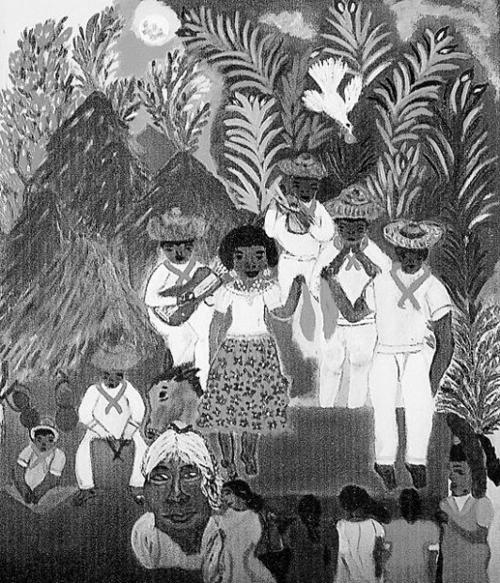
The group also plans to bring in an artist from Mexico, Aydée Rodriguez Lopez. Her paintings depict a story using Mexican and black cultures.
The activities will entertain people but will also open the lines of communication. Williams said.
"It's long overdue," said Dolores Rivas Bahti, who teaches Spanish and Latin American history. "Historically there's a connection between African-Americans and Mexicans that people aren't aware of, and because they aren't aware of it, it creates a distance."
She will be working with Williams on the project along with Jessica Zavala, a dancer and secretary of the South Park Art and Culture Center.
"Right now we are just doing a lot of research, but this is going to be so important for many reasons including self-identification," she said. "Self-identification in the sense of how people view themselves and how the world views them. This will be a real awakening for the Tucson community."
Southwest
● For more information about the South Park Art and Cultural Center, contact Barbea Williams at 628-7785.