Tony Davis
Reporter
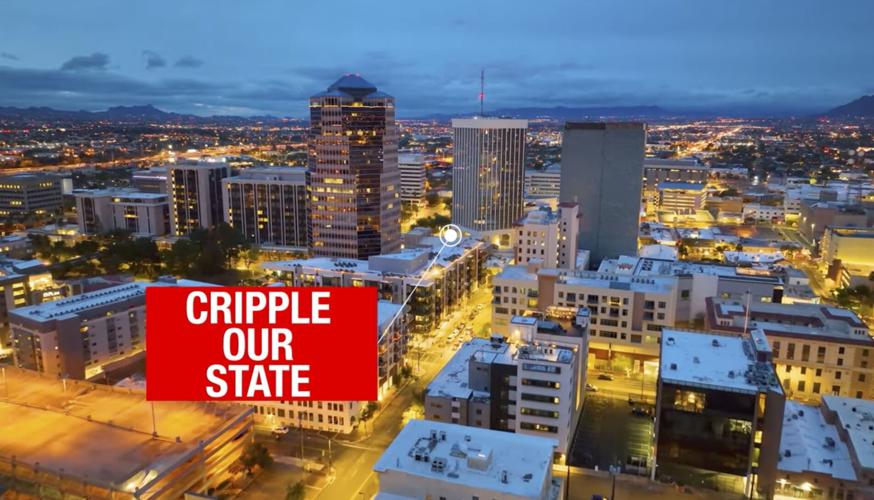
A controversial new video produced by the Central Arizona Project offers a dire warning: Cut water deliveries to the canal system too much and it will "cripple our state, flatten our economy and weaken our national defense."
The video's tone and atmosphere are dramatic, opening with crosshairs aimed at a scene of the Arizona State Capitol complex and accompanied by a harsh soundtrack that sounds as if it were lifted from a World War II-era documentary on the military.
The video comes as the U.S. Bureau of Reclamation is reviewing five proposed alternatives for cutting Colorado River deliveries, three of which would cut supplies to the CAP by a range of 77% to 98%.
The cuts are all discussed in the federal agency's draft environmental impact statement on the river. The bureau will apparently have to decide on its own what to do, because the seven river basin states, including Arizona, were unable to agree on a compromise over how to make the cuts.
People are also reading…
But is the warning valid? Will CAP cuts really flatten Arizona's economy and cripple the state?
A number of longstanding water observers in Arizona strongly disagree with that rhetoric, saying it is overblown and alarmist — at least in terms of the next several years or longer — and inconsistent with other messages state and local officials have been putting out about the risks from CAP cuts.
Until now, officials of the CAP and the Arizona Department of Water Resources have stressed that people using CAP water won't have their taps run dry when cuts first occur because cities and private water companies will have other supplies available for at least a few years. To critics, the video's use of words like "flatten" aren't consistent with that reality.

A screenshot from a new Central Arizona Project video, which says if water deliveries to the canal system are cut too much it will "cripple our state, flatten our economy and weaken our national defense." CAP's board president says it's a needed and valid warning, but some outside water experts say the rhetoric is overblown and alarmist.
The agency that runs CAP, the three-county Central Arizona Water Conservation District, declined to respond to questions from the Star about the video and its rationale for such a grim warning. The $4 billion, 336-mile CAP canal system serves drinking water and some irrigation water to Tucson, Phoenix and Pinal County.
"Everything and more will likely be in our DEIS response, which is due Monday," district spokeswoman DeEtte Person said, referring to the comments CAP will make to the Bureau of Reclamation's draft environmental impact statement.
But CAP Board President Terry Goddard defended the video, although as a board member who sets policy for the agency but does not run its day-to-day operations, he wasn't involved in producing it. It was produced by CAP staff as part of CAP's effort to organize a group called the Coalition to Protect Arizona's Lifeline. The group includes leaders of many Arizona cities, including Tucson Mayor Regina Romero, along with leaders of many of the Arizona tribes that use CAP water.
"If you take one-third of the (CAP) water from Central Arizona, it would be a very serious problem," Goddard said. But if the bureau approved the proposal to cut it by 98%, essentially "that would take us to zero. It would be devastating."
"In the spirit of Paul Revere, folks need to know this is a concern and they need to take appropriate action while they still can," Goddard said. "I don’t want to wake up after they make a final decision and say, 'If we had only made our concerns known to Congress.' I don’t want to have that moment ever happen. We need to exercise every option we have. The only way that will happen is if people realize this is serious."
'Is this scaring necessary?'
There is no doubt among water experts that a big cutback of CAP deliveries would pose major long-term water problems for the state. Tucson gets virtually all of its drinking water from CAP. Many Phoenix-area cities, including Phoenix itself, get significant percentages of their drinking water from it.
If a large share of the state's CAP supplies is curtailed, those cities eventually will have to turn back to pumping groundwater, with all its accompanying risks of land subsidence, higher pumping costs and deteriorating water quality as the aquifer is lowered.
But several water experts, including leading water researchers at the University of Arizona and Arizona State University, strongly disagreed with the video's use of words like "cripple" and "flatten" to describe the impacts of big CAP cuts on the state and its economy, particularly in the short term.

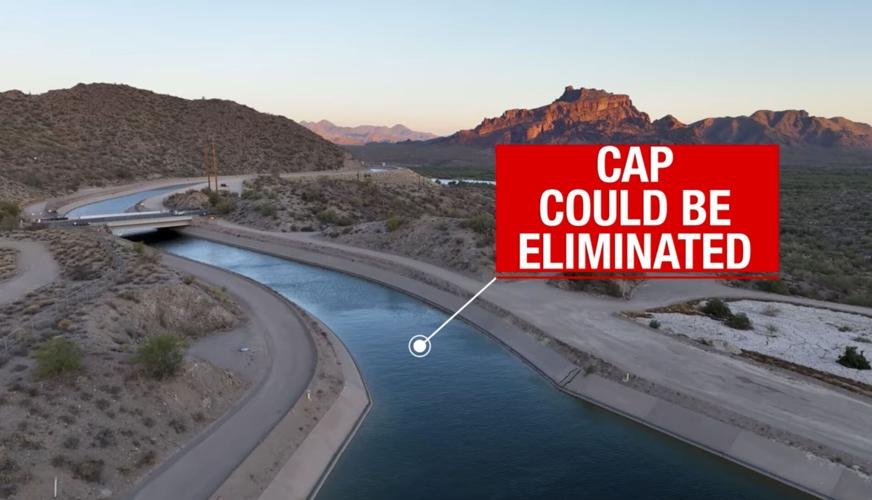
Another screenshot from the Central Arizona Project’s new video.
They described it as at least temporarily inaccurate, since the state has sunk about four years' worth of CAP supplies into the aquifer through the state-managed Arizona Water Bank. Tucson itself has nearly six years of CAP supplies stored underground through its own recharge efforts, and a number of Phoenix-area cities have followed suit.
"By alarmist, I mean it is going to scare a lot of people as to the current situation, when many of us have been trying to explain the realities of the situation we are in and the options to addressed," said Sharon Megdal, director of UA's Water Resources Research Center. "I have indicated that it’s very serious, not the economy will be flattened. They're saying things will be really, really bad. We don’t know they will be bad."
"They're trying to get people concerned so they write comments to the Bureau of Reclamation, but a lot of people if they see this, they will say 'Oh my God, this is horrible, I better not move into Arizona or I better move out of Arizona,'" said Megdal, who was on the CAP governing board from 2008 through 2020. "Is that what they want the results to be?" she asked about the video.
"I think this could have unintended consequences; is this scaring necessary?" she continued. "This was not done in a vacuum by a few people. It suggests to me that people are worried and that the seven-state negotiations over the river are not going well."
Sarah Porter, director of ASU's Kyl Center for Water Policy, said, "We all understand the need to explain how important Colorado River water is to Arizona. But we shouldn’t ignore that cities have taken big steps to be prepared" for major CAP shortages. "It will be disruptive. ... There's a longer term cost in finding long-term renewable supplies. But it won't flatten the economy, at least in the short term."
"Most cities have groundwater supplies. They will turn to the Arizona Water Bank supply (but) there's a cost for turning to those supplies," Porter said.
"What we've seen when there's (even) a little water problem of some far corner in the Phoenix-Tucson region, that is very ratting to investors and of course some national media. I can't predict whether or not very deep cuts in CAP supplies would have a significant impact on investor confidence, but there could be that impact. It's super important that cities be prepared for very deep cuts, so that we don't experience that loss of confidence. That's probably the biggest risk we face," Porter said.
She agreed, however, that losing CAP water used by Davis-Monthan Air Force Base in Tucson and Luke Air Force Base near Phoenix would have a significant effect on national security. Since the country has gone through several rounds of base closings, that would mean those left have been deemed to be important, she said.
'I'm not saying that happens tomorrow'
Goddard said that using the water bank and other recharged water supplies will provide water in the short term, but when it comes to long-term economic effects, CAP takes a long view.
"We have been seriously dependent upon renewable resources of the Colorado River. It's one of the important pillars on which our economy is based," said Goddard, who formerly held posts as Arizona attorney general and Phoenix mayor.

This screenshot from the Central Arizona Project’s new video refers to the fact that under the most extreme cut being considered by the federal government, CAP's deliveries of water from the Colorado River could be cut by 98%.
As for the economy being flattened, "I'm not saying that happens tomorrow. But I think people who make investments would take a long look and it would be a huge concern to them," Goddard said. "The fundamental, important thing to emphasize, what we are responding to is the worst of the options under consideration. They are all bad but some of the worst would have a serious impact, a devastating impact on our economy."
The video also appeared to Porter and other observers to carry an entirely different message from what CAP General Manager Brenda Burman offered in early February. At that time, she said at a press briefing that while one of the bureau's proposed alternatives would "wipe CAP off the map," she felt that people now drinking CAP water wouldn't have to worry about not getting water when they turn on their taps because Arizona has stored so much water underground to prepare for future shortages.
Said Porter: "I think it is hard to see consistency in those two messages."
The video cherry-picks the data, said David Wegner, a retired bureau engineer and environmental official who now sits on a National Academy of Sciences advisory committee on water issues. "Every organization has an objective. They pick the data that proves their point. You've got to look at the data and put it into context and see what it means."

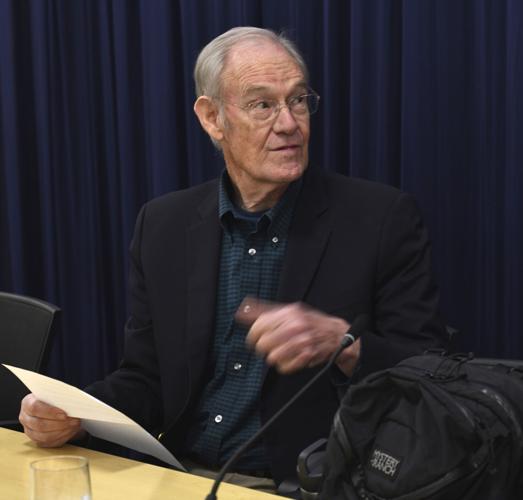
Terry Goddard, president of the CAP governing board
Disagreeing, Goddard said that if you put the word "flatten" into the context of what's happening with CAP and the river negotiations now, "if the worst option is taken it will have very serious consequences."
Megdal also questioned a statement in the video that big CAP cuts would take water away from Arizona "that we all have a legal right to."
"I think that's a broad statement. As we all know, CAP is lower priority water. We all acknowledged when CAP was approved that we could lose all CAP water before California lost a drop. Would the federal government be taking water Arizona has a legal right to? I think that is something people could take issue with."
Porter, however, said the 1968 law authorizing CAP that put the project lowest on the priority list for getting Colorado River water in times of shortage is only one part of a broader picture involving who should have rights and access to river water.
'More for a headline'
It’s realistic to expect there will be impacts to the Arizona economy, if it's a 50% or more cut to CAP in the long run, said Brett Fleck, water resources adviser for the city of Peoria, which is northwest of Phoenix. "I'm not sure it would flatten the economy. Arizona is not completely dependent on CAP. Salt River Project is the foundation of the Phoenix metropolitan area. It was there first.
"I understand the point that's being made. There’s a real connection between CAP supplies and Arizona's economic vitality and potential. But I think tying those two things together in a sweeping statement is maybe more for a headline than a policy paper," Fleck said.
UA economist George Frisvold said he couldn't comment in any detail on the CAP video because it doesn't define "flatten" and it wasn't accompanied by an analysis to back the point up.
But Jeffrey Silvertooth, a UA environmental science professor, said he agreed with the video's warning about economic flattening, based on what's happened in Pinal County since CAP water was completely cut to its farmers in 2022 and 2023.
Since then, about half the farmland in two major irrigation districts in Pinal County has been fallowed, and many of the farmers have left the business and not settled on a future course, he said. Or, they may move elsewhere to farm, said Silvertooth, who has worked with farmers there for many years.
"It's been a real quandary for them. There's been a lot of stress for those communities," Silvertooth said.
Contact Tony Davis at 520-349-0350 or tdavis@tucson.com. Follow Davis on Twitter@tonydavis987.
Tony Davis
Reporter


 Arizona faces massive cut in Colorado River water under most likely US plan