ANKARA — NATO has weathered another storm from Donald Trump, but European members of the military alliance are bracing for more turbulence ahead in relations with the U.S. president.
It says much about the state of U.S.-European ties when a NATO summit that began with a U.S. leader ordering a cutoff in trade with one member, Spain, and rebuking others was widely hailed as a success after he recommitted to the alliance hours later.
European leaders were upbeat after the Ankara summit, pleased by Trump’s talk of "love in the room," his endorsement of a declaration that reiterated support for NATO’s Article 5 mutual defense pact and his decision to give Ukraine a license to make Patriot missile interceptors.
That was a relief after months of severe strains triggered by Trump’s efforts to take Greenland from fellow NATO member Denmark and divisions over the Iran war, which prompted him to revive his long-standing criticism of the alliance and cast doubt on future U.S. membership.
People are also reading…
Though they expect more volatility in the relationship, European officials see value in keeping their superpower ally inside the alliance. Without U.S. military clout, many fear they would be more vulnerable to an attack from Russia.

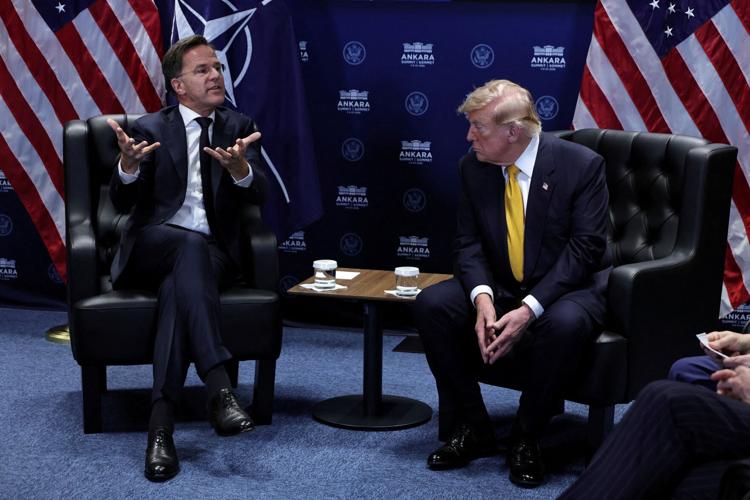
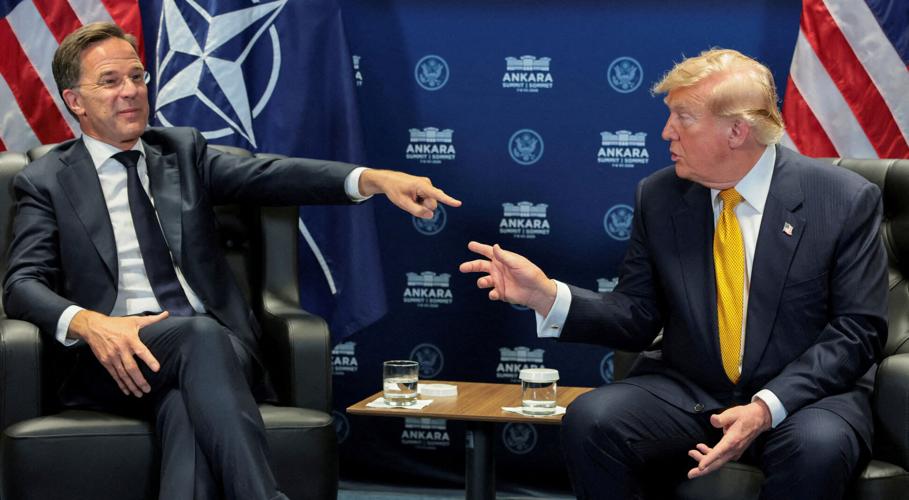
U.S. President Donald Trump, right, and NATO Secretary General Mark Rutte meet Wednesday on the sidelines of the NATO leaders summit in Ankara, Turkey.
‘Dominant player’
"There is, of course, one dominant player in the room — let's be honest," NATO Secretary-General Mark Rutte told Reuters after the summit. "The United States on its own is half of NATO's economy, and the military might of the U.S. is unparalleled and is as big as the might of the rest of NATO combined."
Rutte said NATO’s credibility and ability to deter Moscow had not been undermined by the recent display of divisions.
Not everyone is so sure.
"Even if Trump makes nice, the damage is done," said Jim Townsend, a former senior Pentagon official now at the Center for a New American Security think tank. "Russia and the alliance taxpayer need to see that NATO is getting stronger, but that message is lost in the theatrics of Trump."
One European diplomat, speaking on condition of anonymity, doubted the summit had undone any of the damage of recent months. "But it didn't get worse and that's progress, considering …" the diplomat said.

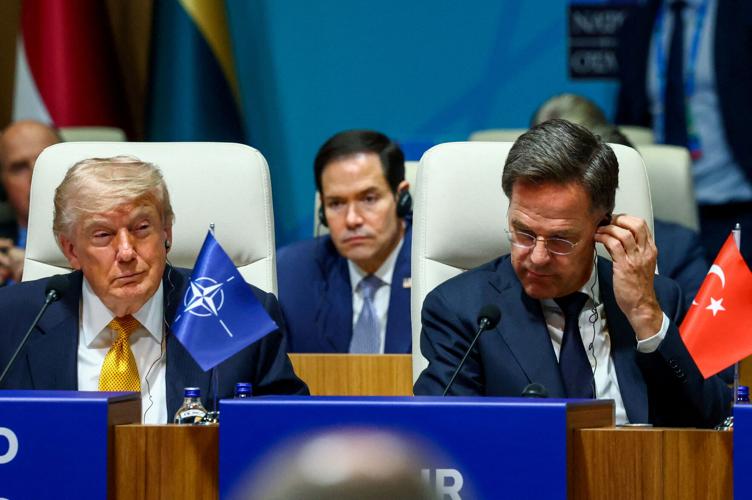
From left, U.S. President Donald Trump, U.S. Secretary of State Marco Rubio and NATO Secretary General Mark Rutte attend a meeting of the North Atlantic Council on Wednesday during the NATO leaders' summit in Ankara, Turkey.
Defense spending
Ending the summit on a positive note provided a measure of vindication for Rutte and the host, Turkish President Tayyip Erdogan.
Before the summit, Rutte and other NATO officials sought to persuade Trump to set aside tension over Iran and stick with the alliance, telling him big increases in defense spending by European allies were a personal victory for him.
Trump has long said Europe should spend more on defense, and his administration pushed Europeans to take over primary responsibility for the conventional defense of the continent.
When Rutte met Trump at the White House last month, NATO officials set up easels with large charts showing increases in defense spending by the alliance’s European members and Canada in the decade since Trump began his first term in 2017.
One bore the heading “The Trump Trillion” in gold capital letters, suggesting he was responsible for $1.21 trillion in allies’ extra spending, though it also covered four years of Joe Biden’s presidency.
"Some ambassadors have been critical of Rutte’s behavior in Washington. Others say: Can anybody find an alternative?” one senior diplomat said ahead of the summit.
Officials also prepared data to counter some of Trump’s assertions that NATO allies denied support to U.S. forces in the Iran war. While Spain banned the U.S. from using bases on its territory, other allies largely stuck to long-standing agreements with U.S. forces, Rutte said.
Such efforts sometimes got him into diplomatic trouble among Europeans. Italian Defense Minister Guido Crosetto accused Rutte of conveying a “totally misleading message" after he said about 500 U.S. planes took off to support the war from U.S. bases in Italy, where the conflict was deeply unpopular.

U.S. President Donald Trump, right, and NATO Secretary General Mark Rutte meet Wednesday on the sidelines of the NATO leaders summit in Ankara, Turkey.
Deals sealed
Before the summit, NATO also sought to show that its members were turning cash into military capabilities with a glitzy defense industry forum in Ankara, featuring giant screens, slick videos and a blizzard of deals for military kit including surveillance planes, drones and transport aircraft.
It came with a big number attached – NATO said the deals were worth more than $50 billion.
"Trump likes strong men, winners, big, beautiful numbers and flattery — and the summit had all of those," said Oana Lungescu, a Distinguished Fellow at the RUSI think tank and a former NATO spokesperson.
However long the summit afterglow lasts, European officials are braced for more upheaval.
Having already cut back on the forces it pledges to deploy for NATO in the event of a crisis, the Pentagon last month launched a review of the 80,000-strong U.S. troop presence in Europe.
But many NATO states concluded there is one thing they can do to reduce the drama – hold fewer summits. Plans for a leaders' meeting in Albania next year are on hold.
“Better to hit the pause button on these gatherings rather than have the alliance confront what has amounted to an annual existential crisis," said John R. Deni, a nonresident senior fellow at the Atlantic Council think tank.