WASHINGTON — The White House Situation Room — a space of great mystique and even greater secrecy — just got a $50 million facelift.
Actually, "room" is a misnomer. It's a 5,500-square-foot, highly secure complex of conference rooms and offices on the ground floor of the West Wing.

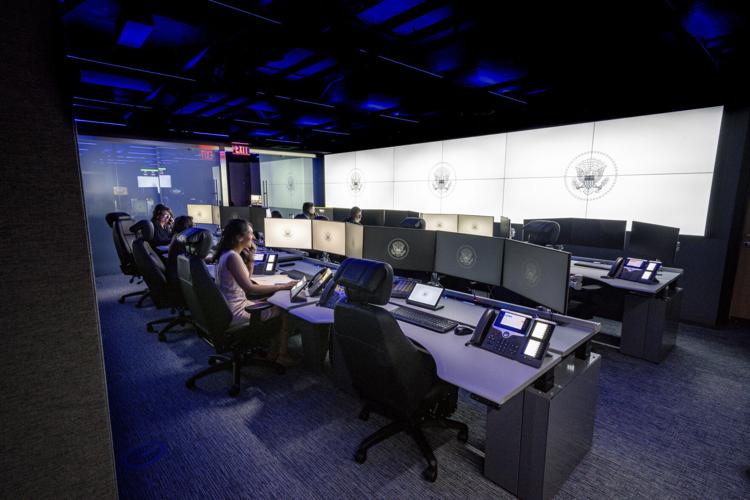
In this image provided by the White House, people sit at desks on the "watch floor," a 24-7 operations center, in the newly renovated complex of the White House Situation Room on Aug. 16, 2023, in Washington.
These are rooms where history happens, where the president meets with national security officials to discuss secret operations and sensitive government matters, speaks with foreign leaders and works through major national security crises.
Where President Barack Obama and his team watched the raid that took down al-Qaida leader Osama bin Laden in 2011. Where President Donald Trump monitored the 2019 operation that killed Islamic State leader Abu Bakr al-Baghdadi. Where President Lyndon Johnson went over Vietnam War plans.
The latest redo was no small update: The total gut renovation took a year to complete.
People are also reading…
The White House opened the classified space to a group of reporters this week for a rare visit to check out the new look. President Joe Biden got a tour on Tuesday and then received an intelligence briefing in the space, said Marc Gustafson, the Situation Room director.
"He loved it, he thought the update was fantastic," Gustafson said.

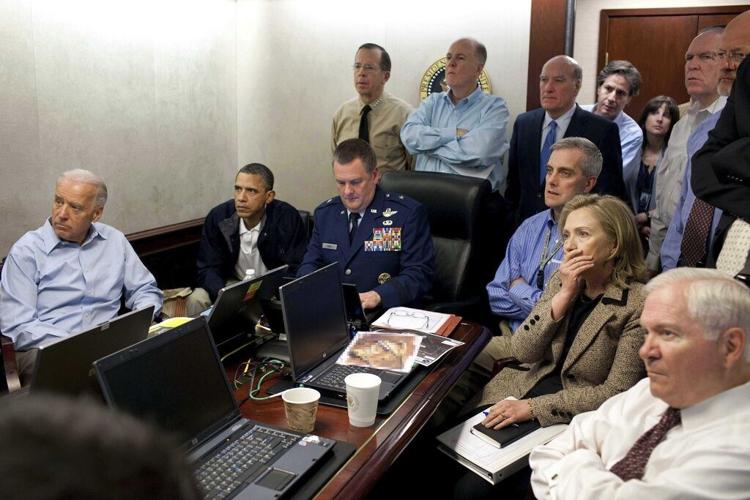
FILE - In this May 1, 2011 file image released by the White House and digitally altered by the source to diffuse the paper in front of Secretary of State Hillary Clinton, President Barack Obama and Vice President Joe Biden, along with members of the national security team, receive an update on the mission against Osama bin Laden in the Situation Room of the White House in Washington.
"Folks, the newly renovated White House Situation Room is up and running," Biden said in a post on X, formerly Twitter. "My thanks to everyone who worked on this incredible facility.
The renovated space has a modern-but-vintage vibe. Old floors, furniture, computers and other tech were stripped out and replaced with pristine mahogany paneling from Maryland, stonework from a Virginia quarry, LED lights that can change colors and flat-screen panels. See-through glass offices fade to opaque with the press of a button. The whole space has that new car smell.
But there are still plenty of landline phones: No cellphones are allowed in the secure space for security reasons. (There are cubbies to stow phones near a door leading outside, where a baggie with some cocaine was found earlier this year.)
Access is tightly controlled and generally restricted to the president's national security and military advisers. Anyone listening in on classified briefings needs clearance. Even the contractors working on the renovation had to get temporary security clearances. Illuminated signs flash green for declassified and red for classified.

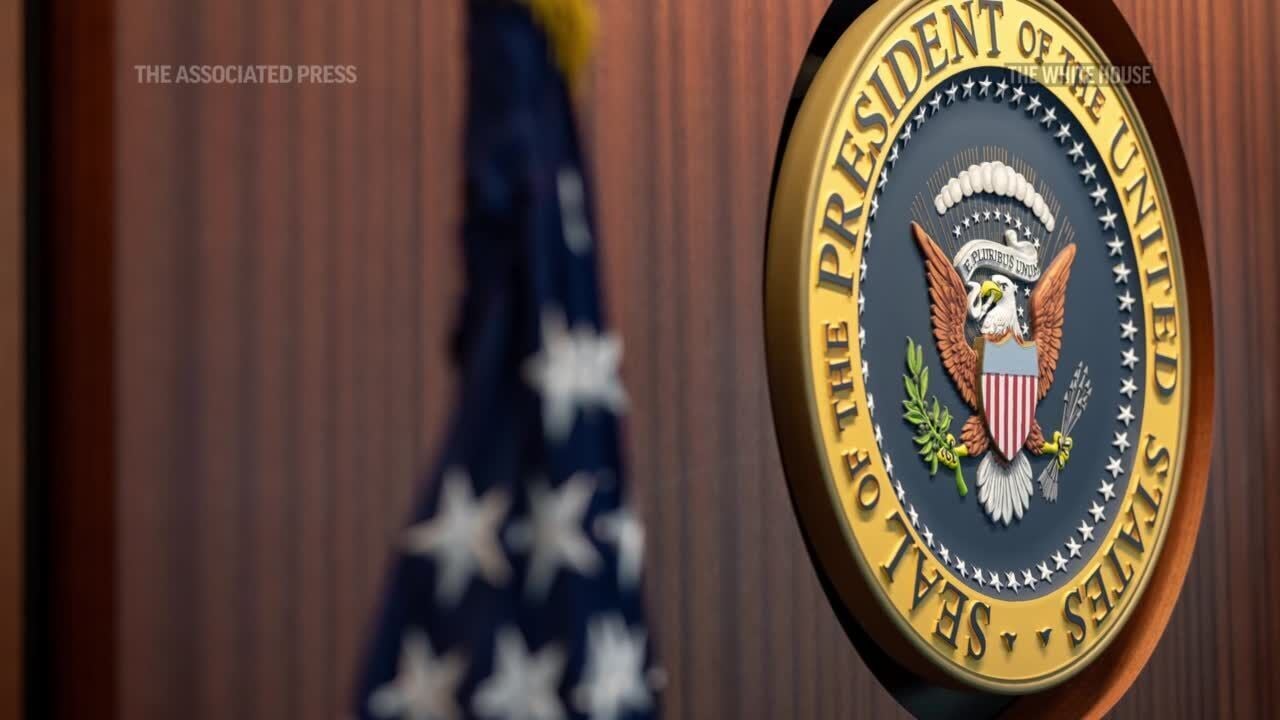
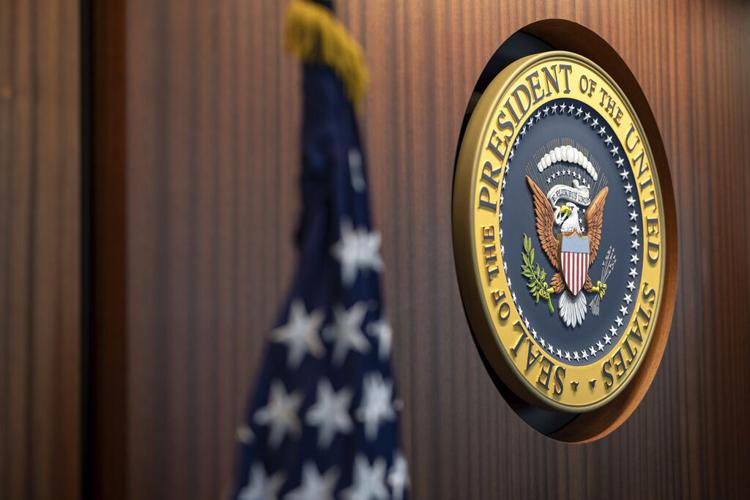
In this image provided by the White House, the presidential seal is displayed in the newly renovated White House Situation Room on Aug. 16, 2023.
The hush-hush complex was created in 1961 by the Kennedy administration after the Bay of Pigs invasion. President John F. Kennedy believed there should be a dedicated crisis management center where officials could coordinate intelligence faster and better.
That was an upgrade, to be sure. But it wasn't exactly comfortable: Nixon administration national security adviser and then Secretary of State Henry Kissinger described the space as "uncomfortable, unaesthetic and essentially oppressive."
After the Sept. 11, 2001, terrorist attacks, the White House did a significant Situation Room update, along with a broader upgrade to presidential communications on Air Force One and the presidential helicopter. Presidents used the complex for secure video conferences before such tech became more portable. The last renovation was in 2007.
The complex is staffed around the clock by military and civilian personnel who monitor breaking developments worldwide.

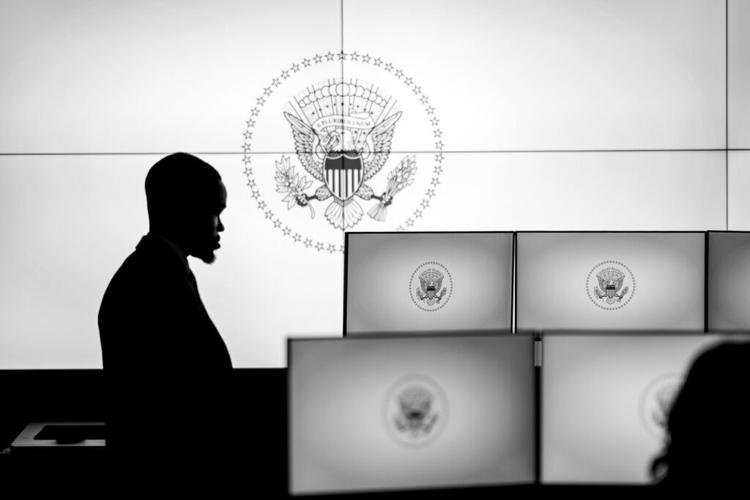
In this image provided by the White House, a person stands on the "watch floor," a 24-7 operations center that is part of newly renewed complex of the White House Situation Room at the White House Aug. 16, 2023, in Washington.
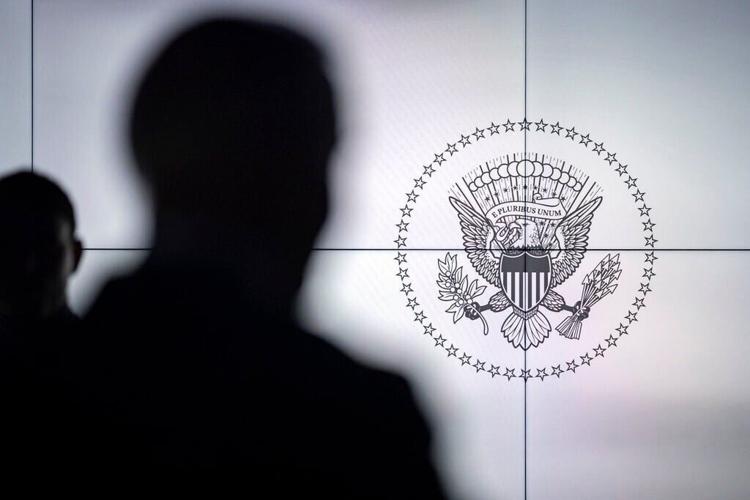
It has a reception area with a U.S. seal in stonework. Behind that is the main conference room, known as the "JFK room." To the right are a smaller conference room and two soundproof "breakout rooms." To the left is the "watch floor," a 24-7 operations center.
"It's a marriage of the traditional and the modern," Gustafson said of the new space.

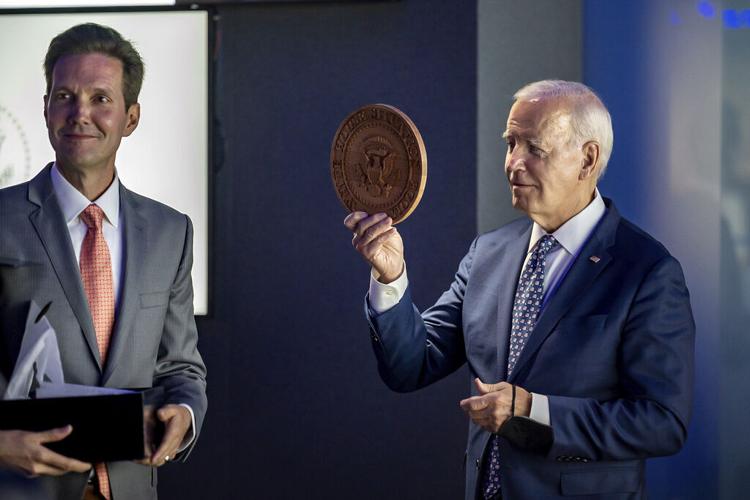
In this image provided by the White House, President Joe Biden holds a wooden presidential seal presented to him by Situation Room director Marc Gustafson, left, as tours the "watch floor" in renovated White House Situation Room complex, Sept. 5, 2023, in the West Wing of the White House in Washington.
Workers dug five feet underground to make more room and install cutting-edge technology allowing White House officials to bring together intelligence from different agencies with the push of a few buttons.
"Now we have all the capabilities," Gustafson said.
For those in the know, referring to the "sit room" is out. It's the "whizzer," stemming from the complex's acronym: WHSR. (Washington does love a good acronym.)
Gustafson said the goal is to never need a complete renovation again. The new space was designed so panels can be removed and updated and new technology swapped in, usually with less space needs. A room once taken up by computer servers has become a smaller conference room.
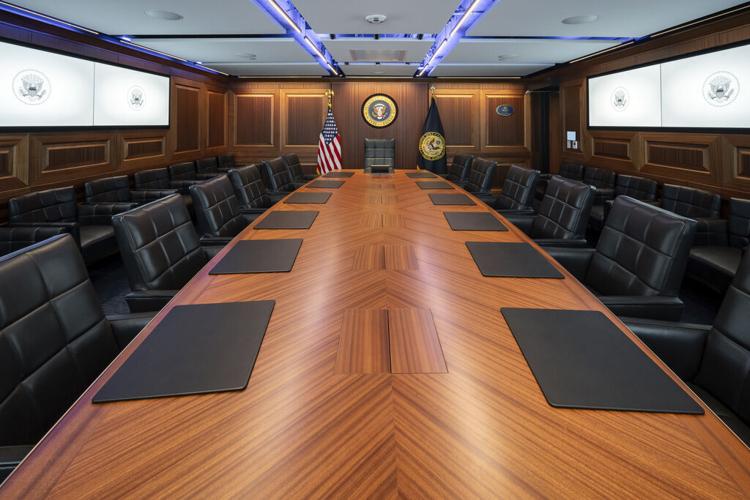
The JFK room has a long wooden table with six leather chairs on each side and one at the head for the president. Leather armchairs line the walls. A giant, high-tech screen runs the length of the back wall. A 2-foot (0.6-meter) seal is positioned at the president's end of the room, larger than the old seal.

This image provided by the White House shows the completed renovations of the White House Situation Room on Aug. 16, 2023, in Washington.
There aren't many photos of the Situation Room, but one of the most famous is the image of Obama, Secretary of State Hillary Clinton, Vice President Biden and others watching the bin Laden operation.
That took place around the corner from the JFK room in a smaller conference room that no longer exists. It's been cut out entirely from the space and sent off to Obama's presidential library, Gustafson said. In its place are two smaller rooms.
Another item preserved for history is an old phone booth that stood in the complex. It was sent to storage for Biden's eventual presidential library. Gustafson didn't know if anything had been sent to Trump.
Gustafson said staff members have to be ready to prepare rooms for classified briefings on a moment's notice, and Biden has been known to pop in to meetings unexpectedly, particularly as Russia was invading Ukraine.
While the area was closed for renovation, White House officials used other secure spots on the campus. Gustafson said the renovated Situation Room is having a soft opening of sorts: About 60% of the staff are back in the space with more coming every day.

In this image provided by the White House, President Joe Biden tours the renovated "watch floor" a 24-7 operations center, that is part of the White House Situation Room complex, Sept. 5, 2023, in the West Wing of the White House.
One cosmetic upgrade Gustafson pointed out is the ability to swap out the different 2-foot-diameter seals that hang on the JFK room wall, depending on who is in the meeting. Seals for the president, vice president and executive staff are kept in a nearby closet and can be quickly subbed.
Gustafson said visitors previously remarked that the room didn't reflect Hollywood's grand imagining of the space.
He said they now declare: "This looks like the movies."
Photos: Inside the White House's color-coded rooms
The White House's Green Room, which was originally listed as a "lodging room," has served as a dining room, drawing room and parlor for holding teas and receptions, according to WhiteHouse.gov.
The first major piece of green decor came during Thomas Jefferson's administration in the form of a "canvas floor cloth, painted green."
In 1812, President James Madison signed the United States' first declaration of war in the Green Room. The room would later be the site of the viewing for President Abraham Lincoln's son, Willie, who died at age 11 from typhoid fever. According to the White House Museum, Mary Todd Lincoln avoided the room after that.

The Green Room in the White House, Washington, D.C., April 24, 1940. (AP Photo)

A portrait of former President Dwight D. Eisenhower hangs on the wall of the Green Room in at the White House in Washington, D.C., Dec. 1962. Exact date is unknown. (AP Photo)

Paintings of past presidents adorn the walls as a crystal chandelier hangs from the ceiling of the Green Room at the White House in Washington, D.C., Dec. 1962. Exact date is unknown. (AP Photo)

Paintings of past presidents adorn the walls as a crystal chandelier hangs from the ceiling of the Green Room at the White House in Washington, D.C., Jan 21, 1963. (AP Photo)
The Blue Room got its signature color in 1937 during Martin Van Buren's administration and is where the president and first lady usually greet guests during formal receptions. Its geometric design came around 1870 when President Andrew Johnson's daughter Martha Johnson Patterson redecorated.
It's one of four oval rooms in the White House and has served as a place for meetings, luncheons and dinners, as well as the site for President Grover Cleveland's wedding in 1886.
The Blue Room is also where the White House Christmas tree has been placed each December since 1961 (except 1962 and 1969).

First lady Hillary Rodham Clinton unveils the renovated Blue Room of the White House, Feb. 17, 1995. The process for the renovation began when the Committee for the Preservation of the White House recommended that the Blue Room be refurbished. (AP Photo/J. Scott Applewhite)
The Red Room got its name in 1845 after it was redecorated with furniture upholstered in "crimson plush." It had previously been know as the "president's anti-chamber" during Thomas Jefferson's presidency and has often been used as a private parlor for first ladies to receive guests.
Rather than being painted red, the Red Room's walls are covered in red satin.
Currently, the room is most often used as a parlor for dinner and reception guests.

First Lady Nancy Reagan is shown standing in the Red Room of the White House in this March 4, 1981 photo. (AP Photo/HO)
The Yellow Oval Room is located directly above the Blue Room. President John Adams' first reception was held here in 1801 before the White House was officially finished, according to the White House Museum. The room first got its yellow color when Dolley Madison decorated in 1809.
The Yellow Oval Room served as the location for the first White House library in 1851, as well as the house's first Christmas tree in 1889.
Franklin D. Roosevelt used the Yellow Oval Room as his study, and it was where he was when he learned about the Pearl Harbor attacks in 1941.
The room is currently used to host important guests during formal private receptions.

First lady and mother of the bride Lady Bird Johnson fixes the wedding gown train of her daughter, Lynda Bird Johnson, in the Yellow Oval Room of the White House in Washington, D.C. on Dec. 9, 1967. Standing next to the bride is husband and Marine Corps Capt. Charles S. Robb. Standing behind the first lady is U.S. President Lyndon B. Johnson. To the right is the groom's mother, Mrs. Robb, and father, James S. Robb. (AP Photo)

America’s first lady Barbara Bush, wife of President George H.W. Bush, chats with Britain’s Princess Margaret in the Yellow Oval Room in the upstairs White House residence in Washington on March 11, 1991. Princess Margaret, sister of Queen Elizabeth of England, is in Washington to attend the visit of the Royal Ballet. (AP Photo/Ron Edmonds)

This photo provided by the White House shows first lady Laura Bush, right, meeting with Klara Dobrev, wife of Hungarian Prime Minister Ferenc Gyurcsany, Monday, June 6, 2006, in the Yellow Oval Room in the private residence of the White House. (AP Photo/White House, Paul Morse)

This photo provided by the White House shows first lady Laura Bush, third from right, hosting a coffee for Azerbaijan first lady Mehriban Aliyeva, fourth from right, and others, in the Yellow Oval Room inside the private residence of the White House in Washington, Thursday, Dec. 7, 2006. (AP Photo/White House, Shealah Craighead)