SACRAMENTO, Calif. — Goats have become a familiar sight on California hillsides, munching through weeds and brush before it can become fuel for wildfires. But the companies that put those herds to work said a change in state labor rules made goat grazing too expensive to continue.
The labor rule in question was a temporary state law that allowed goat herders to be paid under the same wage structure as sheep herders, but it expired July 1. Goat grazing companies said the expiration meant they could face annual wage costs of about $240,000 per herder because of overtime requirements.
Company owners said the higher labor costs might force them to switch from goats to sheep, or shut down and sell their herds.
“As a business owner, we just really don’t know what the future is going to hold,” said Andrée Soares, a third-generation rancher who is president of Star Creek Land Stewards, a grazing company that employed five to 14 herders, depending on the season.
People are also reading…

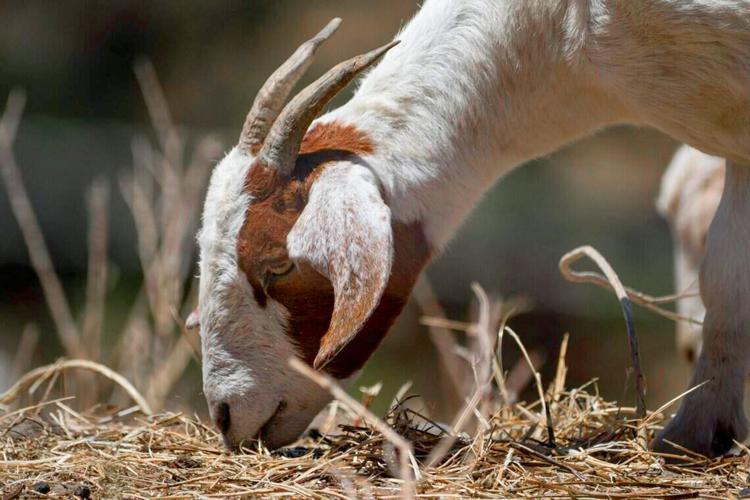
A goat from Capra Environmental Services eats grass to minimize wildfire risk on a hill in Lincoln, Calif.
In California, grazing companies were frequently hired by cities and other local governments to use goats to reduce vegetation that could fuel wildfires. The exact percentage of California’s 500,000 sheep and 125,000 goats used for targeted grazing was unknown, but labor advocates and grazing company owners agreed it was at least 20% and increasing.
Tim Arrowsmith, owner of Western Grazers, said goats could eat a wider variety of plants than sheep, including starthistle, a thorny weed that grew densely and could become a wildfire risk because of its dry, fibrous stems and leaves. Sheep would eat starthistle only in the early stages of growth, but goats would eat it even after it became prickly.
“They eat a lot of other forms that sheep might pick at, but not really do a good job at cleaning up,” Arrowsmith said.
Without another change in state law, Arrowsmith said he would likely have to sell his goats by the end of the year. In that case, he said, many of the animals could be slaughtered.
Sheep herders exempt, goat herders aren’t
The law at the center of the dispute was Assembly Bill 1066, signed by then-Gov. Jerry Brown, which gradually extended overtime pay requirements to agricultural workers. Under the law, agricultural workers became entitled to 1.5 times their normal wage for working more than eight hours a day or 40 hours a week.
Range herders were originally treated differently under the overtime law because herding companies said they could not afford conventional hourly overtime for jobs that required herders to remain on duty around the clock. Instead, the state established a minimum monthly wage for herders that included $2,934 in regular wages and an additional $1,887 in overtime wages.
More than 90% of sheep and goat herders in California worked under H-2A visas, most commonly coming from Peru and Mexico. Companies also had to cover herders’ room and board, meals, limited clothing expenses, transportation to and from their home countries and visa costs.
Sheep and goat herders made around $60,000 a year in wages, in addition to expenses paid by their employers, Arrowsmith said.

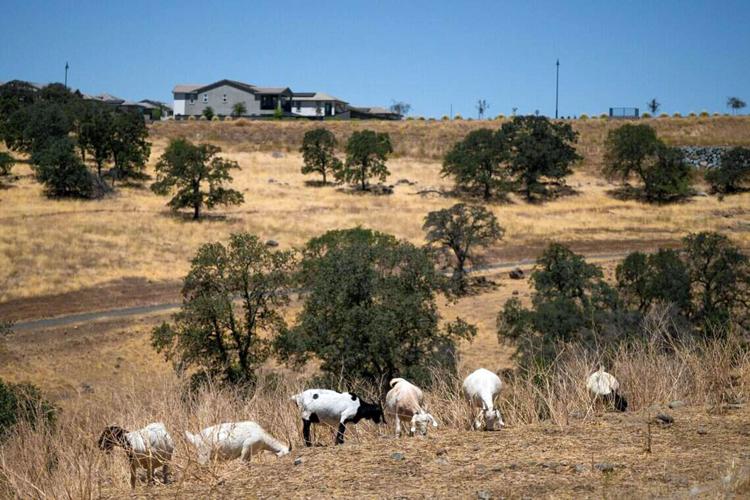
Goats from Capra Environmental Services eat grass to minimize wildfire risk on a hill in Lincoln, Calif.
In 2022, the California Labor Commissioner’s Office determined that the alternative minimum monthly wage applied only to sheep herders, not goat herders. The interpretation meant goat herders were subject to standard overtime requirements for the hours they worked, potentially pushing annual wages to around $240,000 per herder, in addition to expenses paid by employers.
Grazing industry representatives protested the change, prompting legislators to pass Senate Bill 143, which allowed goat herders to be paid the alternative minimum monthly wage used for sheep herders through June 30.
Since the provision expired, goat grazing companies are again subject to the higher wage requirements.
Why hire foreign workers?
Lorena Gonzalez Fletcher, who authored AB 1066 while serving in the state Assembly, said she fought for the bill because she believed agricultural workers should have the right to an eight-hour workday like other workers.
Fletcher, now president of the California Federation of Labor Unions, said herders working under the H-2A visa program could work for three years, return to their home countries for 90 days and then return to California for another three years. They often spoke little to no English, worked in isolation — sometimes in poor conditions — and had no direct path to U.S. citizenship.

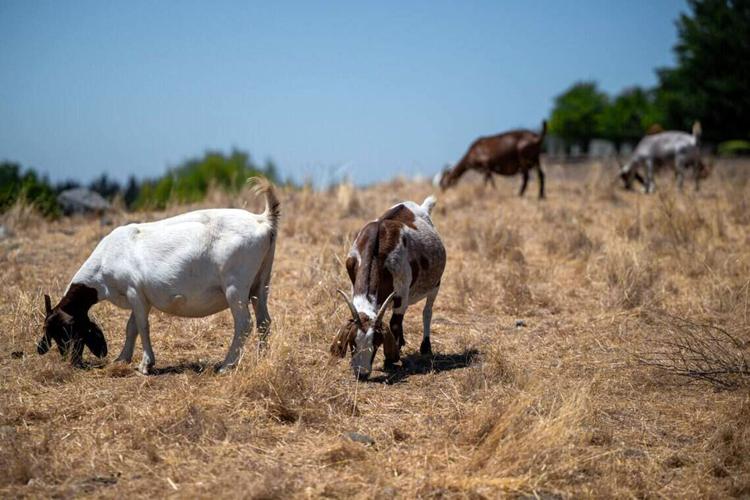
Goats from Capra Environmental Services eat grass to minimize wildfire risk on a hill in Lincoln, Calif.
Arrowsmith said grazing companies used H-2A workers because U.S. workers did not apply for herding jobs.
“Americans are a little spoiled in their work habits,” he explained. “The other part of it is, it’s hard work. It’s hot, it’s dirty.”
Employers seeking H-2A workers first had to advertise the jobs to U.S. workers. Arrowsmith said he received applications from people around the world, including South Africa, Mexico, Russia and India.
“What I have not had are any American resumes or applications,” he said.
He said grazing companies were required to hire qualified U.S. applicants over H-2A workers.
“(Domestic workers) have preference over foreign agricultural workers. They just don’t want the job,” he said.
A report required by SB 143 and submitted to California’s Department of Industrial Relations concluded that sheep and goat herding involved similar work.
“All stakeholders agree that the alternative minimum monthly wage for range herders who are on duty 24/7 should be the same for sheep and goat herders because the workers and work involved in herding sheep and goats are similar and often overlap,” the report read.
“The Legislature got this study and did absolutely nothing with it,” said Soares. “They just let (SB 143) expire.”
Soares, who sits on the board of directors of the California Wool Growers Association, said the association hired a lobbyist to push for a change in state law. If the law remains unchanged, Soares said, there would be no market for goats in California.
If that happens, “all the goat producers in this state will be liquidating,” she said.