Despite years of momentum to loosen restrictions on weed, there is still a big disconnect between states and the federal government.
On April 23, the Department of Justice said it will shift some kinds of marijuana with medical use from Schedule I, the most heavily controlled drugs under the Controlled Substances Act, to Schedule III, which can be legally prescribed.
The move doesn't apply to all marijuana, and it doesn't make recreational use legal at the federal level.
Someone who uses medical marijuana in a state that has a medical use program, if they follow the state’s rules, no longer breaks federal law, said Heather Trela, director of operations and fellow at the Rockefeller Institute of Government. But, she noted, "This will not make medical marijuana legal in states that have not legalized it.”

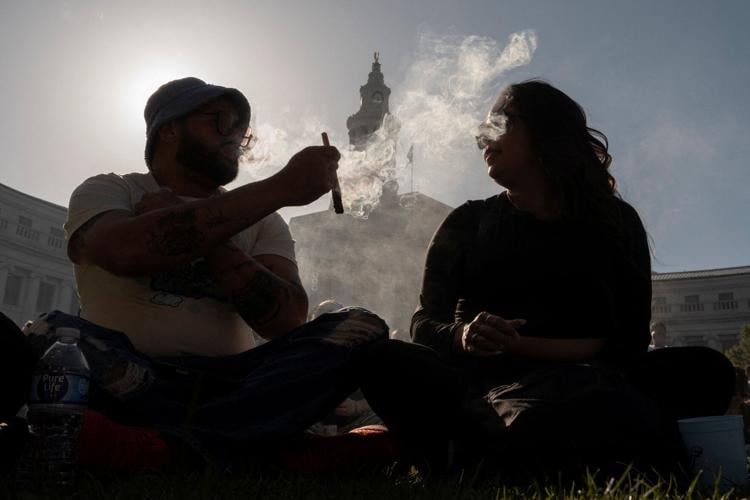
Revelers smoke cannabis April 20 at the Mile High 420 Festival in Denver, the Colorado state capital.
Experts say the reclassification doesn't satisfy the yearslong push to make marijuana legal for other uses, and won't resolve conflicts between federal and state laws.
People are also reading…
Many states passed their own laws on marijuana, often ones far more permissive than the federal government. Most states authorized marijuana for medical use even before the rescheduling, and nearly half of all states also say recreational use is OK. Few states ban the drug outright.
Full legalization has significant public support: About 64% of Americans think it should be legal, according to an October 2025 survey by Gallup, which has polled public opinion on weed for decades.
Drug scale
The Controlled Substances Act classifies drugs from Schedule I to Schedule V based on their potential for abuse, addictiveness and medical use. Schedule I drugs have "high potential for abuse and the potential to create severe psychological and/or physical dependence" and "no currently accepted medical use," the Drug Enforcement Administration says.
Marijuana was considered a Schedule I drug since it was placed on the list in 1970, alongside drugs like heroin, LSD and ecstasy.
Schedule III drugs, which include Tylenol with codeine or anabolic steroids, can be lawfully prescribed as medication regulated by the FDA.
The shift could open up potential tax benefits for weed companies in states where medical marijuana is legal.

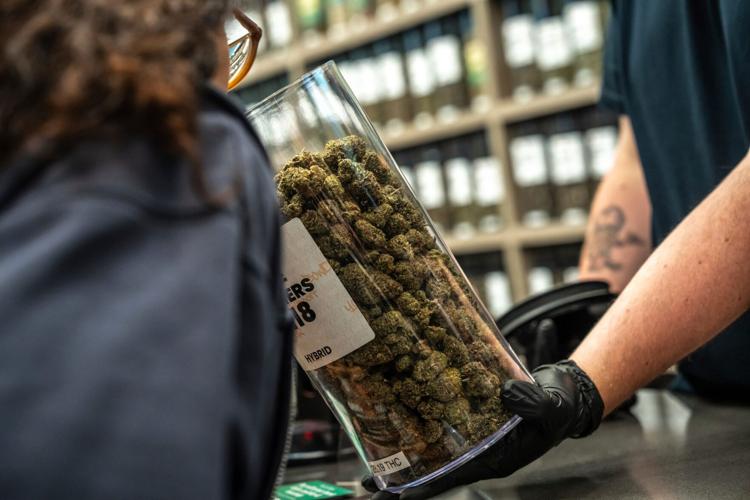
A customer smells marijuana flowers Aug. 13 at BOWDEGA Cannabis dispensary in Utica, Michigan.
State level
Forty states, three territories and Washington, D.C., all allow for medical marijuana as of June 2025, according to the National Conference of State Legislatures, which tracks state laws.
Twenty-four states, three territories and D.C. passed laws permitting recreational use, with a variety of specific rules on legal limits.
Some other states allow for "low THC, high cannabidiol" products for medical purposes.
Only Idaho has no legal use of marijuana products at all.
Federal level
Technically, pot is illegal at the federal level everywhere. Administrations have discretion over how they will enforce their laws; the federal government could choose to prosecute someone for recreationally using marijuana, even if they are in a state that allows it and are following all the state rules, Trela said.
But the federal government tends not to do that and would rather use its resources pursuing crimes it deems more important. It will still sometimes charge someone for marijuana possession when their actions draw too much attention, Trela said. That could include using weed on federal property, the U.S. Park Police recently said.
For more than a decade, Congress passed provisions in budget bills that bar the DOJ from using taxpayer money to interfere with states’ ability to implement medical marijuana programs.
Rescheduling all marijuana to Schedule III, something the Trump administration says it will continue to evaluate, could reduce the mandatory-minimum penalties faced by those who are prosecuted for marijuana use, Trela said.
It would still not make all marijuana use legal at the federal level, however.
What's ahead?
Congress could act to reschedule marijuana or fully legalize it, Trela said. It’s never had enough momentum to go very far, she said, and full legalization doesn’t seem likely in the foreseeable future.
Otherwise, the executive branch can pursue a much longer, complicated process to change how it classifies marijuana.
Starting at the end of June, the DOJ said it will begin the process of more broadly rescheduling marijuana, which will include administrative hearings. By limiting the scope of the April rescheduling order, the DOJ could bypass some of the formal administrative rulemaking process, allowing the order to go into effect immediately.
Already a federal lawsuit was filed challenging the DOJ’s authority to order the limited rescheduling. The groups Smart Approaches to Marijuana and the National Drug and Alcohol Screening Alliance filed a petition May 4 to block the rescheduling move, arguing it violates rulemaking requirements and the administration overstepped its power.