



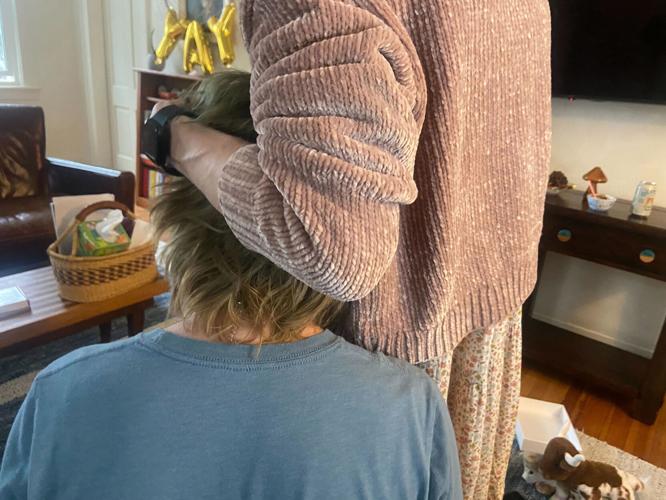
One afternoon in late 2024, a sixth-grader nicknamed Bug came home from school with an announcement to make. Bug, who was assigned female at birth, told his parents he was a boy — and would be using he/him pronouns.
"OK, cool," his mother, J, remembered saying. (J asked to be identified by only her first initial, and Bug by his nickname, because the family fears harassment.)
"'What do you need to be supported?'" she recalled asking next. "He asked to get healthcare."
This was the kind of moment J had been anticipating since the family had moved earlier that year from Texas to Massachusetts, for its more liberal and inclusive politics. But she hadn't realized that access to gender-affirming treatment could disappear even when their state's laws and leaders supported it.
Individual hospitals all over the U.S., in red and blue states, have responded to President Donald Trump's attacks on transgender healthcare by deciding to withdraw care on their own. At least 20 hospitals did so in the first months of the Trump administration as it threatened to pull back federal funding or initiate fraud or wrongful-claim investigations, and such services have continued to drop off since.
People are also reading…
When Bug came out as trans, J was relieved they'd landed in a state that not only has a "shield" law to protect providers who offer gender-affirming care but also is among 24 states requiring commercial insurance, which Bug's family has, to cover it.
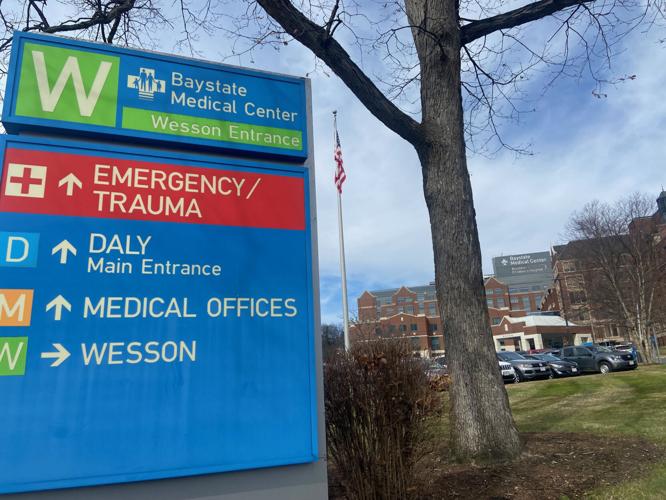
After Bug's gender announcement, J's queries led her to the largest hospital system in the region, Springfield, Massachusetts-based Baystate Health, where they began the process to start hormone therapy.
But this past February, two weeks before Bug was scheduled to start testosterone, Baystate announced it would no longer provide gender-affirming medications to minors, offering only counseling. A letter to patients' families did not explain why.
Baystate spokesperson Heather Duggan sent a statement that said the decision to end treatment for minors reflected the fact that Baystate could lose "hundreds of millions of dollars in government reimbursement" as a result of the Trump administration's plans. "Nearly 70 percent of Baystate Health's patients rely on Medicaid and Medicare for coverage," it said.
All Bug knew was that the care he'd eagerly awaited was about to vanish.
J said it felt as if the floor had fallen out from under them. "Maybe this is naive, but I didn't think that would happen in Massachusetts," she said.
Baystate is among the providers still choosing not to offer puberty blockers and hormones as the issue wends its way through the courts. This spring, in a lawsuit that Massachusetts joined, a federal judge concluded that it was unlawful for the Department of Health and Human Services to threaten federal funding for providers that offered gender-affirming care to minors. In June, another federal judge cleared 16 states, including Massachusetts, to move forward with another lawsuit against the administration over its push to criminalize gender-affirming care.
The American Academy of Pediatrics declined an interview request but said in a past statement that young patients and their families should make decisions about gender-affirming care with their doctors, "delivered with compassion, and offered without political interference."
One mother of a former Baystate patient said that before her child came out as a transgender girl, she had been severely depressed, battling suicidal thoughts. (The mother asked that only her first initial, L, be used, because the family also fears harassment.)
After Baystate doctors prescribed puberty blockers and estrogen, her daughter's mood and grades rose markedly, L said. When she received the letter announcing Baystate was ending the medical treatment, she and other parents filed civil rights complaints with the Massachusetts attorney general.
The attorney general's office did not respond to a request for comment.
L and J both found alternatives for their children. L asked the family's primary care doctor to take over hormone prescriptions. Bug's family was referred to Transhealth, a private specialty clinic in Northampton, Massachusetts, that said it has taken on about 50 of Baystate's former patients.
"Transhealth has been staffing ourselves up for a while now in anticipation of the fact that this may be happening across the state," CEO Jo Erwin said.
Erwin said Transhealth can weather the funding threats because the clinic gets large private donations and is not as dependent on Medicaid and Medicare as most hospitals. But Erwin said that doesn't entirely reassure the broader LGBTQ+ community, including transgender adults.
"When you see something like that go down, people get scared that it's ultimately going to happen to everyone," Erwin said.
In May, Colorado's Supreme Court ordered a children's hospital in that state to resume medical treatments for transgender youths, while in Texas a court settlement compelled a children's hospital there to do the opposite — start the nation's first "detransition clinic." The Trump administration has continued to pressure providers, including by seeking the medical records of transgender minors.
After Bug's false start at Baystate, he was able to start taking testosterone at the new clinic in the spring.
His mother, J, said the treatment is going smoothly and that Bug has learned how to give himself the injections. But J is nervous that the federal government will find other ways to stop his treatment again. She sometimes second-guesses the family's move from Texas to Massachusetts, wondering whether they should have gone to Canada instead.
KFF Health News is a national newsroom that produces in-depth journalism about health issues and is one of the core operating programs of KFF, the independent source for health policy research, polling and journalism.


