

JOHANNESBURG — The first victim of a suspected hantavirus outbreak had already been dead 21 days when fellow passenger Jake Rosmarin posted a video about cows he had seen on a remote volcanic island in the Atlantic, showing no indication he was aware his cruise ship was about to be quarantined.
But later that evening, on May 2, Rosmarin posted: "For those who have seen recent news, yes, I am currently onboard the M/V Hondius," adding that he did not wish to say more, "out of respect for those involved."
The following day, with his ship marooned off the Cape Verde islands and refused permission to offload its passengers and crew, a visibly distraught Rosmarin said, "What's happening right now is very real for all of us."
"We're not just headlines. We're people with families, with lives, with people waiting for us at home," he added, his voice trembling as he choked back tears, a ring on his ring finger visible in the frame.
People are also reading…
"All we want is to feel safe and to get home," he said.
That was two days after conveying his excitement at spotting a critically endangered Wilkins's Finch on Nightingale Island.
Fear as dozens trapped on ship
About 150 people remain stuck on the ship, which had been visiting some of the most remote places on Earth, including Tristan da Cunha, an island in the south Atlantic between Argentina and South Africa, where Rosmarin filmed the cows.
Three people on board — a Dutch couple and a German national — have died, the operator said.
Rosmarin did not immediately respond to a request for comment via text message, but his post was a rare insight into the atmosphere on the M/V Hondius.
The first stricken passenger, the Dutch man, died on April 11, as the ship steamed toward Tristan da Cunha. His body remained on board until April 24, when it "was disembarked on St Helena, with his wife accompanying the repatriation," the ship's operator, Oceanwide Expeditions, said in a statement on Monday.
Three days later, the man's wife also fell sick and later died, while another passenger, a Briton, became "seriously ill and was medically evacuated to South Africa," the company said.
South African authorities have confirmed that the British patient, who is being treated in a Johannesburg hospital, tested positive for the hantavirus. The Netherlands has confirmed the virus in the Dutch woman who died.
Cruise goes on as deaths continue
The Hondius left Ushuaia in southern Argentina in March, according to company documentation, on a voyage marketed as an Antarctic nature expedition, with berth prices ranging from $16,000 to $25,000.
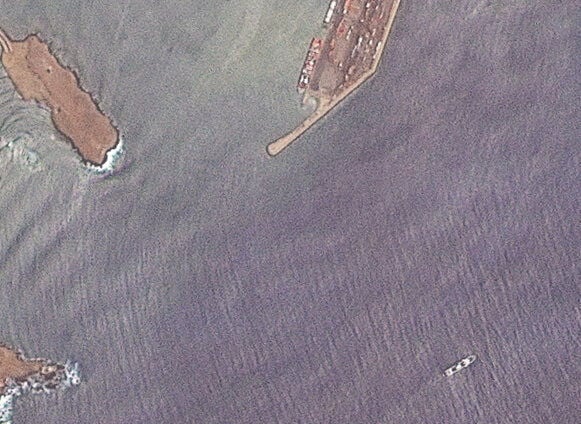
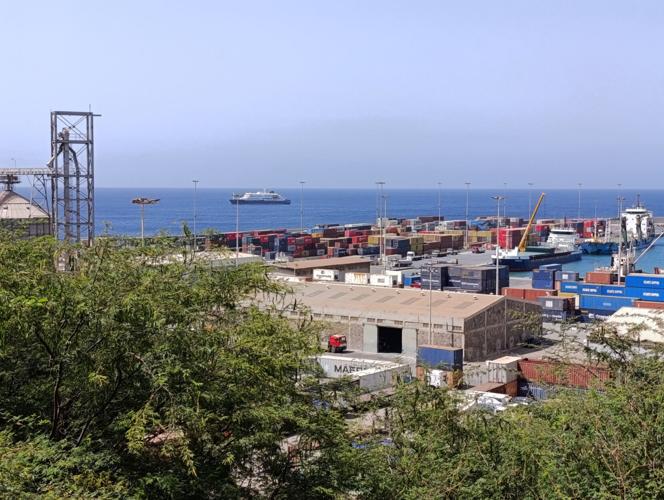
It traveled past mainland Antarctica, the Falklands, South Georgia, Nightingale Island, Tristan, St Helena and Ascension before reaching Cape Verdean waters on May 3.
On May 1, the ship's chef Khabir Moraes posted a joyful video of himself and colleagues swimming in the ocean off a rubber dinghy, the cruise ship anchored in the background.
"The day was pleasant and the depth was 4,700 meters," he said, commenting in the video about his colleagues laughing as they hauled him back onto the dinghy.
Moraes did not immediately respond to a Reuters request for comment sent via text message. Reuters could not establish if he was aware of the deaths before he made his post.
The following day, another passenger died, Oceanwide said in Monday's statement, adding that the cause had not yet been established and that the passenger was of German nationality.
Oceanwide Expeditions said Cape Verdean health authorities had not yet granted permission for a medical evacuation of the ship and screening of its passengers.
It is now considering sailing on to Las Palmas or Tenerife for this purpose.
Hantavirus is primarily spread by rodents but can be transmitted between people in rare cases, according to the World Health Organization.
As concern mounts in South Africa, health authorities said there was no need for locals to be concerned about the virus spreading onshore, while Cape Verde authorities also put out a statement to calm fears, saying that since the ship has remained at sea, "there is currently no risk to the population on land."
Additional reporting by Nerijus Adomaitis in Oslo, Stephanie Van Den Berg in The Hague and Richard Lough in Paris


